
Plate Load
Plate load is the amount of removable weight added to a bar, machine, sled, or storage system.
- Example: adding two 10 lb plates to a barbell
- Check: confirm the total load includes both sides
- Limit: plates need compatible equipment
Weight plates differ from barbells because plates are the removable load, while the barbell is the implement that holds and guides that load. A barbell without plates may be too light for many goals; plates without a compatible bar or machine have no useful loading path.
The two pieces work together, but they solve different problems. Barbells provide grip, length, sleeve space, and movement structure. Plates provide adjustable resistance and progression.
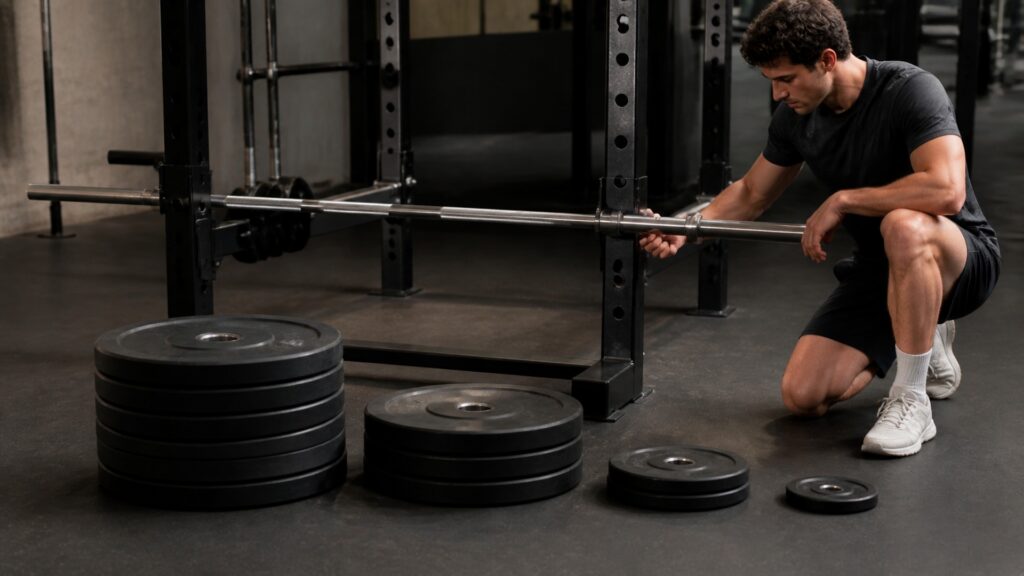
A practical comparison of removable load, bar structure, compatibility, and strength progression.
Tip: Think of the bar as the loading structure and the plates as the adjustable resistance.
These concepts explain why plates and barbells are separate parts of the same loading system.
Plate load is the amount of removable weight added to a bar, machine, sled, or storage system.
Sleeve diameter is the size of the bar or machine post the plate fits on.
Increment is the smallest useful weight change available.
Grip cutout is an opening or handle shape that makes a plate easier to carry.
Calibration is how closely a plate matches its labeled weight.
Storage fit is how well plate size, thickness, and quantity work in the room.
Tip: The right equipment choice depends on how resistance is created, adjusted, and repeated.
The barbell gives the user a grip, sleeve, length, and movement structure. It shapes squats, deadlifts, presses, and rows.
The barbell is the structure the plates load.
Plates add resistance in steps. Different plate sizes let the user build working weight and progress gradually.
Plates are what make the bar adjustable.
A plate must fit the bar sleeve. Olympic and standard equipment are not always compatible.
Compatibility keeps the system usable.
A home gym usually needs both, but the purchase order depends on goals. Some users need a barbell set; others need plates for machines or sleds first.
The pieces should be chosen as a system.
A barbell and plates are usually partners, not substitutes. The useful question is whether the bar, plates, and space match the training goal.
Together they form the loading system.
They work together, but they do different jobs.
Removable load, progression steps, and compatibility with bars, machines, or sleds.
Options for material, thickness, and increments.
Grip, sleeve space, bar path, and structure for major lifts.
A standard implement for heavy strength work.
The parts are related, but not interchangeable.
The bar holds the load; plates create the adjustable resistance.
Hole and sleeve size must match.
Plate increments, thickness, and material affect daily training.
Most plate loading needs a compatible bar, machine, or sled.
Tip: Choose the bar and plates as a compatible system.
Short answers for practical equipment and training decisions.
The barbell is the implement; plates are the removable load added to it.
Yes, on compatible machines, sleds, and some plate exercises, but most barbell lifts need both.
No. Plate hole size and bar sleeve diameter must match.
Start with the equipment and lifts you plan to use, then choose compatible plates.
Barbells provide structure; plates provide adjustable load.
Weight plates differ from barbells because plates provide removable load while barbells provide the structure for many lifts.
They are usually best evaluated together as a compatible loading system.
Use these Review Streets paths to compare related categories and practical next decisions.
Explore the weight plates category.
Review plate loading and setup basics.
Compare related strength-training equipment.
Choose a retailer
Prices checked regularly. We may earn a commission at no cost to you.