
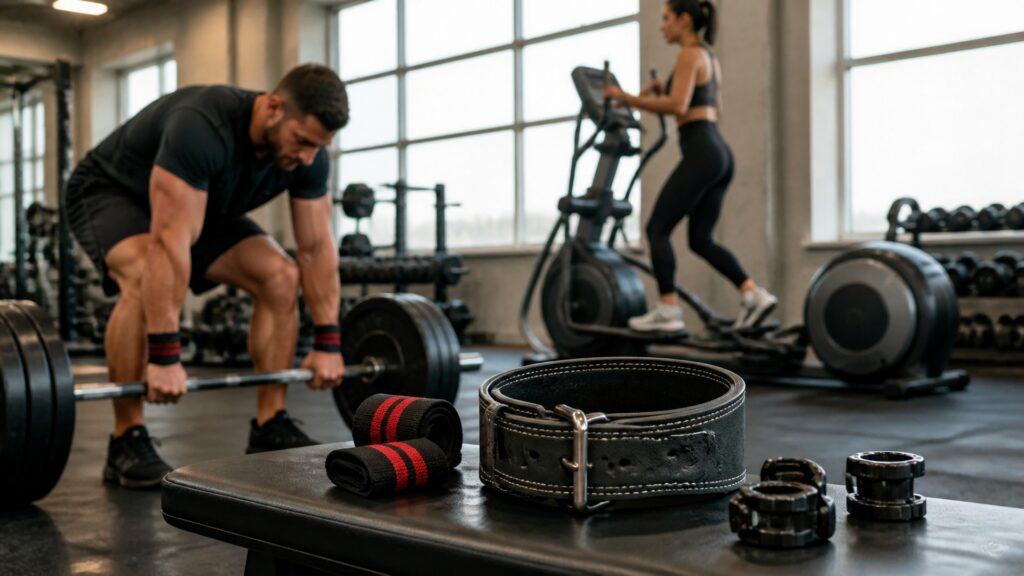
What Makes Weightlifting Accessories Different from Elliptical Machines

Weightlifting accessories are different from elliptical machines because accessories assist exercises the user is already performing, while an elliptical machine creates the exercise itself. Straps, belts, collars, wraps, wedges, and similar items modify or support strength training tasks. An elliptical is a complete cardio machine.

That difference changes the buying decision. Accessories are chosen around a lift, a piece of equipment, or a setup need. An elliptical is chosen when the user wants a dedicated place to do low-impact cardiovascular exercise.

By: Review Streets Research Lab
Updated: September 23, 2026
Explainer · 8-12 min read
weightlifting accessories explainer hero image for Review Streets
What You'll Learn

How Strength Accessories Differ From A Complete Cardio Machine

A category comparison based on training role, equipment dependence, footprint, cost, and use context.

  • Why accessories depend on another exercise or setup
  • How an elliptical creates its own cardio workout
  • Where strength-training support and cardio training differ
  • How size, cost, and commitment change the decision
  • When both categories can fit the same broader routine

Tip: Ask whether the product supports an existing exercise or provides the exercise.

Definitions

Key Differences Between Weightlifting Accessories And Elliptical Machines

These comparison points explain why the categories serve fundamentally different roles.

Accessory Role

An accessory role supports, secures, or modifies an exercise rather than replacing the exercise.

  • Example: collars securing plates for a barbell lift
  • Check: identify the lift or setup the accessory depends on
  • Limit: an accessory has little value without the exercise it supports

Complete Machine Role

A complete machine role means the product supplies the movement path and workout station.

  • Example: an elliptical providing repeated low-impact stepping for cardio
  • Check: test whether the machine itself delivers the intended workout
  • Limit: a machine can be useful but space-intensive

Strength Support

Strength support helps with lifting tasks such as grip, bracing, wrist position, setup, or plate security.

  • Example: wrist wraps used during pressing work
  • Check: match the support to a specific strength exercise
  • Limit: support gear does not create cardiovascular conditioning by itself

Cardio Equipment

Cardio equipment is built to support sustained aerobic exercise.

  • Example: using an elliptical for a 25-minute indoor cardio session
  • Check: review comfort, controls, stride feel, and home placement
  • Limit: cardio equipment does not solve lifting setup problems

Footprint Difference

Footprint difference is the gap between small portable accessories and a fixed exercise machine.

  • Example: a belt and straps fitting in a bag while an elliptical needs floor space
  • Check: compare storage, transport, and room requirements
  • Limit: small items still need organization and care

Use Context

Use context is the setting where the product becomes useful.

  • Example: accessories used during barbell work and an elliptical used for home conditioning
  • Check: place each product in a normal training week
  • Limit: a product used rarely may not justify its cost or space

Tip: The clearest difference is dependency: accessories need another exercise, while the elliptical is the exercise station.

Category Role

Accessories Modify A Strength Exercise

Weightlifting accessories work alongside another lift or piece of equipment. They may help the lifter grip a bar, brace for a heavy set, secure plates, or change a setup.

  • They depend on a strength-training context.
  • They are chosen for a specific support job.
  • They usually travel or store more easily than machines.

Accessories are add-ons to training, not standalone cardio equipment.

Machine Role

An Elliptical Provides The Cardio Workout

An elliptical machine is a full exercise station. The user steps onto it to perform a low-impact cardiovascular session without needing barbells, plates, benches, or lifting accessories.

  • It supplies the movement path.
  • It occupies a fixed place in the home or gym.
  • It is judged by comfort, controls, size, and repeat use.

The elliptical creates the session instead of supporting another exercise.

Training Purpose

Strength Support And Cardio Conditioning Are Different Goals

Weightlifting accessories are usually evaluated by how well they support a lift. Ellipticals are evaluated by how well they provide conditioning. Those goals can both matter, but they are not the same goal.

  • Choose accessories for lifting tasks.
  • Choose an elliptical for indoor cardio access.
  • Use both only when both goals are present.

A clear training purpose prevents a false comparison.

Commitment

Size And Cost Change The Purchase Decision

Most accessories are smaller purchases that fit in a gym bag or storage bin. An elliptical is a larger commitment with delivery, floor space, and long-term placement to consider.

  • Accessories are easier to add one at a time.
  • An elliptical needs enough room to use safely.
  • The larger purchase should solve a larger recurring need.

The practical commitment is part of what makes the categories different.

Routine Fit

They Can Complement Each Other Without Overlapping

A person might use lifting accessories for strength sessions and an elliptical for cardio days. That does not make the products interchangeable. It means they serve separate parts of a broader routine.

  • Put each product on the training week where it belongs.
  • Avoid buying one to solve the other's problem.
  • Keep the comparison anchored to the user's actual routine.

Different roles can coexist when each one earns its place.

Quick Reality Check

Where The Difference Shows Up

The categories separate most clearly by dependency, purpose, and footprint.

Weightlifting Accessories

Support lifts the user is already doing.

Usually small, portable, and tied to strength-training tasks.

Elliptical Machines

Provide a complete low-impact cardio session.

Require a fixed space and a larger purchase commitment.

Common Myths

Misconceptions About Accessories And Ellipticals

The products should not be treated as versions of the same thing.

They both solve the same fitness need

Accessories support strength exercises, while ellipticals provide cardio exercise.

Accessories are less important because they are smaller

A small accessory can be important when it solves a real lifting setup or support problem.

An elliptical can replace lifting support gear

An elliptical may improve conditioning, but it does not secure plates, assist grip, or support bracing.

A balanced routine automatically requires both

A routine should include only the tools that match the user's goals, space, and habits.

Tip: Compare categories by the work they do, not by whether both appear in fitness shopping lists.

FAQ

Frequently Asked Questions About Weightlifting Accessories And Ellipticals

Short answers for comparing strength-training support with cardio equipment.

What is the main difference?

Weightlifting accessories support exercises the user is already doing. An elliptical machine provides a complete cardio workout.

Can weightlifting accessories replace an elliptical?

No. They can help with lifting tasks, but they do not provide sustained low-impact cardio.

Can an elliptical replace weightlifting accessories?

No. It can support conditioning, but it does not help with grip, bracing, plate security, or setup changes for lifts.

Which one should I buy first?

Buy the one that solves the current training gap: lifting support or indoor cardio access.

What is the practical takeaway?

Choose weightlifting accessories for strength-session support and an elliptical machine for dedicated cardio exercise.

Bottom Line

Weightlifting accessories support existing strength exercises, while elliptical machines provide their own cardio workout.

They can both belong in a fitness routine, but they differ in purpose, equipment dependence, footprint, cost, and use context.

Next Steps

Go Deeper or Compare Your Options

Use these Review Streets paths to compare related categories and practical next decisions.