
Shoe-Layer Problem
A fit or contact issue inside the running shoe.
- It points toward socks.
- Shoes still matter.
- No blister guarantee follows.
Use athletic socks instead of running apparel when the issue is inside or directly above the shoe: toe seam feel, heel tab height, ankle cuff coverage, forefoot cushion, arch band tension, moisture yarn, or shoe-collar contact.
Running shorts, tights, singlets, jackets, and vests solve body-coverage and storage problems; they do not change the foot layer inside the shoe.
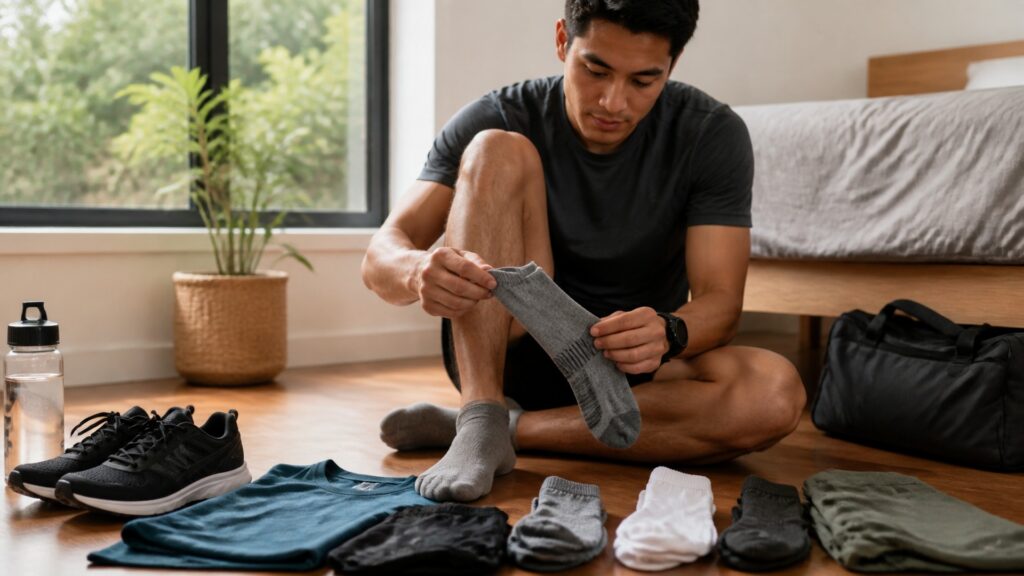
This decision boundary separates sock-specific running issues from broader running apparel needs.
Tip: If the problem is under the ankle and inside the shoe, socks probably deserve the first look.
These definitions connect the main idea to the variables, limits, and practical signals readers need to compare options.
A fit or contact issue inside the running shoe.
A raised sock area near the back of the ankle.
Extra thickness under the front of the foot.
Clothing such as shorts, tights, tops, jackets, and vests used while running.
The upper edge around the ankle opening of a shoe.
A clothing issue involving torso, leg, arm, rain, cold, sun, or pocket coverage.
Tip: Use these terms to separate the shoe layer from body-covering running apparel.
A sock-first decision makes sense when the problem is toe seam feel, heel tab height, cuff coverage, cushion thickness, arch tension, or shoe-collar contact.
The sock owns the shoe-interface problem.
Shorts, tights, tops, jackets, and vests answer weather, pocket, and body-coverage needs away from the shoe.
Body coverage is not a sock job.
Sock thickness and construction affect available space inside the shoe in a way a shirt or jacket cannot.
The foot layer changes shoe fit directly.
Cold rain, long routes, trail dust, or race-day storage can involve both the foot layer and body apparel.
Overlap does not erase the boundary.
Changing socks can alter fit and contact conditions, but it cannot guarantee comfort, blister prevention, speed, or injury reduction.
The decision stays practical.
This decision explains when running problems belong to socks rather than shirts, shorts, tights, or jackets.
It separates shoe-interface fit from body coverage.
It preserves cases where both categories matter.
It does not guarantee comfort, blister prevention, or injury prevention.
It does not provide running advice.
Common shortcuts and misunderstandings can make the topic seem simpler than it is.
Socks have a specific foot-and-shoe role.
Weather layers do not change toe seams or sock cushion.
That claim depends on many factors and should not be assumed.
Socks also change the shoe interface.
Tip: Treat strong claims as starting points for comparison, not final answers.
Concise answers to common questions readers may have after the main explanation.
When the issue is toe seam, heel tab, cuff height, cushion, arch tension, moisture, or shoe fit.
When the issue is torso, leg, weather, pocket, or layer coverage.
Yes. Sock thickness and construction take up room inside the shoe.
No such claim should be assumed from sock choice.
Yes, especially in weather, long routes, or trail conditions.
Use athletic socks instead of running apparel when the issue is the foot layer inside the shoe.
Use running apparel when the issue is broader body coverage, storage, or weather management.
Use these Review Streets paths to connect the explainer to related categories, comparisons, and next decisions.
Use this for the sock mechanics behind the foot-layer decision.
Read this to compare body-covering running apparel needs.
Browse socks after confirming the issue is below the ankle.
Choose a retailer
Prices checked regularly. We may earn a commission at no cost to you.