
Fixed Path
A fixed path means both hands move the same bar through one shared line.
- Example: pressing a barbell from the chest
- Check: make sure the path fits the lift
- Limit: the shared bar can expose mobility limits
Use barbells instead of dumbbells when the workout needs a shared load, heavier measurable progression, a rack-supported start, or a movement that benefits from both hands controlling one implement. Barbells often fit squats, bench presses, deadlifts, rows, and overhead presses.
Dumbbells remain useful when the session needs independent-side work, freer hand paths, compact setup, or lighter transitions. The choice should follow the lift, not a habit of reaching for one tool first.
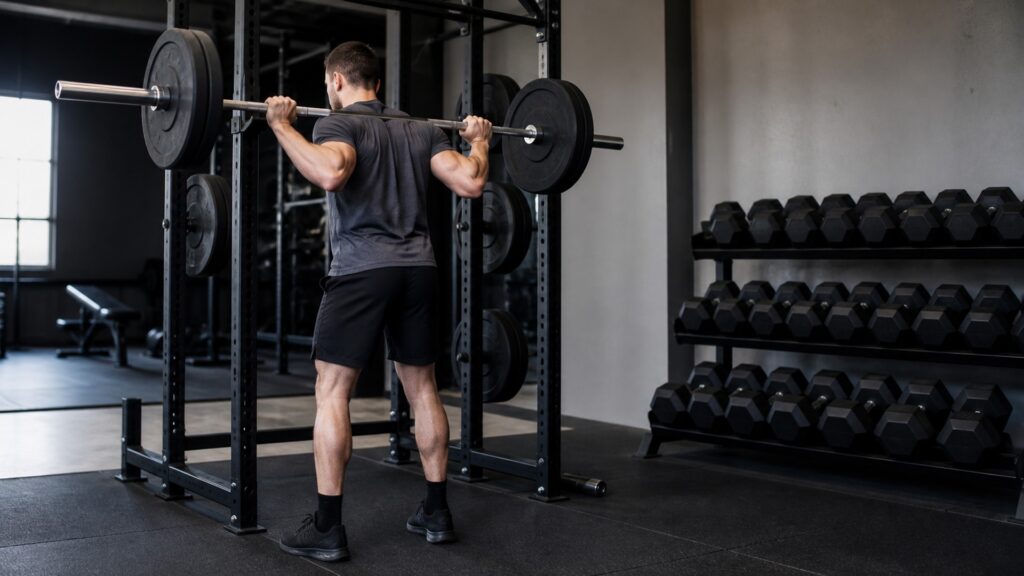
A decision path for choosing barbells over independent dumbbells.
Tip: Choose the bar when the lift benefits from one shared load.
These concepts separate shared-bar jobs from independent-hand jobs.
A fixed path means both hands move the same bar through one shared line.
Load progression is the ability to add weight in controlled steps over time.
Rack setup is how the bar starts, returns, and stays supported between attempts.
Grip and centering keep the bar balanced before and during the lift.
Brace and control keep the body stable while the bar moves.
Spotter or safeties provide a backup when a lift may fail.
Tip: Use the barbell when fixed shared loading is the advantage.
A barbell usually makes it easier to add weight in known amounts and repeat the same lift setup over time.
Heavy measurable work often points to the bar.
Bench presses, squats, rows, and deadlifts often benefit from a shared load that can be centered, racked, and moved through a consistent path.
The shared implement is useful when the lift calls for it.
Dumbbells can be better when each side needs to work separately or when the hands need a freer path around the body.
Dumbbells win when independence matters.
Heavy barbell work may need safeties, spotters, collars, racks, or a platform. That setup is part of the decision.
A barbell choice includes the station around it.
The question is not whether barbells are better than dumbbells overall. The question is whether the exercise needs shared loading, independent control, heavy progression, or range freedom.
The goal should choose the tool.
The decision depends on load, path, setup, and control.
The goal is heavy shared-load progression.
The lift benefits from a rack, plates, or fixed grip spacing.
The goal is independent-side control or freer range.
The setup needs quick transitions or smaller space.
The better choice changes by exercise.
They often allow more load, but that does not make them best for every movement.
Dumbbells can be primary strength tools.
Two dumbbells and one barbell can feel very different.
Safety depends on load, setup, backup, and control.
Tip: Choose by the demand of the lift.
Short answers about when the barbell fits better.
Use a barbell when shared loading, heavier progression, or rack-supported setup helps the lift.
Use dumbbells when independent control, freer hand path, or quick setup matters more.
Yes. Many plans use barbells for main lifts and dumbbells for assistance work.
Barbells are often easier to progress precisely because plates provide known increments.
Use the barbell when the lift benefits from one centered shared load.
Use barbells instead of dumbbells when the session needs stable shared loading, heavier progression, and a consistent bar path.
Use dumbbells when independent movement, range freedom, or simpler transitions matter more.
Use these Review Streets paths to compare related categories and practical next decisions.
Review the core bar, sleeve, grip, and loading basics.
Compare shared-bar lifting with independent-hand loading.
Explore the barbell category.
Choose a retailer
Prices checked regularly. We may earn a commission at no cost to you.