
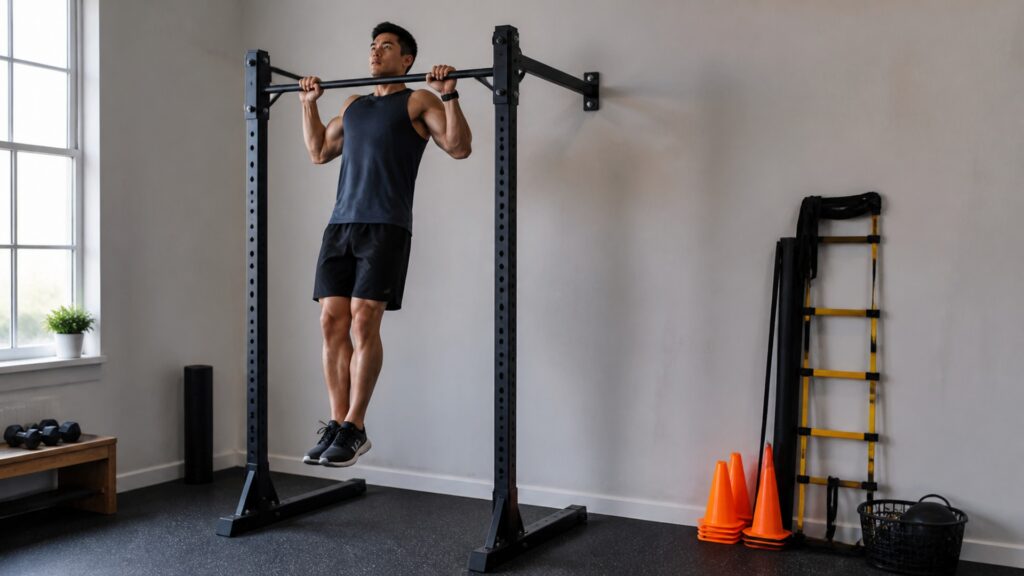
When to Use Bodyweight Training Equipment Instead of Agility Training Equipment

Use bodyweight training equipment instead of agility training equipment when the workout needs strength, support, leverage control, or compact body-resistance work. Pull-up bars, parallettes, dip stations, push-up handles, sliders, and ab wheels create a different kind of challenge than cones, ladders, hurdles, or reaction cues.

Agility equipment is better for quick footwork, direction change, acceleration, deceleration, spacing, and reaction drills. Bodyweight equipment is better when the goal is controlled pushing, pulling, bracing, hanging, supporting, or progressing exercises without external weights.

By: Review Streets Research Lab
Updated: October 2, 2026
Explainer · 8-12 min read
bodyweight training equipment explainer hero image for Review Streets
What You'll Learn

When Bodyweight Gear Is The Better Fit

A practical decision path for choosing body-resistance tools over agility markers and drill equipment.

  • Why bodyweight gear is better for strength and support work
  • When agility equipment solves a different problem
  • How space, impact, and setup affect the choice
  • Where pull-up bars, handles, stations, wheels, and sliders fit
  • When the two categories can work together
  • What to check before buying either setup

Tip: Choose bodyweight gear when the main challenge is controlled resistance. Choose agility gear when the main challenge is movement through space.

Definitions

Key Concepts Behind The Bodyweight-First Choice

These terms separate body-resistance equipment from quick-movement drill tools.

Bodyweight Training Equipment

Bodyweight training equipment supports exercises where the user's own body provides the main resistance.

  • Example: pull-up bars, dip stations, push-up handles, sliders, or ab wheels
  • Check: confirm the tool supports the target push, pull, brace, or support pattern
  • Limit: it may not train quick direction change

Agility Training Equipment

Agility training equipment organizes footwork, reaction, spacing, and direction-change drills.

  • Example: cones, ladders, marker discs, mini hurdles, or reaction lights
  • Check: use it when the drill needs routes or timing cues
  • Limit: it may not provide strength loading

Compact Strength

Compact strength is resistance training that fits in a small area using body position and support.

  • Example: push-ups on handles or pull-ups on a doorway bar
  • Check: measure clearance and support safety
  • Limit: some exercises still need external load

Leverage Control

Leverage control changes difficulty by adjusting body angle, support, range, or limb position.

  • Example: making suspension-style rows harder by lowering the body
  • Check: progress one variable at a time
  • Limit: large jumps can be hard to manage

Spatial Agility

Spatial agility is quick movement through marked space with starts, stops, cuts, or cues.

  • Example: cone shuttle drills
  • Check: use a safe surface and enough stopping room
  • Limit: it is not the same as strength training

Training Priority

Training priority is the main adaptation the session is trying to develop.

  • Example: choosing handles for pressing strength instead of cones for footwork
  • Check: name the priority before choosing equipment
  • Limit: mixed goals can require more than one tool

Tip: The choice is not about which category is better. It is about whether the workout needs controlled resistance or quick movement.

Strength

Choose Bodyweight Gear For Controlled Resistance

Bodyweight equipment is the better fit when the user needs pressing, pulling, bracing, hanging, dipping, or support work. These movements depend on body position more than drill spacing.

  • Use bars for pulling and hanging.
  • Use handles or parallettes for pressing.
  • Use sliders and wheels for controlled core work.

Bodyweight tools make the body the resistance source.

Agility Advantage

Choose Agility Gear For Movement Through Space

Agility equipment is better when the workout needs foot placement, acceleration, deceleration, lateral movement, reaction, or route changes.

  • Use cones for routes and cutting points.
  • Use ladders for footwork patterns.
  • Use hurdles or cues for timing challenges.

Agility tools organize quick movement rather than body-resistance progression.

Space

Bodyweight Tools Usually Need Less Travel Space

Many bodyweight tools fit small rooms, garage gyms, or compact training spaces. Agility drills often need more room for safe movement and stopping.

  • Check overhead clearance for bars.
  • Use floor space for sliders or wheels.
  • Reserve agility drills for safe open areas.

Space can decide the better category before features do.

Progression

Progression Looks Different In Each Category

Bodyweight work progresses through leverage, range, reps, tempo, assistance, and stability. Agility work progresses through speed, spacing, reaction, complexity, and rest.

  • Use bodyweight gear for strength steps.
  • Use agility gear for movement-skill steps.
  • Avoid mixing too many variables at once.

The right tool should make the intended progression clear.

Combination

Use Both When The Session Needs Both Jobs

A complete routine may use bodyweight equipment for strength and agility equipment for movement skill. The categories work best when each has a separate role.

  • Keep strength work controlled.
  • Keep agility drills short and purposeful.
  • Separate high-speed movement from heavy fatigue when needed.

The categories can complement each other without replacing each other.

Quick Reality Check

Where Bodyweight Gear Beats Agility Gear

The choice depends on whether the workout needs resistance control or movement speed.

Use Bodyweight Equipment When

The goal is pushing, pulling, bracing, hanging, support, mobility, or compact strength work.

The user needs repeatable progression without much travel space.

Use Agility Equipment When

The goal is footwork, reaction, cutting, acceleration, deceleration, or direction change.

Markers, hurdles, or cues would make movement drills clearer.

Common Myths

Misconceptions About Bodyweight Gear Versus Agility Gear

The categories support different training jobs.

Agility gear is always more athletic

Athletic ability also depends on strength, control, mobility, and recovery.

Bodyweight gear cannot help sports movement

Bodyweight tools can build strength and control that support movement skills.

One category should replace the other

They often work together when strength and agility are both priorities.

Small-space training means agility gear is useless

Some low-impact agility patterns fit small spaces, but bodyweight tools usually fit compact strength work better.

Tip: Pick the equipment category by the session's main adaptation.

FAQ

Frequently Asked Questions About Bodyweight And Agility Equipment

Short answers for choosing between strength-support tools and movement-drill tools.

When should I choose bodyweight equipment first?

Choose it first when the workout needs controlled resistance, support, leverage, bracing, or compact strength work.

When is agility equipment better?

Agility equipment is better when the workout needs footwork, direction change, reaction, and movement through space.

Can beginners use both?

Yes, but beginners should keep agility drills simple and bodyweight progressions manageable.

Which category is better for small spaces?

Bodyweight equipment usually fits small spaces better, though some agility drills can be scaled down.

What is the practical takeaway?

Use bodyweight gear for controlled resistance. Use agility gear for quick movement and direction-change practice.

Bottom Line

Bodyweight training equipment is the better choice when the workout needs controlled body-resistance work.

Agility equipment is better when the session needs footwork, reaction, spacing, and direction change. Many routines can use both with separate roles.

Next Steps

Go Deeper or Compare Your Options

Use these Review Streets paths to compare related categories and practical next decisions.