When to Use Commercial Electric Vehicles Instead of Fleet Vehicles

Commercial electric vehicles can be fleet vehicles. Introducing them changes the propulsion and energy arrangements within a fleet; it does not replace the need to assign vehicles, maintain them, or manage their use. The practical decision is when a battery-electric candidate can take over a particular assignment from an existing conventional vehicle.

Begin with assignments whose requirements are understood and whose charging support can be made ready. A successful introduction brings the vehicle, infrastructure, people, and service obligations together. Buying electric vehicles before those pieces align can leave useful equipment waiting for the operation to catch up.

By: Review Streets Research Lab
Updated: October 6, 2026
Explainer · 8-12 min read
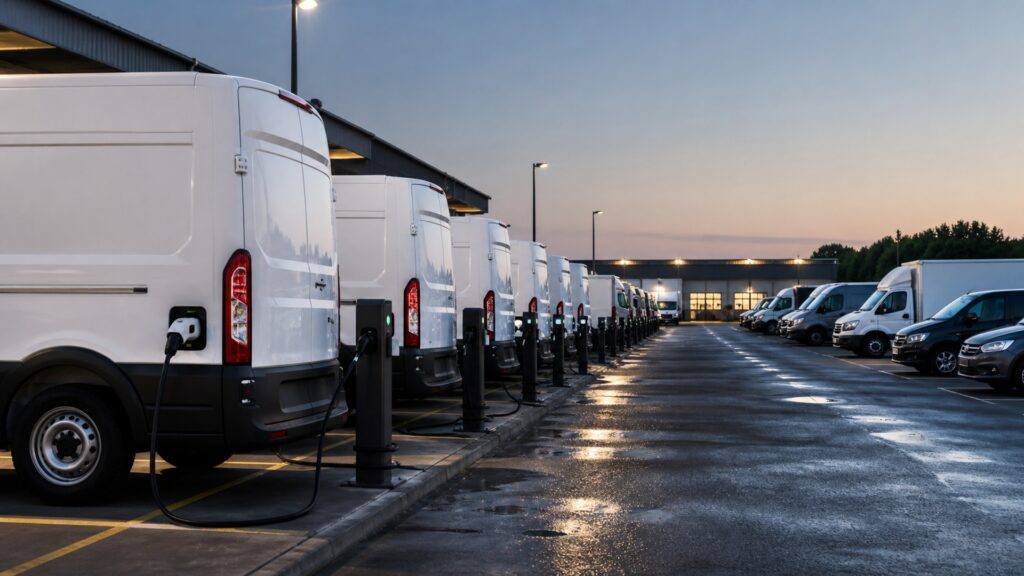
commercial electric vehicles explainer hero image for Review Streets
What You'll Learn

Choose Assignments That Are Ready for Electric Operation

Move from a fleet-wide ambition to a supported vehicle deployment.

  • Why electric vehicles remain part of the fleet
  • Which assignments make useful early candidates
  • How vehicle delivery and charging readiness depend on each other
  • What a trial needs to demonstrate
  • When to expand, adjust, or retain another option

Tip: Write down the service requirement and the evidence needed to show an electric candidate can meet it.

Definitions

Terms for Introducing EVs into a Fleet

These concepts connect a replacement decision with a working service.

Fleet membership

Fleet membership places a vehicle within an organization’s managed transport resources.

  • Example: an electric van assigned by the same depot as its conventional predecessor
  • Check: who controls assignment and support
  • Limit: electric propulsion does not end fleet responsibilities

Replacement candidate

A replacement candidate is a specific vehicle assessed for an existing or planned assignment.

  • Example: an electric van proposed for a regular delivery route
  • Check: the required body, load, equipment, and duty
  • Limit: a broad vehicle category is not an evaluated candidate

Mission readiness

Mission readiness means the candidate can support the required work under the conditions being planned.

  • Example: a loaded vehicle completing the intended service pattern
  • Check: representative evidence and remaining constraints
  • Limit: a short demonstration does not establish every operating condition

Charging readiness

Charging readiness means suitable charging can be used when the vehicle requires it.

  • Example: a commissioned depot arrangement available before the next shift
  • Check: compatibility, access, capacity, and support
  • Limit: a procurement order is not an operating charger

Trial boundary

A trial boundary defines the conditions and assignments a test actually covers.

  • Example: one depot and a set of measured delivery routes
  • Check: what was tested and what remains untested
  • Limit: results do not automatically apply to a different mission

Deployment support

Deployment support supplies the people and services needed for continued operation.

  • Example: trained drivers, a vehicle service provider, and a charger support contact
  • Check: responsibility and response arrangements
  • Limit: hardware alone cannot handle an interrupted assignment

Tip: Use readiness to mean a demonstrated operating arrangement, not simply a vehicle arriving on site.

Category overlap

Keep Fleet Management Around the Electric Vehicle

The organization still needs to know who can use the vehicle, what work it can do, and whether it is available. Electric propulsion adds charging and energy considerations to those decisions. Existing booking and maintenance arrangements may need changes, but they do not disappear. The same manager may oversee an electric delivery van, a passenger car, and a conventional service truck.

  • Keep individual vehicle identity and records.
  • Assign responsibility for charging alongside vehicle care.
  • Make readiness visible to those booking the vehicle.

The Department of Energy’s fleet overview includes varied vehicle types and acquisition arrangements. Fleet is an organizational description, not a competing powertrain.

Reference: Department of Energy fleet overview.

First assignments

Look for Work You Can Describe and Measure

Select candidates using actual jobs rather than a desire to replace a fixed number of vehicles quickly. Record passengers or load, fitted equipment, routes, return locations, and recurring variations. An understood assignment makes it easier to identify the remaining questions. Predictability is useful evidence, but it does not by itself prove the selected vehicle has enough capability.

  • Describe the completed working configuration.
  • Use representative route and duty information.
  • Identify important unusual days as well as the average day.

The Department of Energy recommends assessing duty requirements and charging opportunities when selecting fleet EVs.

Reference: Fleet EV selection guidance.

Delivery sequence

Bring the Vehicle and Its Energy Supply into Service Together

Coordinate procurement with the charging project and the people who will operate it. Establish who controls parking access, who confirms sessions, and who responds when charging is unavailable. Include commissioning and any site work in the schedule. A van delivered before its depot supply is ready may require an interim arrangement that must itself be tested for the service.

  • Confirm usable charging before relying on the assignment.
  • Coordinate the site, utility, equipment, and vehicle teams.
  • Set a realistic date for operational handover.

DOE infrastructure guidance includes utility coordination, installation, inspection, and ongoing operation. Delivery of the charger is only one step.

Reference: Charging infrastructure development.

Trial evidence

Define Success in Terms of Work Completed

A trial should answer concrete questions: did the vehicle carry the required load, complete the assignments, and prepare for the next departure without unplanned disruption? Record the conditions and any workarounds. A driver’s workaround may conceal a gap in the proposed arrangement, such as collecting a different vehicle to finish a route or waiting for a shared charger.

  • Record completed work and interruptions.
  • Capture driver and support-team observations.
  • Separate successful conditions from untested ones.

For example, a trial at one equipped depot does not prove that drivers parking elsewhere can use the same energy plan.

Expansion

Scale the Proven Arrangement and Recheck the Differences

Expand where the next vehicles and assignments match the supported conditions, and reassess where they differ. More vehicles can change charging competition, parking, support workload, and reserve capacity. Retain appropriate alternatives for unresolved assignments while evaluating what would remove the constraint. Compare costs and service outcomes over consistent workloads and periods.

  • Check shared resources as vehicle numbers grow.
  • Reassess different routes and equipped bodies.
  • Give retained assignments a clear review trigger.

A staged transition can be sensible when some work is ready and other work needs a different vehicle or infrastructure arrangement.

Quick Reality Check

An Electric Purchase and an Electric Assignment

The vehicle order and the operating decision need different evidence.

The purchase provides

A specified vehicle and its contracted equipment.

Delivery, warranty, and agreed support terms.

The assignment requires

A capable vehicle, prepared user, and usable charging arrangement.

A practical response to faults, changed work, or missed charging.

Common Myths

Misconceptions About Replacing Fleet Vehicles with EVs

Electrification changes fleet requirements rather than removing them.

Electric vehicles stop being fleet vehicles

They remain managed assets with assignments and support needs.

Every vehicle at one depot has the same readiness

Loads, equipment, routes, and departure times may differ.

A successful trial proves the entire fleet can switch

It supports conclusions about the conditions actually tested.

Buying more vehicles leaves charging demand unchanged

Shared infrastructure and timing must be reviewed as the deployment grows.

Tip: Keep the evidence attached to the assignment it actually supports.

FAQ

Questions About Introducing Commercial EVs

Answers for a staged fleet transition.

Where should an organization start?

With well-understood assignments and specific candidates whose physical capability, energy needs, and support can be assessed.

Does a depot-return route automatically qualify?

No. It provides a useful charging opportunity only if the vehicle and actual energy arrangement support the work.

What should remain in ordinary fleet records?

Vehicle identity, configuration, assignments, condition, service information, and the additional charging-related details needed for operation.

When should expansion wait?

When the proposed assignment or shared support capacity has an unresolved requirement that could prevent dependable service.

Can conventional and electric vehicles remain together?

Yes. Assign each to work it can support and revisit choices when the requirements or available solutions change.

Bottom Line

Introduce commercial EVs when a specific vehicle, assignment, charging arrangement, and support plan are ready to work together.

They become part of the fleet. Expand from demonstrated service rather than treating the powertrain change as a replacement for management.

Next Steps

Go Deeper or Compare Your Options

Use these Review Streets paths to compare related categories and practical next decisions.