
Pressure Garment
A clothing item designed around firm fit or controlled pressure.
- It makes compression the deciding trait.
- Coverage can be narrow or broad.
- It is not automatically medical.
Use compression apparel instead of running apparel when the main job is pressure-focused coverage on a specific body area, not route-ready running utility.
Running apparel often answers weather, storage, visibility, stride clearance, and race-kit needs; compression apparel only leads when its firm fit and covered area are the reason for the choice.
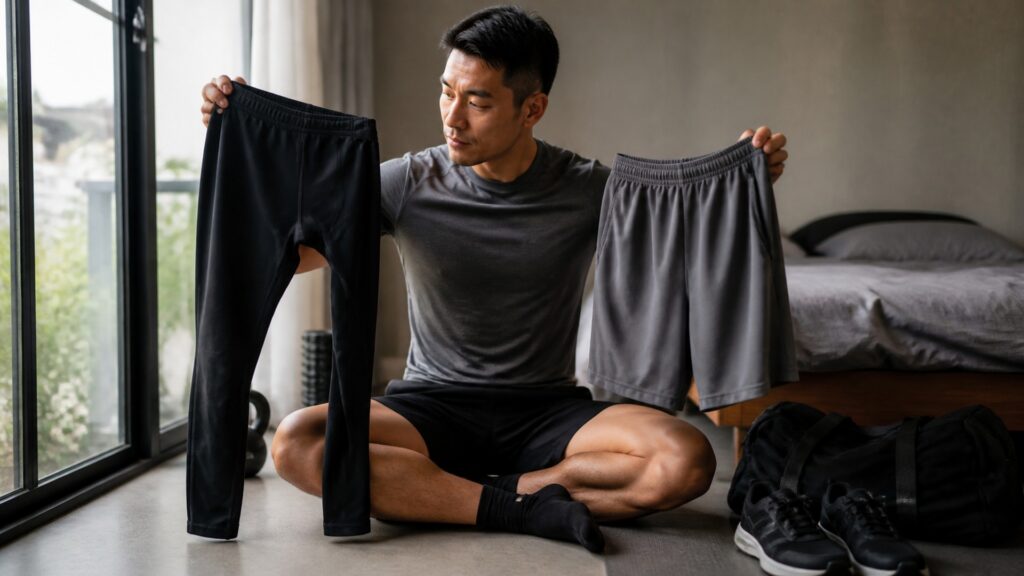
This decision separates compression-specific garment function from running apparel features that matter outside or across miles.
Tip: Choose compression only when pressure and body-area coverage are the deciding need.
These definitions connect the main idea to the variables, limits, and practical signals readers need to compare options.
A clothing item designed around firm fit or controlled pressure.
A lower-body running garment often chosen for stride clearance and heat.
Close lower-body running apparel designed for running conditions.
Material intended to return light in low-visibility settings.
A storage feature for carrying a phone or small item.
Clothing chosen for temperature, rain, wind, or sun exposure.
Tip: These terms separate category purpose from similar-looking garments.
Compression apparel is the better category when the reader specifically wants a sleeve, tight, short, or top because of controlled firm fit on a body area.
Pressure need is the compression-side trigger.
Running apparel can matter more when the problem is weather, sun, pockets, bib placement, reflective trim, or stride clearance on an actual run.
Route requirements point to running apparel.
Some running tights use close fabric and may feel compressive, but they may still be designed around running pockets, weather panels, and stride motion rather than compression pressure zones.
Overlap requires label and feature reading.
The choice does not always require one category to replace the other because sleeves or compression shorts may be worn with running shorts or tops.
Some decisions are layering decisions.
Choosing compression over running apparel can be reasonable without implying faster pace, fewer injuries, safer roads, or better recovery.
The boundary remains product-based.
This comparison decides which apparel category should lead for a given need.
It distinguishes pressure-focused coverage from running-route utility.
It handles overlapping tights and mixed outfits.
It does not promise running performance, safety, recovery, or injury prevention.
It does not decide medical suitability.
Common shortcuts and misunderstandings can make the topic seem simpler than it is.
It can lack pockets, weather features, and running-specific trim.
Close fit can overlap, but design priorities and features can differ.
It covers a narrow area and still needs other apparel around it.
Visibility planning is broader than a clothing feature.
Tip: Treat strong claims as starting points for comparison, not final answers.
Concise answers to common questions readers may have after the main explanation.
When firm pressure over a specific body area is the main reason for the garment.
When outdoor running conditions, storage, visibility, or stride-specific clothing features matter more.
Yes, some compression pieces can be layered with running shorts, tops, or race kit.
Some overlap exists, but the label, pressure design, and running features need to be checked.
That should not be assumed; the comparison is about apparel function.
Use compression apparel instead of running apparel when pressure-focused coverage is the actual requirement.
Choose running apparel first when the run itself demands weather handling, storage, visibility planning, heat management, or route-specific clothing features.
Use these Review Streets paths to connect the explainer to related categories, comparisons, and next decisions.
Review pressure zones, panels, cuffs, and sizing before choosing compression.
Compare the running-clothing side of fabric, pockets, visibility, and weather logic.
Use the reciprocal decision when route utility should lead instead.
Choose a retailer
Prices checked regularly. We may earn a commission at no cost to you.