
Accessory
An add-on that attaches to a bike, rider, helmet, or bag to perform a support job.
- It may light, carry, measure, mount, or repair.
- It has fit and placement constraints.
- It is not clothing by default.
Use cycling accessories instead of cycling apparel when the needed job is mounted, mechanical, electronic, storage-based, or repair-related.
A jersey pocket or reflective jacket can help in some conditions, but it does not replace a front light, bottle cage, bike computer, saddle bag, phone mount, rack, pump, or multi-tool when that specific function is required.
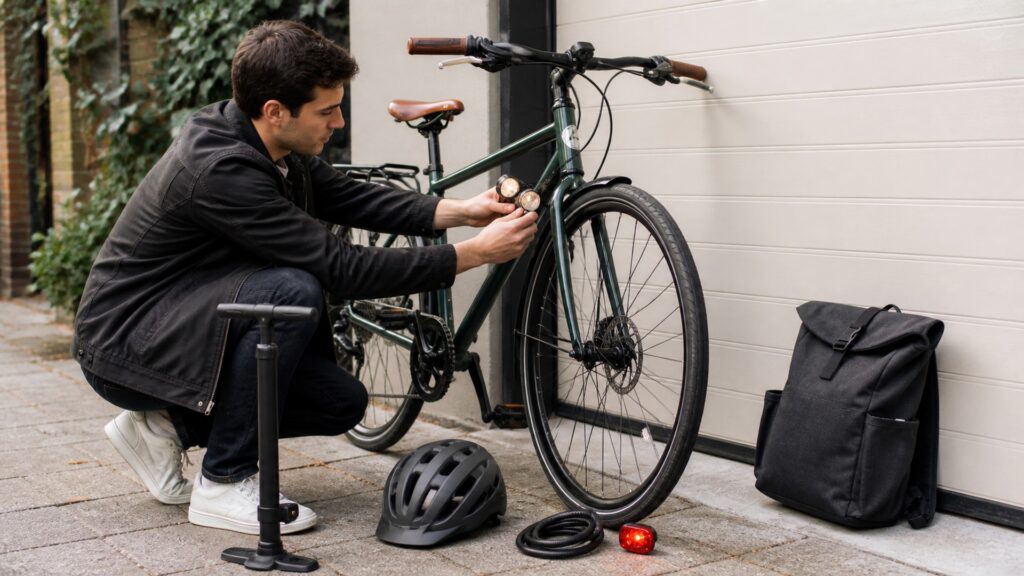
This decision boundary separates mounted ride functions from clothing-based support.
Tip: Choose accessories when the job needs a mounted device, container, tool, or power source; choose apparel when the issue is worn coverage or body contact.
These definitions connect the main idea to the variables, limits, and practical signals readers need to compare options.
An add-on that attaches to a bike, rider, helmet, or bag to perform a support job.
Clothing designed for ride conditions and rider contact.
A job performed from a fixed place on the bike or helmet.
Apparel used for wind, rain, cold, or sun coverage.
The ability to bring tools, food, bottles, layers, or devices.
Items that help make a rider easier to notice.
Tip: Classify the need by where the solution has to sit: on the bike, on a mount, in storage, or on the body.
Lights, computers, cages, racks, bags, pumps, and tools work because they attach, store, measure, or repair in ways apparel usually cannot.
Accessory-first decisions start with a required function.
Apparel is the better category when the need is temperature management, skin contact, rain coverage, pocket layout, or fit against the rider.
The boundary stays clear when clothing is not asked to be a device.
A rear light and a reflective jacket are not interchangeable, even though both relate to being noticed.
Shared goals do not erase category differences.
Small snacks may fit in apparel pockets, while bottles, tools, layers, locks, and repair kits may call for cages, bags, racks, or mounts.
Carrying needs should be sized before choosing apparel or accessory.
Accessories and apparel can support a ride, but neither category promises comfort, safety, performance, recovery, or health results.
The decision remains a product-role comparison.
The comparison explains when accessory functions should come before apparel choices.
It separates mounted tools and devices from worn clothing.
It handles overlap around visibility and carrying.
It does not guarantee comfort or safety.
It does not replace product instructions or local rules.
Common shortcuts and misunderstandings can make the topic seem simpler than it is.
Reflective fabric and active lights work differently and may both matter.
Pockets help, but larger or heavier loads may need bike-mounted storage.
Some apparel choices solve the actual problem better.
Tools help with some roadside issues but do not prevent wear.
Tip: Treat strong claims as starting points for comparison, not final answers.
Concise answers to common questions readers may have after the main explanation.
When the need is lighting, measurement, mounting, repair support, bottle access, or larger storage.
When the issue is weather coverage, rider contact, fit, or wearable pocket access.
They are apparel with visibility features, not the same as mounted lights.
Sometimes, but dedicated bags or mounts may be better for heavier or sharper items.
No. Check local rules and product instructions for required gear.
Use cycling accessories instead of apparel when the need is a mounted, electronic, repair, hydration, lighting, or storage function.
Use apparel when the unresolved issue is clothing fit, weather coverage, or body contact during the ride.
Use these Review Streets paths to connect the explainer to related categories, comparisons, and next decisions.
Use this for accessory attachment and support mechanics.
Read this to compare apparel-side clothing functions.
Browse accessories once the mounted-function need is clear.
Choose a retailer
Prices checked regularly. We may earn a commission at no cost to you.