
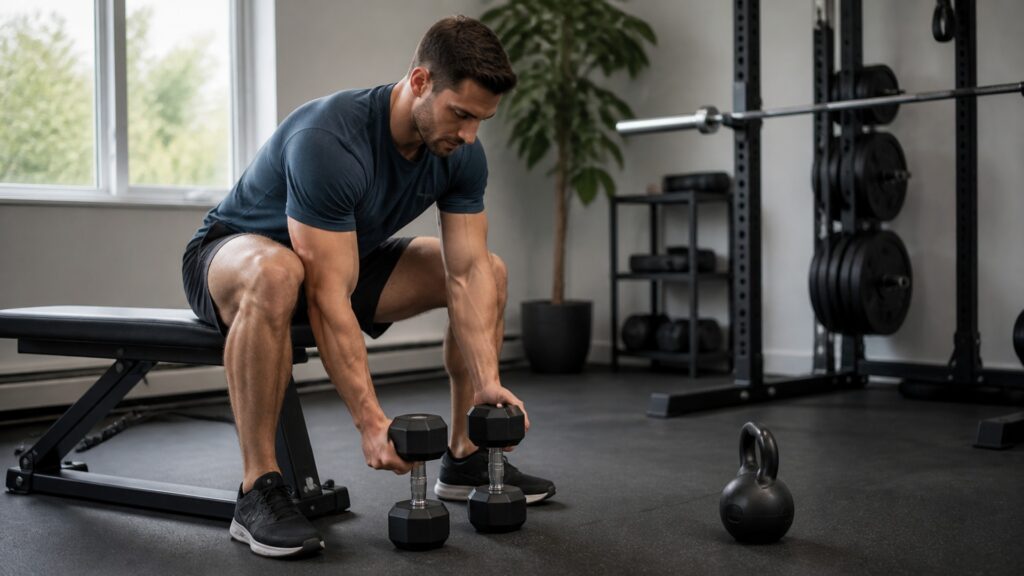
When to Use Dumbbells Instead of Kettlebells

Use dumbbells instead of kettlebells when the workout needs precise load choices, separate control for each side of the body, or a movement path that stays close to traditional strength exercises. Dumbbells are usually easier to line up for presses, rows, curls, lateral raises, step-ups, and many beginner-friendly strength sessions.

Kettlebells still make sense when the goal is swings, cleans, snatches, carries, and other movements built around momentum and a shifting center of mass. The better choice depends on what the session is supposed to train, how much control the user needs, and how safely the movement can be repeated.

By: Review Streets Research Lab
Updated: October 1, 2026
Explainer · 8-12 min read
dumbbells explainer hero image for Review Streets
What You'll Learn

When Dumbbells Are The Better Fit

A practical decision path for choosing dumbbells over kettlebells for strength training, home gyms, and skill level.

  • Why dumbbells are easier for controlled presses, rows, curls, and accessory work
  • How independent left-right loading helps balance and strength comparisons
  • Where kettlebells are stronger for swing-based power and carries
  • Why beginners often find dumbbell setup simpler
  • How storage, weight jumps, and grip shape affect the decision
  • What to check before buying one style of free weight over the other

Tip: Start with the exercise list. If most planned movements are controlled lifts, dumbbells usually deserve the first look.

Definitions

Key Concepts Behind The Dumbbell Or Kettlebell Decision

These terms explain the practical differences that affect exercise choice, progression, and setup.

Independent Loading

Independent loading means each hand holds its own weight, which can reveal or train left-right differences.

  • Example: using two dumbbells for a shoulder press instead of one shared implement
  • Check: see whether the exercise needs each arm to work separately
  • Limit: separate weights require more coordination than one fixed path

Controlled Strength Lift

A controlled strength lift uses a steady path and tempo rather than a swing or ballistic movement.

  • Example: a dumbbell bench press, goblet squat, or one-arm row
  • Check: choose the tool that keeps the movement stable
  • Limit: controlled lifts may not train power or rhythm as well as kettlebell work

Offset Center Of Mass

An offset center of mass means the weight sits away from the hand and changes how the tool moves.

  • Example: a kettlebell bell hanging below the handle during a clean
  • Check: decide whether that shifting feel is useful for the exercise
  • Limit: the offset can make some beginner exercises harder to learn

Weight Jump

A weight jump is the difference between one available load and the next heavier option.

  • Example: moving from 20 lb to 25 lb dumbbells for rows
  • Check: compare whether the set allows small enough increases
  • Limit: large jumps can stall progression or alter technique

Grip Demand

Grip demand is how much the handle shape, thickness, and movement challenge the hands and forearms.

  • Example: holding a kettlebell by the handle for swings or carries
  • Check: match handle demands to the user's strength and goal
  • Limit: grip fatigue can end a set before the target muscles are trained

Exercise Transfer

Exercise transfer is how well a tool supports the movement pattern the user wants to practice.

  • Example: using dumbbells for a press pattern that resembles other strength lifts
  • Check: review the actual exercises in the plan
  • Limit: one tool rarely covers every training goal equally well

Tip: The tool should match the movement, not just the category name on the rack.

Best Fit

Choose Dumbbells For Controlled Strength Work

Dumbbells are usually the better choice when the session centers on steady lifting patterns. They make it easier to set up pressing, rowing, curling, raising, lunging, and other exercises where a predictable path matters.

  • Use dumbbells when the goal is muscle-focused strength work.
  • Choose them when small load changes matter.
  • Favor them when the exercise should feel stable and repeatable.

For many home strength plans, dumbbells are the simpler and more direct tool.

Control

Separate Weights Make Left And Right Sides Work Honestly

A dumbbell in each hand prevents the stronger side from hiding the weaker side as easily. That can help with presses, rows, split squats, carries, and accessory work where balanced control matters.

  • Watch whether one side drifts or slows down.
  • Use equal loads when symmetry is the goal.
  • Use one dumbbell when the exercise calls for unilateral focus.

Dumbbells are useful when the workout needs control on both sides of the body.

Kettlebell Advantage

Use Kettlebells When Momentum Is The Point

Kettlebells are not just oddly shaped dumbbells. Their handle and offset weight make them strong for swings, cleans, snatches, carries, and other drills where timing, grip, and power are central.

  • Choose kettlebells for swing patterns and loaded carries.
  • Respect the skill needed for ballistic movements.
  • Avoid forcing a kettlebell into a lift where the shape gets in the way.

Kettlebells win when the workout benefits from their moving, offset load.

Beginner Setup

Dumbbells Are Often Easier To Learn First

Many beginners can understand a dumbbell curl, row, press, or goblet squat quickly. Kettlebell work can be excellent, but some of its best exercises need more timing and coaching.

  • Start with movements that are easy to repeat safely.
  • Add kettlebell skills after the basic pattern is clear.
  • Choose the tool that lets the user practice without rushing.

The easier setup is often the better starting point.

Practical Check

Buy For The Exercises You Will Repeat

The deciding factor is not which tool looks more versatile. It is whether the available weights, handle feel, storage space, and exercise list fit the user's actual week of training.

  • Write down the exercises planned for the next month.
  • Check whether the weight increments support progression.
  • Compare storage needs before buying several pairs or bells.

The right choice is the tool that supports repeated sessions without adding friction.

Quick Reality Check

Where Dumbbells Beat Kettlebells And Where They Do Not

The choice depends on control, progression, exercise style, and the user's skill level.

Dumbbells Are Better When

The workout is built around controlled strength lifts, accessory work, and small load changes.

The user wants separate left-right control for presses, rows, lunges, curls, and raises.

Kettlebells Are Better When

The session uses swings, cleans, snatches, carries, and power-focused patterns.

The user wants one compact tool for rhythm, grip, conditioning, and offset-load work.

Common Myths

Misconceptions About Dumbbells Versus Kettlebells

Both tools can be useful, but they are not interchangeable in every workout.

Dumbbells are only for beginners

Dumbbells can support advanced strength training, heavy unilateral work, bodybuilding, rehabilitation-style accessories, and precise progression.

Kettlebells are always more functional

Kettlebells are excellent for certain patterns, but a tool is useful only when it matches the exercise and goal.

One tool can replace the other completely

There is overlap, but dumbbells and kettlebells feel different in pressing, pulling, swinging, carrying, and setup.

The heaviest option is automatically best

The best load is one the user can control with the intended movement, tempo, and range of motion.

Tip: A strong home gym can use both tools, but the first purchase should match the exercises most likely to happen.

FAQ

Frequently Asked Questions About Dumbbells And Kettlebells

Short answers for choosing the better free-weight tool for a specific routine.

When should I choose dumbbells over kettlebells?

Choose dumbbells when the workout centers on controlled strength exercises, small weight changes, and separate left-right control.

When are kettlebells better?

Kettlebells are better for swings, cleans, snatches, carries, conditioning circuits, and exercises that use the bell's offset shape.

Are dumbbells safer for beginners?

They are often easier to learn for basic lifts, but safety still depends on load, technique, space, and the exercise selected.

Can I build strength with kettlebells instead?

Yes. Kettlebells can build strength, especially with goblet squats, presses, rows, carries, and hinge patterns, but progression may feel different.

What is the practical takeaway?

Use dumbbells when control and precise loading matter most. Use kettlebells when swing-based power, carries, and offset-load conditioning are the goal.

Bottom Line

Dumbbells are usually the better choice when the workout needs controlled strength work, precise loading, and independent left-right control.

Kettlebells remain the better tool when the session is built around momentum, carries, grip demand, and the feel of an offset load.

Next Steps

Go Deeper or Compare Your Options

Use these Review Streets paths to compare related categories and practical next decisions.

Dumbbells

Explore the dumbbells category for related explainers and buying context.