
Independent Loading
Independent loading means each hand controls its own weight.
- Example: pressing two dumbbells overhead
- Check: watch whether both sides move evenly
- Limit: each side can drift if control fades
Dumbbells work by placing a separate handheld load in each hand. That independent loading lets the lifter press, row, curl, hinge, squat, carry, or lunge while each side must control its own weight.
A dumbbell is simple on the surface, but handle shape, grip, weight style, size, balance, storage, and setup all change how it feels. Fixed, adjustable, rubber-coated, metal, and selectorized designs can solve different training problems.
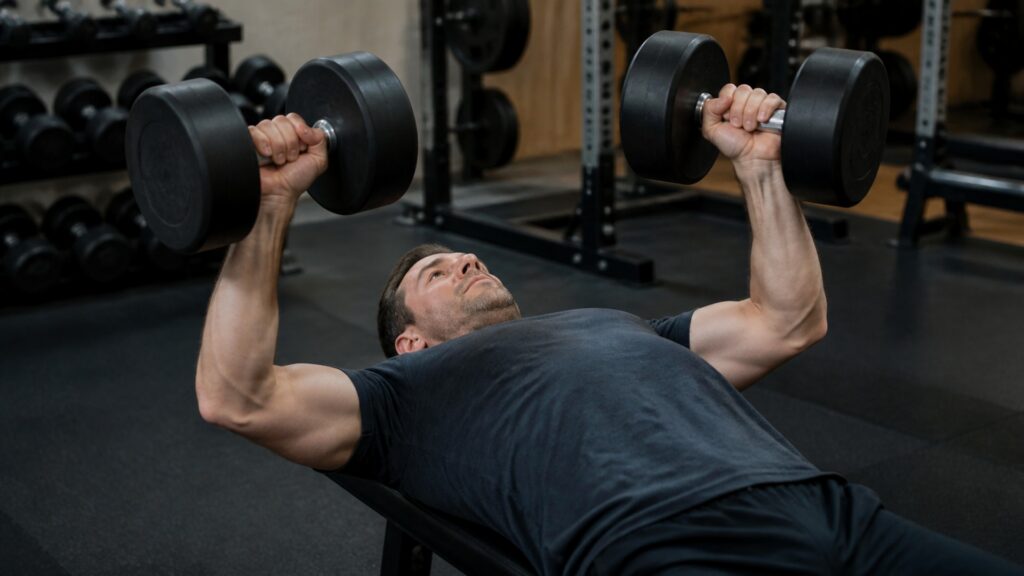
A practical look at handles, heads, grip, balance, adjustable systems, and exercise control.
Tip: A dumbbell is useful because each side has to control its own path.
These concepts explain how dumbbells create resistance.
Independent loading means each hand controls its own weight.
Range freedom is the ability to adjust hand path around the body.
Stabilization demand is the extra control needed because each weight can move separately.
Weight jump is the change between available dumbbell sizes.
Setup and exit are how the lifter gets dumbbells into and out of position.
Pair matching keeps both dumbbells the same weight and style when the exercise needs symmetry.
Tip: Dumbbells work best when load, grip, path, and setup all fit the exercise.
Unlike a barbell, dumbbells do not connect both hands to one shared implement. Each side has to stabilize and move its own load.
Independent loading is the core dumbbell feature.
Handle diameter, texture, length, and rotation affect how secure the dumbbell feels. A grip that feels fine for curls may feel different for heavy presses or carries.
Grip is part of how the dumbbell works.
Fixed dumbbells are quick to grab and durable, but they need more storage. Adjustable dumbbells save space, but changing weight can take more attention.
The design changes the session flow.
Because the hands are not joined by one bar, dumbbells can move around the torso, shoulders, and hips in different ways. That can help comfort and range.
Freedom is useful only with control.
Heavy dumbbells can be awkward to pick up, position, and put down. A safe set includes the start and finish, not only the reps.
Dumbbell work includes setup and exit.
Dumbbells are flexible, but their independence creates specific tradeoffs.
They allow independent-side control and flexible paths.
They work well in compact strength setups.
Heavy setup can be awkward.
Large weight jumps can make progression harder.
Simple equipment can still change a lift in complex ways.
They move independently and ask for different control.
They save space but can change setup speed, size, and feel.
Extra range helps only when the lifter controls it comfortably.
They still need good setup, grip, and exit control.
Tip: Dumbbells work through independent load, range freedom, and control.
Short answers about dumbbell design and use.
They place a separate handheld load in each hand.
Each side moves independently, so stabilization and path freedom change.
Yes. They save space but may change size, balance, and transition speed.
Grip affects wrist position, comfort, and control during the lift.
Use dumbbells when independent control and flexible paths support the exercise.
Dumbbells work by giving each hand a separate load to move and stabilize.
Their value comes from independent control, flexible path options, and a setup that fits the exercise.
Use these Review Streets paths to compare related categories and practical next decisions.
Review independent loading, grip, range, and setup basics.
Compare independent-hand loading with shared-bar lifting.
Explore the dumbbells category.
Choose a retailer
Prices checked regularly. We may earn a commission at no cost to you.