When to Use Full Size Pickup Trucks Instead of Compact Pickup Trucks

Use a full-size pickup instead of a compact when you repeatedly need passenger space, cargo dimensions, or loaded capability that the compact cannot provide. A larger cab may suit adult passengers, a different bed may accommodate bulky equipment, and a properly equipped full-size truck may handle a trailer beyond the compact's limits. Each advantage needs to be checked on the actual configuration.

Here, the everyday comparison is a light-duty full-size pickup with a compact pickup; moving up in size does not automatically mean choosing heavy-duty. The larger truck earns its place when it solves a recurring problem. If the compact already fits the people and loads, easier parking and access may be more valuable than capacity you rarely use.

By: Review Streets Research Lab
Updated: October 5, 2026
Explainer · 8-12 min read
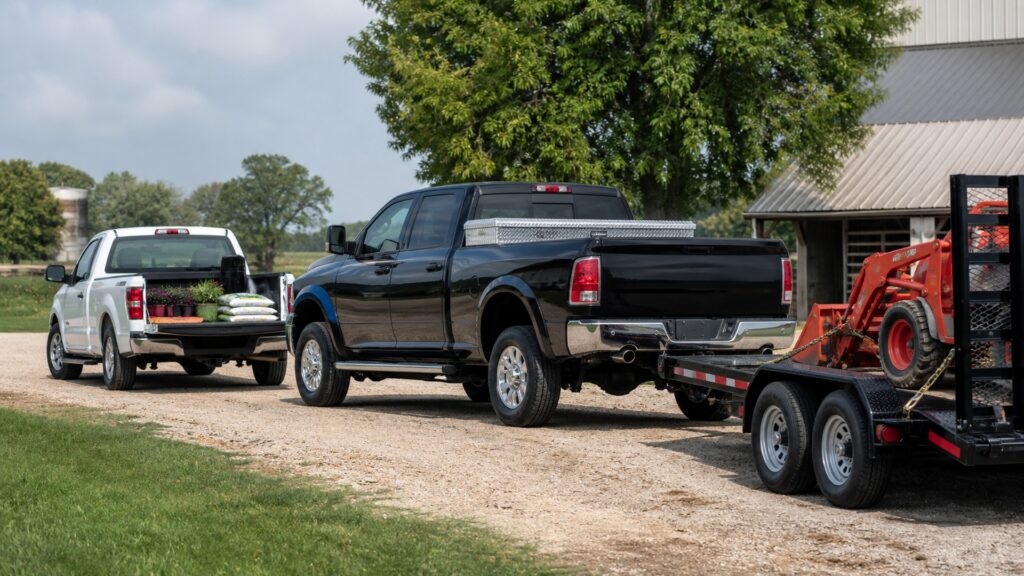
full size pickup trucks explainer hero image for Review Streets
What You'll Learn

When a Larger Pickup Solves a Real Constraint

Compare people, cargo, trailers, and the space available to drive and park.

  • Test passenger space with the people and seats you actually use
  • Measure cargo instead of comparing bed labels alone
  • Check loaded trailer and payload requirements together
  • Account for the larger truck on ordinary driving days
  • Consider delivery or rental for unusual oversized jobs

Tip: Bring measurements of your regular cargo and parking space to the vehicle comparison.

Definitions

Six Measurements for the Compact-to-Full-Size Decision

A useful size increase should address an identified need.

Usable cab space

Usable cab space is room passengers can actually occupy with seats adjusted and required equipment installed.

  • Example: rear passengers sitting behind a tall driver's normal seat position
  • Check: try the exact cab with the usual occupants
  • Limit: a larger truck badge does not guarantee every cab has more useful rear seating

Usable bed dimensions

Usable bed dimensions describe the space available for the load, including restrictions such as wheel housings.

  • Example: a tool chest that must fit between the wheel housings
  • Check: measure length, width, and required tailgate position
  • Limit: advertised bed length does not establish the fit of every object

Remaining payload

Remaining payload is the carrying allowance left after the people and equipment already on board are counted.

  • Example: allowance remaining after passengers, a cover, and camping gear
  • Check: use the specific vehicle's label and actual added weights
  • Limit: a larger model can have less remaining allowance than expected

Loaded trailer requirement

The loaded trailer requirement includes the trailer's travel weight and the load it applies to the truck.

  • Example: a boat trailer with gear and its downward hitch load
  • Check: compare truck, axle, hitch, and combination limits
  • Limit: empty trailer weight is not the complete travel load

Maneuvering space

Maneuvering space is the room needed to turn, reverse, open doors, and park.

  • Example: entering a narrow garage from an angled driveway
  • Check: measure mirrors and the approach as well as the parking bay
  • Limit: fitting between lines does not prove the vehicle can enter or exit comfortably

Frequency of need

Frequency of need is how often the larger truck's extra space or capacity will be used.

  • Example: weekly equipment hauling compared with one furniture collection
  • Check: separate normal duties from rare exceptions
  • Limit: infrequent use still requires a properly rated transport plan

Tip: Identify whether the constraint is space, weight, or access before deciding that a bigger truck fixes it.

Passengers

A Bigger Cab Helps Only When the Seating Arrangement Works

Full-size pickups offer different cab layouts, and a crew cab can be useful when adults or family equipment regularly occupy the back seat. Sit in the vehicle with the front seats in their normal positions. If child restraints are needed, check installation and seating requirements against both the restraint and vehicle manuals rather than judging the space by eye.

  • Try entry, exit, legroom, and storage with normal occupants.
  • Check the exact cab rather than another trim on the lot.
  • Leave room for items that must travel securely inside.

For a solo driver with light cargo, extra rear-seat space may add little practical value.

Cargo Space

Measure the Object That the Compact Cannot Carry

A larger bed can help with tools, recreation equipment, and project supplies, but full-size cab-and-bed combinations vary. A short-bed full-size truck is not automatically longer where your load needs the space. The bed also has to support the cargo's weight, and the load needs suitable restraint and placement.

  • Measure the narrowest usable width and closed-tailgate length.
  • Include installed storage, racks, and covers.
  • Confirm a safe loading and securement method.

An awkward bicycle arrangement and an overweight pallet are different problems; dimensions solve only the first.

Towing

A Larger Truck Must Pass the Complete Load Calculation

A properly equipped full-size pickup may be a sensible step when the compact's approved trailer capability is insufficient. Count people, cargo, added equipment, and hitch load before deciding how much capacity remains. The largest advertised tow figure may refer to a different engine, axle, cab, or package than the truck being considered.

  • Read the actual loading label and configuration-specific towing guide.
  • Use loaded trailer weight and hitch load.
  • Check every applicable vehicle, axle, tire, hitch, and combination limit.

Do not assume that moving to full-size automatically solves a payload-limited towing setup.

Daily Driving

Keep the Extra Size in the Everyday Calculation

The truck remains longer or wider when the bed is empty. Check parking at home and work, loading height, door-opening room, and visibility on familiar routes. Compare energy use and ownership costs for the particular candidates rather than assuming every truck within a class performs alike.

  • Measure the garage including mirrors and any overhead equipment.
  • Try parking and bed access during a test drive.
  • Price insurance, tires, and routine service for both candidates.

A useful cargo gain may be worth the daily compromise, but the compromise should be understood before purchase.

Decision

Buy for Repeated Needs and Plan for Exceptions

A household that regularly carries several passengers and pulls a suitable loaded trailer may benefit from full-size capacity. Someone who commutes alone and makes small supply runs may get more use from a compact. Delivery, a suitable rental, or a midsize option can address some needs without committing to the largest everyday vehicle.

  • Write down normal duties and the largest realistic trip.
  • Compare the cost of occasional transport with ongoing ownership.
  • Confirm towing permissions and compatibility before relying on a rental.

Choose the larger pickup when it removes a real, recurring constraint and remains practical where you use it.

Quick Reality Check

A Practical Choice Between Two Sizes

The best fit depends on which limitations you actually encounter.

Full-Size Is Useful When

The exact cab, bed, and ratings solve recurring passenger, cargo, or trailer requirements.

The larger vehicle fits your parking, access, and ownership budget.

Compact Remains Useful When

Regular loads and passenger needs fit its actual capabilities.

Its smaller footprint is valuable and unusual large jobs have another transport solution.

Common Myths

Misconceptions About Moving Up to Full-Size

A category change is not a substitute for checking a specific truck.

Every full-size pickup has a longer bed.

Cab and bed combinations vary. Measure the vehicles you are actually comparing.

Full-size means heavy-duty.

Light-duty full-size trucks are a distinct practical choice; heavy-duty is not required merely to gain size.

Extra towing capacity is separate from passenger weight.

People, equipment, and hitch load affect the truck's remaining allowance and the suitability of the combination.

One oversized collection justifies a bigger daily truck.

It may, but compare delivery or suitable rental transport with the costs of owning more vehicle all year.

Tip: Use an actual recurring need to explain each advantage you expect from the larger truck.

FAQ

Questions About Full-Size Versus Compact Pickups

Checks that help turn a size preference into a practical decision.

What should justify moving up first?

A recurring space or capability requirement the compact cannot meet and the selected full-size truck can.

Is passenger space always better?

No. Cab configuration matters. Test the actual seats with the people and equipment that will travel.

Can a compact still pull a trailer?

Some can within their approved limits. Loaded weight, hitch requirements, and configuration decide.

What if the full-size truck still lacks payload?

Choose another suitable configuration or transport arrangement. More engine power does not by itself fix the carrying limit.

What is the best buying preparation?

Collect cargo and parking measurements, occupant and equipment weights, and the loaded trailer requirements before comparing trucks.

Bottom Line

Use a full-size pickup when its verified space or capability solves a recurring need that a compact cannot meet.

Keep the compact in consideration when it already does the work and its easier daily access is more useful than extra size.

Next Steps

Go Deeper or Compare Your Options

Use these Review Streets paths to compare related categories and practical next decisions.

Manufacturer references: Ford towing information and model-year guides; Ford F-150 configuration and capability information. Use the manual and ratings for your own model year and configuration.