
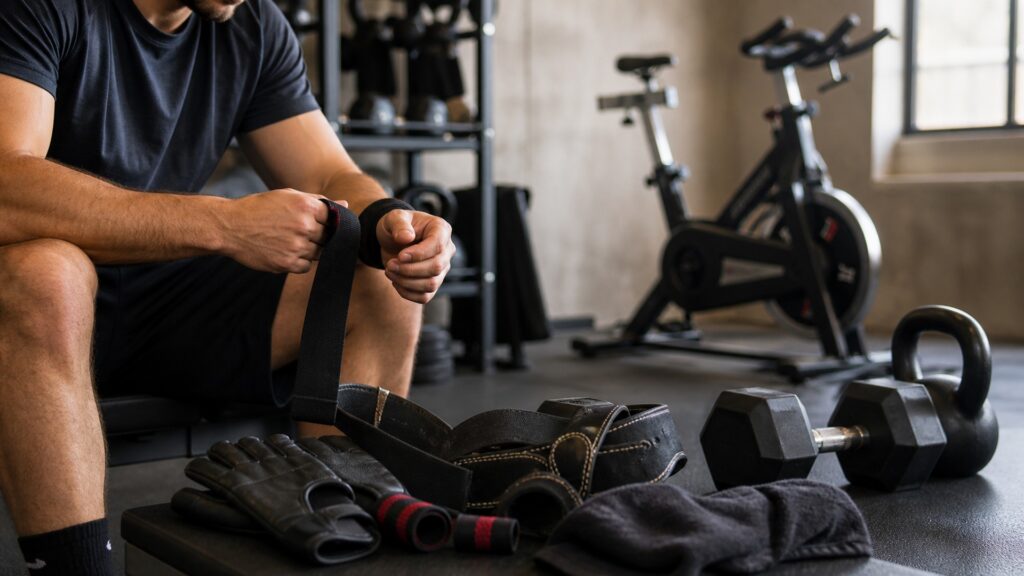
When to Use Grip Accessories Instead of Exercise Bikes

Use grip accessories instead of an exercise bike when the problem is hand connection during strength training, pulling, carrying, or bodyweight work. An exercise bike is a cardio machine. It can improve conditioning, but it will not solve slipping hands, skin irritation, weak bar hold, or wrist-support needs during lifting.

The choice is straightforward once the training gap is clear. Grip accessories make sense when the workout already exists and the hands are limiting it. An exercise bike makes sense when the missing piece is indoor cycling or low-impact cardio.

By: Review Streets Research Lab
Updated: September 23, 2026
Explainer · 8-12 min read
grip accessories explainer hero image for Review Streets
What You'll Learn

When Grip Tools Are The Better Fit

A practical decision path for choosing hand support instead of a cardio bike.

  • Why grip accessories solve hand-to-equipment problems
  • When an exercise bike is still the better purchase
  • How training goals separate the two choices
  • Where cost and space affect the decision
  • What to check before buying either option

Tip: Use grip accessories when they solve a specific training problem, not just because they are easy to add.

Definitions

Key Concepts Behind Grip Accessories Instead of Exercise Bikes

These concepts clarify the practical details that shape grip accessory value.

Grip Limiter

A grip limiter is the point where hand strength or friction stops a set before the target muscles are fully trained.

  • Example: hands opening before the back is tired during rows
  • Check: identify what ends the set first
  • Limit: grip limitation can be useful when grip is the goal

Friction Support

Friction support improves contact between the hand and the equipment.

  • Example: chalk or textured grips during pull-ups
  • Check: see whether slipping is the real problem
  • Limit: extra friction does not fix weak positioning

Load Assistance

Load assistance helps the hand stay connected to the load during selected lifts.

  • Example: straps for heavy Romanian deadlifts
  • Check: use it when the target exercise is limited by grip
  • Limit: constant use can reduce direct grip demand

Wrist Position

Wrist position is the angle and stability of the wrist while holding equipment.

  • Example: keeping the wrist stacked during pressing
  • Check: watch whether support changes technique
  • Limit: support should not be used to ignore pain

Skin Protection

Skin protection reduces rubbing, pinching, or hot spots on the hand.

  • Example: gloves during high-repetition cable work
  • Check: separate skin irritation from grip weakness
  • Limit: padding can reduce feel

Exercise Match

Exercise match is how well the accessory fits the lift, load, and training goal.

  • Example: chalk for pull-ups and straps for heavy rows
  • Check: choose the tool for the exercise
  • Limit: one grip tool rarely fits every movement

Tip: A grip tool should make the intended exercise clearer, safer, or more productive.

Training Gap

Start With The Problem You Need To Solve

Grip accessories are useful when hand connection is limiting an exercise. They are not meant to add cardio capacity or replace conditioning equipment.

  • Identify whether grip ends the set.
  • Choose the accessory for the lift.
  • Skip grip gear if cardio is the goal.

The problem points to the right tool.

Grip Need

Use Grip Tools For Lifting And Handle Control

Straps, gloves, wraps, chalk, and handles can help with pulling work, heavy carries, bodyweight holds, and high-friction sessions.

  • Use straps when grip is not the target.
  • Use gloves or pads for skin comfort.
  • Use chalk or texture when slipping is the issue.

The accessory should improve the exercise already in the plan.

Bike Need

Use A Bike For Cardio And Conditioning

An exercise bike makes sense when the user wants indoor cycling, heart-rate work, warmups, intervals, or low-impact conditioning.

  • Choose a bike for cardio sessions.
  • Compare resistance, fit, and programming.
  • Make sure space and noise work at home.

A bike creates a session that grip accessories cannot provide.

Commitment

The Purchase Size Is Not Comparable

Grip accessories are small and targeted. Exercise bikes require more money, space, and long-term commitment.

  • Buy small tools for small problems.
  • Measure bike space before purchase.
  • Compare expected weekly use.

The larger purchase should solve a larger routine gap.

Decision

Choose Based On What Stops The Workout

If hands, wrists, or skin stop strength work, grip accessories may help. If conditioning options are missing, an exercise bike may help more.

  • Name the limiting factor.
  • Match the product to that limit.
  • Use both only when both limits exist.

The best purchase solves the current bottleneck.

Quick Reality Check

Where Each Option Makes Sense

Grip accessories support exercise execution, while bikes provide cardio sessions.

Grip Accessories Make Sense When

Hands slip, fatigue, or need protection during training.

The user already has exercises that need better hand support.

Exercise Bikes Make Sense When

The user wants indoor cycling or low-impact cardio.

Conditioning is the missing part of the routine.

Common Myths

Misconceptions About Grip Accessories Versus Bikes

These products solve different training gaps.

Grip accessories are a cheaper bike alternative

They are not a cardio machine and cannot replace cycling workouts.

Exercise bikes solve all fitness needs

A bike can support conditioning but not lifting grip problems.

Small accessories do not matter

Small tools can matter when grip limits important sets.

The bigger purchase is always more useful

Usefulness depends on the problem being solved.

Tip: If the accessory hides pain, poor setup, or an unsuitable load, it is not solving the right problem.

FAQ

Frequently Asked Questions About Grip Accessories Versus Exercise Bikes

Short answers for practical buying and training decisions.

When should I choose grip accessories?

Choose them when hand connection limits strength, pulling, carrying, or bodyweight work.

When should I choose an exercise bike?

Choose a bike when the main need is cardio, conditioning, or low-impact indoor cycling.

Can grip accessories improve cardio?

Not directly. They may help certain circuits, but they do not create bike-style conditioning.

Can a bike improve grip?

Not in the same way lifting, carries, or grip tools can.

What is the practical takeaway?

Choose grip accessories for hand problems and a bike for cardio problems.

Bottom Line

Use grip accessories when the hands are limiting exercises that are already part of the routine.

Use an exercise bike when the missing piece is dedicated indoor cardio.

Next Steps

Go Deeper or Compare Your Options

Use these Review Streets paths to compare related categories and practical next decisions.