When to Use Hammer Drills Instead of Standard Drills

Hammer drills and standard drills share similar outward designs, yet their internal operating principles differ in meaningful ways. This distinction is frequently misunderstood because both tools rotate bits in a familiar manner, masking the additional mechanical action present in hammer drills. The result is confusion about when the hammering function is active, how it interacts with rotation, and why it exists at all within the drilling system.

This explainer clarifies the mechanical differences that separate hammer drills from standard drills and outlines the conditions that make those differences relevant. It walks through how hammering motion is generated, how it engages with various materials, and how this alters the drilling process. By the end, readers will understand the functional role of hammer drills and the scenarios that distinguish them from standard drilling mechanisms.

By: Review Streets Research Lab
Updated: April 20, 2026
Explainer · 8–12 min read
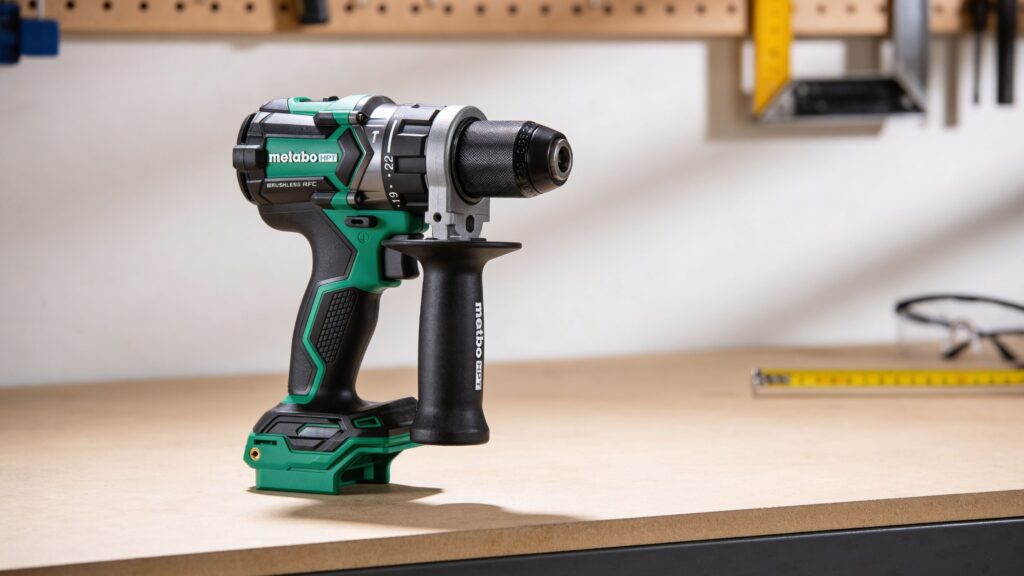
Hammer drill being used to drill into concrete masonry while a standard drill rests nearby on a workshop surface
What You’ll Learn

How Hammer Drilling Differs from Standard Drilling

A focused breakdown of the hammer mechanism and how it changes drilling dynamics across materials, so the tool’s behavior makes mechanical sense.

  • How the hammer mechanism generates rapid axial impacts during rotation
  • What changes when impact energy is added to cutting action
  • How percussion engagement differs from a drill’s normal torque-only drive
  • Why masonry materials respond differently than wood, metal, and plastic
  • How bit geometry interacts with impact to clear dust and debris
  • What vibration, sound, and feed pressure indicate about engagement quality
  • How mode selection and clutch settings change the force path

Tip: Think in force paths: standard drilling relies on torque, while hammer drilling adds axial impulse energy that alters how the bit fractures and clears material.

Definitions

Key Mechanisms That Separate Hammer Drills from Standard Drills

Understanding hammer drilling requires clarity around how impact motion is generated, transmitted, and coordinated with rotation inside the tool.

Hammer Mechanism

The internal system that creates rapid forward-and-back impacts along the bit’s axis while the drill rotates, adding a second force direction.

  • Impact generation: Uses cam plates or ratcheting discs to create pulses
  • Frequency: Delivers many small impacts rather than large strikes
  • Engagement: Activates only when resistance exceeds a threshold

Axial Motion

Linear movement aligned with the bit’s length that works alongside rotation to fracture brittle materials rather than cutting them.

  • Direction: Acts forward into the material instead of around it
  • Material response: Encourages micro-fracturing in masonry surfaces
  • Energy transfer: Converts rotation into repeated linear impulses

Percussion Drive

The combined action of rotation and impact that defines hammer drilling as a distinct operating mode within the drivetrain.

  • Force layering: Adds impact energy without replacing torque
  • Load behavior: Changes how resistance feeds back into the tool
  • Continuity: Maintains rotation even during repeated impacts

Bit–Material Interface

The contact zone where bit geometry, rotation, and impact interact directly with the drilled surface.

  • Crushing action: Impacts break material ahead of cutting edges
  • Dust clearing: Vibration helps loosen and evacuate debris
  • Stability: Resistance changes affect how impacts propagate

Mode Selector

The control that mechanically engages or disengages the hammer mechanism, altering the internal force path.

  • Mechanical linkage: Physically couples or isolates impact components
  • Force routing: Redirects energy toward rotation alone or combined motion
  • System clarity: Separates drilling behaviors without changing the motor

Vibration Feedback

The tactile and audible signals produced when impact energy travels through the tool and bit.

  • Signal quality: Indicates whether impacts are transferring effectively
  • Damping limits: Shows how much vibration the structure absorbs
  • Energy loss: Excess vibration reflects inefficient force coupling

Tip: Hammer drilling works as a layered system, where rotational torque and axial impacts follow separate paths before converging at the bit.

Power Path

How Rotation and Impacts Share the Same Drivetrain

A hammer drill does not add a separate power source—it redirects existing rotational energy into a second motion. Following the force path explains why the hammering action appears only under resistance.

  • The motor produces rotation that feeds the gearbox and output shaft
  • An internal cam or ratcheting interface converts rotation into axial pulses
  • Axial impacts travel along the spindle while rotation continues uninterrupted
  • Feed pressure increases coupling so the impact surfaces engage consistently
  • The bit receives combined torque and impulse energy at the cutting edges

Because both motions draw from the same drivetrain, changes in load alter how energy divides at the interface.

Motors

How the Motor Behaves Under Hammering Loads

The motor’s job is unchanged, but the load it “sees” is different when impacts are present. Repeated resistance spikes influence current draw, speed stability, and heat generation through the electrical system.

  • Impact engagement creates rapid torque fluctuations rather than a steady cutting load
  • The controller responds by modulating current to maintain acceptable speed
  • Higher load variability increases heat in windings, electronics, and conductors
  • Rotational inertia smooths pulses, affecting how consistent the impacts feel

In use, motor behavior is most apparent as speed drop, vibration character, and thermal buildup during sustained engagement.

Gearing

How Gearing Shapes Torque Delivery and Impact Engagement

The gearbox sets the relationship between motor speed and output torque, which in turn affects how easily the hammer interface stays engaged. Gear selection changes the balance between rotational authority and impact cadence.

  • Lower output speed typically provides higher torque at the spindle
  • Higher output speed can raise impact frequency but reduces available torque
  • Gear quality influences alignment, backlash, and how impacts propagate
  • Drivetrain stiffness affects how much energy reaches the bit versus flexing internally

Gear behavior shows up as differences in how quickly the tool transitions from slipping to consistent percussion under load.

Heat Management

Why Percussion Loads Create More Thermal Stress

Hammer drilling adds cyclic loading to the drivetrain, which increases frictional losses and electrical demand. As temperatures rise, systems reduce output to keep components within safe operating limits.

  • Repeated impact engagement increases contact friction at the hammer interface
  • Higher current draw raises heat in the motor and electronic components
  • Battery temperature rises faster when discharge rates fluctuate under heavy load
  • Lubrication film breakdown and material expansion change mechanical efficiency

Thermal effects present as a gradual shift in sound, speed stability, and impact consistency during extended use.

User Control

How Vibration, Feed Pressure, and Alignment Affect the Mechanism

Hammer drilling depends on mechanical coupling, so control inputs influence whether impacts translate into the material or dissipate through movement. Alignment and pressure determine how efficiently axial pulses reach the bit tip.

  • Consistent axial pressure keeps the hammer surfaces engaged instead of skipping
  • Off-axis loading increases chatter, reducing effective energy transfer at the bit
  • Vibration feedback reflects how much impact energy is coupling to the workpiece
  • Stable starting reduces bit skating, helping the interface settle into steady percussion

These factors shape the tool’s observable behavior because the hammer mechanism is sensitive to contact conditions at the bit.

Quick Reality Check

Where Hammer Drills Differ — and Where They Don’t

A brief, neutral contrast highlighting how hammer drills behave differently from standard drills, and where each approach reveals clear mechanical strengths and constraints.

Where Hammer Drills Fit

Hammer drills add axial impacts to rotation, allowing brittle materials to fracture progressively rather than relying solely on cutting force from the bit.

In masonry or concrete, repeated micro-impacts break surface resistance, letting the rotating bit clear debris while advancing without sustained torque alone.

Where Standard Drills Hold

Standard drills rely entirely on rotational torque, which works efficiently in wood and metal but transfers limited energy into hard, brittle materials.

Under heavy resistance, torque-only drilling converts more energy into heat and vibration, reducing progress when material fracture requires axial impulse instead.

Common Myths

Misconceptions About Hammer Drills and Standard Drills

Hammer drilling is often misunderstood as “more force,” when it is really a different motion path that changes how energy couples into material.

Hammer mode is just higher torque

Hammer mode adds axial impacts to rotation rather than increasing rotational torque. The mechanism converts part of the drivetrain’s motion into rapid linear pulses, changing how resistance is broken at the bit tip.

Any drill works the same in masonry

Masonry resists cutting and tends to fracture instead of shaving cleanly. Without axial impulses, the bit must rely on sustained torque and abrasion, which raises heat and often increases chatter as debris compacts.

Hammer drilling always makes faster holes

Impact pulses help when the material fractures under compression, but they can be irrelevant when the bit is primarily cutting. In many materials, added vibration increases losses without improving chip formation or evacuation.

More pressure creates more hammering power

Feed pressure mainly controls engagement consistency between the impact surfaces and the work. Beyond stable coupling, additional pressure often shifts energy into friction and heat rather than increasing the useful impulse delivered to the bit.

Hammer mode is harmless on any surface

Axial impacts transmit vibration through the bit and workpiece, which can damage brittle finishes or enlarge holes by micro-fracturing around the edges. The effect depends on how the material dissipates repeated compressive pulses.

Tip: Think of hammer drilling as a coupled system where rotation cuts while axial impulses fracture, and the material determines which action actually governs progress.

FAQ

Frequently Asked Questions About Hammer Drills and Standard Drills

Clear, mechanism-based answers to common questions about hammer action, material behavior, and why drilling can feel dramatically different across surfaces.

What actually makes a hammer drill different from a standard drill?

A hammer drill adds rapid axial impacts to normal rotation using an internal cam or ratcheting interface. The drill still turns the bit, but it also delivers linear pulses that help brittle materials fracture at the contact point.

Does hammer mode increase power, or just change the motion?

It changes the motion path rather than creating extra rotational torque. The motor supplies the same rotation through the drivetrain, and part of that motion is converted into repeated axial impulses when resistance keeps the hammer surfaces engaged.

Why does hammer drilling work better in concrete and masonry?

Masonry is brittle and tends to resist clean cutting, so progress depends on localized fracture and dust removal. Axial impacts concentrate force at the bit tip, breaking the surface structure while rotation clears debris and maintains alignment.

Why does drilling sometimes feel rough or vibrate excessively?

Excess vibration usually means the impacts are not coupling cleanly into the workpiece. Misalignment, inconsistent feed pressure, or a bit that is not tracking straight can cause the hammer interface to skip, turning impulse energy into chatter, noise, and heat.

When should I use low gear vs high gear?

Use low gear when resistance is high and the drivetrain needs more torque authority at the spindle. Use high gear when resistance is lower and higher rotation speed is mechanically stable. Gear choice affects how consistently the hammer interface stays engaged under load.

What changes when I switch between drill and hammer mode?

The mode selector mechanically couples or isolates the hammer interface inside the drivetrain. In drill mode, energy flows primarily into rotation; in hammer mode, rotation also drives the cam or ratchet surfaces that generate axial pulses at the spindle.

Why do some holes get wider or edges chip in hammer mode?

Axial impacts can produce micro-fractures around the hole perimeter, especially in brittle substrates or near edges. If the bit wanders or the interface chatters, the repeated pulses enlarge the contact area and break material beyond the intended cut path.

What matters more for hammer drilling: torque or impact action?

They work together but contribute differently. Torque keeps the bit rotating and clearing debris, while impact action changes how the surface fails at the tip. If torque is limited, rotation slows and dust compacts; if impacts decouple, the system reverts to torque-only abrasion.

Tip: Diagnose drilling behavior by separating two paths—rotation stability and impact coupling—then trace symptoms like chatter, heat, or slowdown to the path that is breaking down.

Bottom Line

Hammer drilling adds axial impacts to rotation, changing how force couples into materials. This layered motion explains why brittle surfaces fracture under pulses while cutting-driven materials respond primarily to steady torque and rotational stability.

Understanding these interacting paths clarifies drilling behavior, helping readers interpret vibration, heat, and progress without confusing impact effects for raw power differences.

Next Steps

Go Deeper or Compare Your Options

Now that you know when hammer drills make more sense than standard drills, these pages show where to go next for broader research and clearer decisions.

Hammer Drill Roundups

A broader look at hammer drill options organized by common needs, helping you understand how different tool features fit different materials and project types.

Hammer Drill Comparisons

A direct look at how two tools differ in size, impact action, control, and intended use, making practical distinctions easier to sort out.

Hammer Drill Buying Guides

A practical guide to the features, drilling demands, and jobsite considerations that matter most when choosing the right hammer drill.

Quick Summary

Hammer Drills vs Standard

  • Hammer drills add axial impacts alongside rotation to fracture brittle materials
  • Standard drilling relies on continuous torque and cutting rather than impact pulses
  • Impact engagement depends on resistance, feed pressure, and internal cam mechanisms
  • Heat and vibration rise when impact energy decouples from the workpiece
  • Mode selection reroutes force paths without changing the motor or power source