
When to Use Heart Health Devices Instead of Fertility & Reproductive Health Devices

Heart devices record pressure, pulse, rhythm, or limited electrical data, while fertility devices detect cycle-linked temperature or marker thresholds on a reproductive timeline.

The word instead makes this a use-case decision, not a competition over feature count. A situation favors heart health devices when the required job is to measure or record cardiovascular variables such as blood pressure. A situation favors fertility & reproductive health devices when the required job is to measure or detect cycle-related signals such as basal temperature.

By: Review Streets Research Lab
Updated: August 18, 2026
Explainer · 8-12 min read
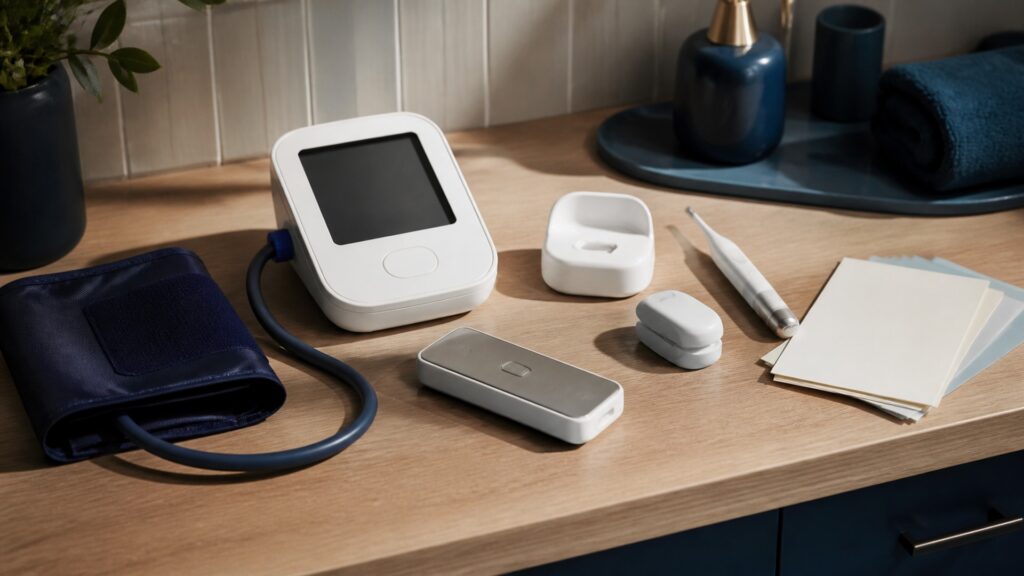
People-free editorial still life illustrating cardiovascular signal versus reproductive marker
What You'll Learn

Decide When Heart Health Devices Fits Better Than Fertility & Reproductive Health Devices

Translate the phrase instead of into a defined case, followed by a practical fit review, individual suitability, reliability, ownership burden, and the consequence of choosing incorrectly.

  • Describe the immediate scenario that calls for cuff fit
  • Identify the user conditions that change rest period
  • Decide whether lead contact is available and practical
  • Compare failure consequences involving rhythm flag
  • Recognize when cycle day points to fertility & reproductive health devices
  • Plan the switch, the backup and next review before operation

Tip: Read the concept as part of a system, then connect it back to the use case.

Definitions

Six Concepts That Shape This Decision

These definitions connect the main idea to the variables, limits, and practical signals readers need to compare options.

Cuff Fit

Relationship between cuff size and limb circumference.

  • Situational role: cuff fit helps identify a situation suited to the primary category.
  • Relevant evidence: Confirm that the task at hand requires this function.
  • Reason to switch: If the real job is cycle day, the alternative option may be the better match.

Rest Period

Quiet interval before a measurement.

  • Selection role: rest period changes whether the first option fits the user.
  • Evidence for the choice: Check the user's ability, comfort, and environment.
  • Point for reassessment: A mismatch in suitability for this user can outweigh an otherwise useful feature.

Lead Contact

Electrical connection between sensor and skin.

  • Use-setting role: lead contact belongs in the readiness check.
  • Evidence to check: Verify that the needed supplies and setup are available.
  • Reconsideration point: Unavailable requirements for a workable setup can make the first option impractical.

Rhythm Flag

Device notice of an irregular detected pattern.

  • Role in selection: rhythm flag affects the consequence of a poor match.
  • Evidence to check: Consider what happens if the expected result is absent.
  • Change-of-plan trigger: A consequential breakdown requires a stronger backup plan.

Repeat Protocol

Standard method for additional readings.

  • Role in matching the task: repeat protocol creates a reason to reconsider the selection.
  • Decision support: Compare this point directly with cycle day.
  • Reconsideration point: A situation requiring test window favors evaluating fertility & reproductive health devices.

Symptom Context

How the person feels when data are collected.

  • Practical role: symptom context belongs in the handoff or backup decision.
  • Selection evidence: Write down the condition that triggers a different response.
  • Boundary for switching: A shift in needs require a fresh decision rather than unquestioned continued use.

Tip: Keep the definitions connected; the strongest answer usually comes from the whole system, not one term.

Situation

Start with the Job, Not with Heart Health Devices

Use heart health devices when the current context calls for cuff fit, the user can manage rest period, and the setup supports lead contact. Do not choose it merely because it is available. The competing reason to consider fertility & reproductive health devices is a need focused on cycle day rather than the primary choice's direct output.

  • State the present need involving cuff fit
  • Confirm individual suitability for rest period
  • Check readiness for lead contact
  • Name the alternative job: cycle day

The sounder category choice corresponds to the current context now.

Fit Signals

Look for Conditions That Favor Heart Health Devices

The first option is easier to justify when its direct function matches the need, cuff fit is relevant, and the user can accommodate rest period. Assess those conditions with symptoms, comparison with a validated clinical method, and match device purpose; feature count cannot substitute for that fit evidence.

  • Observe cuff or sensor fit
  • Document body position
  • Keep rest period stable
  • Review the effect of rhythm flag

Several favorable fit signals are better evidence than one attractive feature.

Alternative Signals

Know When Fertility & Reproductive Health Devices Deserves Priority

Move toward fertility & reproductive health devices when the required task depends on cycle day, test window, or threshold result. That is a switch in objectives, not a claim that heart health devices is defective. In some situations the categories can coexist when both distinct functions are required; in others, only one direct job is relevant.

  • Separate cycle day from cuff fit
  • Compare the two immediate outputs
  • Check whether both jobs are present
  • Avoid paying for a function the user's circumstances does not require

Knowing what favors the other option preserves the purpose of each category.

Risk

Let Failure Consequences Set the Backup

Before selecting either option, consider lead contact, motion, and rhythm regularity. For the initial option, the plan for safe operation should inspect before operation; use the least intensive suitable setting; stop following an unexpected response; and never delay emergency care for chest pain. If the result is missing, unclear, or unsafe, stop treating ordinary operation as sufficient and use the response established for this person.

  • Fainting
  • Severe breathlessness
  • New neurologic symptoms
  • A very concerning reading

The higher the consequence of a wrong choice, the more explicit the backup and escalation steps must be.

Ownership

Test Whether the Choice Works Beyond Day One

A sound choice has to hold up through regular home use. The recurring process should confirm settings and power; perform the task performed during use in sequence; inspect the device; rest as directed; and position the cuff or sensor correctly. Then examine remain still, repeat only according to the protocol, and record symptoms and context. If the user cannot sustain that workload, theoretical fit can coexist with poor day-to-day fit.

  • Clean contact surfaces
  • Share persistent abnormalities with a clinician
  • Check condition before use
  • Prepare compatible supplies

Long-term fit depends on upkeep, available help, a shift in needs, and a realistic replacement or handoff plan.

Quick Reality Check

What a Use-Case Comparison Can Decide

The two-option assessment can identify which direct job fits a defined situation. It cannot prove that one category is universally better or that either option is suitable for every user.

Conclusions the real-world scenario Can Support

A situation governed by cuff fit can support choosing heart health devices when setup, suitability for this user, and maintenance are workable.

A need focused on cycle day can support considering fertility & reproductive health devices even when the first option has appealing features.

Questions the contrast between options Cannot Settle Alone

The category label cannot determine individual contraindications, diagnose an underlying problem, or guarantee that rhythm flag will remain reliable.

A new warning sign, recurrent problems, or material change in the user's condition requires the appropriate response rather than an automatic switch between products.

Common Myths

Misconceptions That Distort the Decision

Common shortcuts and misunderstandings can make the topic seem simpler than it is.

Heart Health Devices should be used whenever it has more features

Feature quantity does not establish task fit. The decision begins with cuff fit, then checks symptoms and the user's ability to sustain the user's workflow the product demands.

Choosing Fertility & Reproductive Health Devices means Heart Health Devices failed

The products center on different jobs. A situation involving cycle day can favor fertility & reproductive health devices without saying anything negative about heart health devices within the job it directly performs.

One successful trial settles the long-term choice

One trial may miss changes in lead contact, rhythm flag, or day-to-day workload. Review performance across the conditions expected in practice and keep a Reconsideration point.

The lower-maintenance option is automatically safer

Ownership workload matters, but safety also depends on correct use, consequence of failure, and response planning. Apply this precaution: fainting.

Tip: Treat strong claims as starting points for comparison, not final answers.

FAQ

Questions to Ask Before Choosing

Concise answers to common questions readers may have after the main explanation.

When does heart health devices fit the practical setting?

It fits when the user needs to measure or record cardiovascular variables such as blood pressure, can manage rest period, and comparison with a validated clinical method supports a reliable setup. Confirm the product's core job before comparing conveniences.

What points toward fertility & reproductive health devices instead?

Give the alternative priority when the real task is cycle day or test window. Those needs belong to a different pathway from lead contact.

Can both categories be appropriate?

Yes, if the user genuinely has both direct jobs and can sustain both sets of recurring tasks. Keep their purposes separate, document rest period, and do not let the result from one category stand in for the other's evidence.

What should trigger a new decision?

Reassess after recurring failure, a changed condition, an unsustainable routine, or a sign that calls for action. The plan should new neurologic symptoms and should specify who reassesses ongoing use.

Bottom Line

Use heart health devices for a situation built around cuff fit; consider fertility & reproductive health devices when cycle day is the actual task.

Make the final choice with person-specific fit, failure consequences, upkeep, and a written Reason to switch in view. The option remains defensible as long as those conditions remain acceptable.

Next Steps

Go Deeper or Compare Your Options

Use these Review Streets paths to connect the explainer to related categories, comparisons, and next decisions.

Quick Summary

Practical Takeaways

  • Choose heart health devices for a need focused on cuff fit.
  • Consider fertility & reproductive health devices for a situation requiring cycle day.
  • The user's practical fit and setup can outweigh feature count.
  • The impact of failure determines backup strength.
  • Needs that no longer match should reopen the decision.