When to Use Home Health Monitoring Instead of Occasional Health Checks

Occasional health checks provide snapshots at scheduled visits or selected moments. Home monitoring fills the intervals with repeated measurements, symptoms, or behavior records. The added frequency can reveal timing, variability, and response that a snapshot misses.

Frequency should be earned by the decision it improves. Home monitoring also creates measurement error, false alerts, maintenance, privacy exposure, and workload. It is most coherent when a professional plan, meaningful risk, changing condition, or intermittent event makes between-visit information actionable.

By: Review Streets Research Lab
Updated: August 13, 2026
Explainer · 8-12 min read
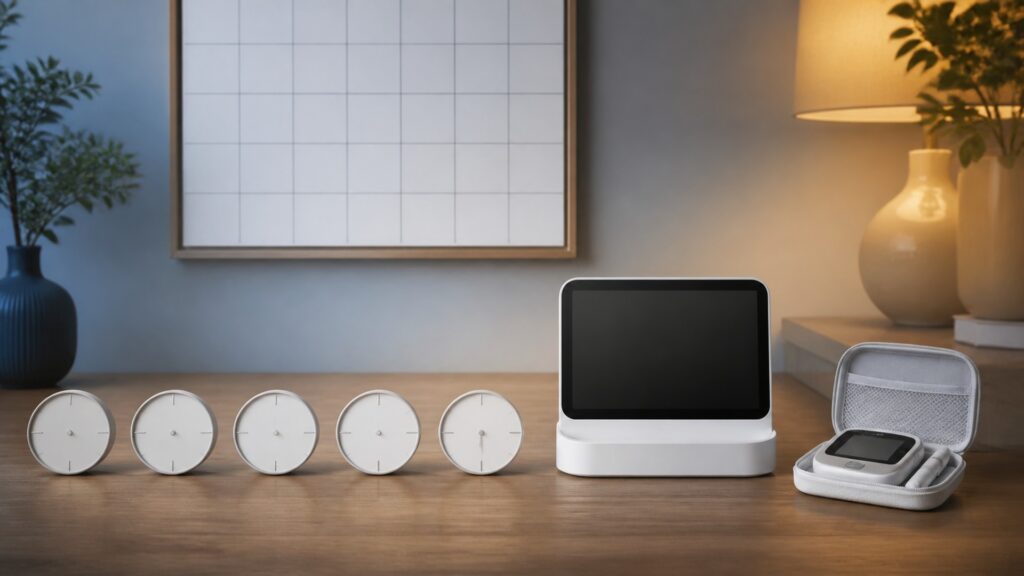
People-free home monitoring station with connected devices contrasted with a simple calendar and occasional-check kit
What You'll Learn

Choose Measurement Frequency by Decision Value

Compare continuous, scheduled home, and occasional checks through rate of change, action thresholds, reliability, burden, and follow-up.

  • When a snapshot can miss an intermittent pattern
  • How rate of change determines useful frequency
  • Why thresholds need a response owner
  • Where frequent data amplify noise
  • How home conditions affect measurement quality
  • When a simpler occasional check is sufficient

Tip: Read the concept as part of a system, then connect it back to the use case.

Definitions

Key Concepts That Define When to Use Home Health Monitoring Instead of Occasional Health Checks

These definitions connect the main idea to the variables, limits, and practical signals readers need to compare options.

Spot Check

A measurement collected at one selected moment

  • System role: Provides a snapshot rather than a full pattern
  • Decision use: Follow spot check when comparing the relevant input and output
  • Boundary: Spot Check does not represent every factor in the result

Monitoring Interval

The time between repeated observations

  • Why it matters: Sets the temporal detail of the record
  • Observation: Changes in monitoring interval should be interpreted across comparable conditions
  • Caution: Treat monitoring interval as one signal rather than a complete conclusion

Rate of Change

How quickly a variable can shift in the relevant context

  • Primary function: Determines whether infrequent checks may miss events
  • Comparison point: Check the stated range and method used for rate of change
  • Constraint: Context can change how rate of change affects the outcome

Intermittent Event

A temporary occurrence absent during many observations

  • Practical meaning: Often requires timing information to capture
  • Buyer check: Ask how the product establishes or controls intermittent event
  • Limit: A specification for intermittent event needs real-use context

Response Plan

The predefined action attached to a threshold or trend

  • Working effect: Makes added frequency useful
  • Feedback: Repeated observations make response plan more interpretable
  • Uncertainty: Technique and conditions can alter the apparent result

Monitoring Burden

Time, cost, discomfort, anxiety, maintenance, and privacy created by tracking

  • Decision relevance: Can outweigh incremental information
  • Use case: Connect monitoring burden with a defined action or comparison
  • Scope: Keep claims about monitoring burden inside the intended-use boundary

Tip: Keep the definitions connected; the strongest answer usually comes from the whole system, not one term.

Question

Ask What an Extra Measurement Would Change

Home monitoring makes sense when a new value could prompt confirmation, adjustment under guidance, communication, an appointment, or urgent action.

  • Define the decision
  • Name the responsible reviewer
  • Set a stopping point

If no action changes, extra frequency may add little value.

Dynamics

Match Frequency to How the Variable Behaves

Fast changes, intermittent events, treatment response, and strong daily patterns may require more observations than slow, stable conditions.

  • Avoid sampling faster than useful
  • Capture relevant times
  • Record symptoms and events

Measurement interval should follow the phenomenon, not device capability.

Reliability

Confirm That Home Technique Is Good Enough

Home placement, posture, timing, environment, calibration, motion, and user ability may differ from controlled checks.

  • Practice the method
  • Compare with a suitable reference when appropriate
  • Flag missing or questionable data

More readings multiply both signal and systematic error.

Workflow

Deliver Data in a Form Someone Can Use

Trends, exceptions, and contextual notes are often more useful than raw streams. Alerts need clear recipients and thresholds.

  • Summarize the relevant window
  • Avoid unfiltered exports
  • Confirm communication expectations

Monitoring is a care workflow, not merely a sensor.

Choice

Use Occasional Checks When They Answer the Question

Periodic measurements can be sufficient when conditions are stable, changes are slow, and frequent readings would not alter decisions.

  • Reduce unnecessary burden
  • Preserve routine review
  • Escalate new symptoms separately

The least intensive method that answers the question is often the better fit.

Quick Reality Check

Frequency Adds Information—and Error

Home monitoring can reveal events between checks, but it also creates more opportunities for artifact, misinterpretation, and overreaction.

When Home Monitoring Helps

Repeated measurements can document timing, variability, and response when those details influence a defined plan.

Home collection may reduce travel and show conditions in the setting where daily routines occur.

When Occasional Checks Help

A high-quality periodic check may be clearer when the variable is stable and added frequency does not change management.

Home monitoring cannot replace examination, diagnosis, or urgent evaluation when symptoms or warning signs require them.

Common Myths

Misconceptions About When to Use Home Health Monitoring Instead of Occasional Health Checks

Common shortcuts and misunderstandings can make the topic seem simpler than it is.

Continuous monitoring is automatically safer than occasional checks

More frequent data can capture events, but it can also create artifacts, false alarms, alert fatigue, anxiety, and unnecessary responses. Safety depends on reliable measurement and a clear, proportionate action pathway.

Occasional checks are useless because they miss daily variation

A well-timed spot check may answer the relevant question when change is slow, thresholds are broad, or management is stable. Frequency should match the decision rather than trying to capture every fluctuation.

Home monitoring eliminates the need to describe symptoms

Sensors measure selected variables and may miss pain, breathlessness, confusion, functional change, context, or device artifacts. Symptom and event notes can be essential to interpreting a number or deciding on escalation.

A professional can see every home-monitoring alert immediately

Remote review schedules, staffing, portal settings, device connections, and program responsibilities vary. Never assume a transmitted value receives real-time attention unless the specific care pathway explicitly establishes that coverage.

Tip: Treat strong claims as starting points for comparison, not final answers.

FAQ

Frequently Asked Questions About When to Use Home Health Monitoring Instead of Occasional Health Checks

Concise answers to common questions readers may have after the main explanation.

What conditions make home monitoring especially useful?

It can help when a variable changes between visits, events are intermittent, treatment response needs structured observation, mobility limits travel, or a qualified plan defines thresholds. Suitability remains device- and person-specific.

How often should a home measurement be taken?

Follow the device instructions and any care plan. The useful interval depends on how quickly the variable changes, timing effects, measurement burden, action thresholds, and whether additional readings improve rather than confuse interpretation.

When should frequent monitoring be reduced or stopped?

Reassess when the original question is answered, the plan stabilizes, data no longer change decisions, burden or anxiety grows, technique remains unreliable, the device is unsupported, or qualified guidance changes the approach.

Can an occasional check confirm a home trend?

A properly performed comparison can help identify systematic differences, but devices, sites, timing, conditions, and methods must be considered. One matching or conflicting pair cannot validate or invalidate an entire monitoring history.

Bottom Line

Use home monitoring when between-check timing, variability, or response changes a defined decision; use occasional checks when a reliable snapshot answers the question.

Match frequency to the variable, control technique, preserve context, define who responds, and do not confuse data volume with care quality.

Next Steps

Go Deeper or Compare Your Options

Use these Review Streets paths to connect the explainer to related categories, comparisons, and next decisions.

Quick Summary

When to Use Home Health Monitoring Instead of Occasional Health Checks Explained

  • Frequency should be earned by decision value.
  • Fast or intermittent changes favor repeated data.
  • More readings also multiply systematic error.
  • Alerts need a responsible recipient.
  • Occasional checks can be the better tool.