
Seated Rowing
Seated rowing is a sliding stroke that combines leg drive, body swing, and handle pull.
- Example: using a rail-based rower for steady cardio
- Check: practice the stroke slowly before judging effort
- Limit: technique affects comfort
Use a magnetic rower instead of a compact elliptical when the workout should be seated, stroke-based, and driven by rowing mechanics. A rower asks the user to coordinate legs, torso, and arms while pulling a handle through a controlled resistance system.
A compact elliptical makes more sense when the user wants standing low-impact stepping in a smaller footprint. The choice is less about which machine is more advanced and more about whether the user wants rowing practice or upright stride motion.
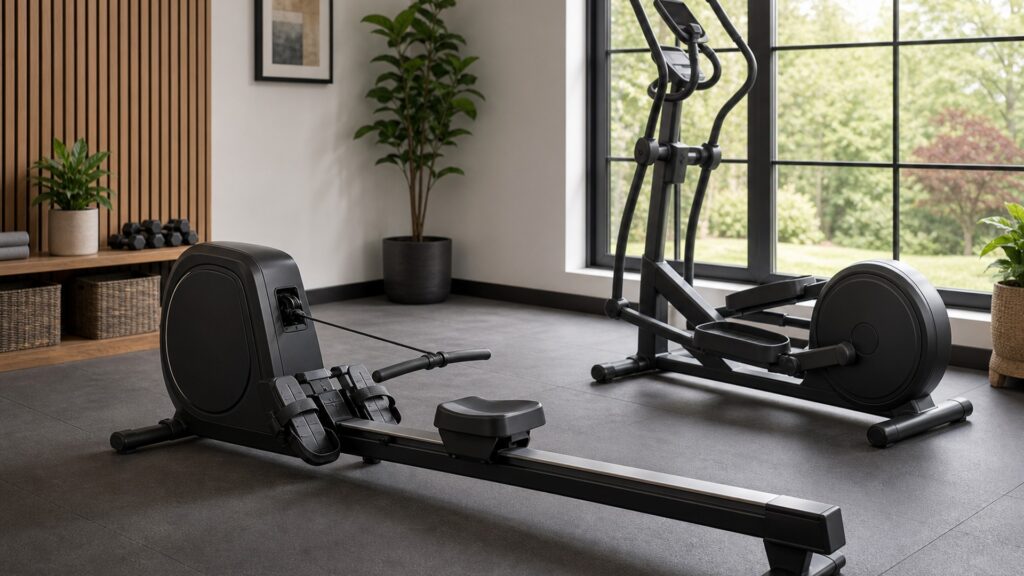
A decision path for choosing seated rowing over compact standing cardio.
Tip: Choose the motion before choosing the product. Seated rowing and compact stepping solve different workout needs.
These terms clarify when a rower is a better fit than a compact elliptical.
Seated rowing is a sliding stroke that combines leg drive, body swing, and handle pull.
A compact elliptical is a smaller standing cardio machine with guided pedal motion.
Technique demand is how much movement skill affects the workout.
Balance demand is the control needed to use the machine safely while standing or moving.
Noise fit is whether the machine's sounds work for the home environment.
Storage plan is how the machine fits when it is not being used.
Tip: The right choice should make the preferred workout easier, not just fit the smallest corner.
A magnetic rower is the better fit when the seated stroke is the point of the workout. The user gets a coordinated push-and-pull movement instead of a standing step pattern.
The rower should be chosen because rowing is the desired motion.
A compact elliptical is usually simpler for users who want standing cardio without a rowing stroke. It can be easier to step on and use casually, especially when the stride feels stable.
The elliptical is better when the user wants guided stepping instead of rowing.
Compact ellipticals may take less visible space, but they need stable floor contact and enough room to mount and stride. Rowers can be long during use but may store vertically.
Operating space matters more than product photos.
The rower depends on seat, footrests, handle, and rail feel. The compact elliptical depends on pedal spacing, frame stability, stride path, and handle support. Either machine can fail at the contact points.
Comfort during repeated use is the real comparison.
The magnetic rower makes sense when quiet seated rowing, stroke practice, and possible upright storage are useful. The compact elliptical makes sense when standing low-impact movement and simple stepping matter more.
The better choice is the machine that supports the workout the user will keep doing.
The choice depends on movement preference, room fit, and training role.
The user wants seated rowing, handle pulling, and stroke-based effort.
Quiet resistance and possible upright storage are important.
The user wants standing low-impact stepping with less rowing technique.
A smaller fixed cardio station fits the room and feels stable.
The machines are both cardio options, but they are not substitutes for the same movement.
It is more useful only when rowing motion fits the user's goal.
They can be simple, but stability, stride length, and posture still matter.
Magnetic resistance can be quiet, but seats, rails, straps, and frames still make sound.
The machine must fit during use, not just while parked.
Tip: Try the motion that the user will repeat most often, then compare features.
Short answers for deciding between rowing and compact standing cardio.
Choose it when seated rowing, stroke practice, and controlled resistance are the workout you want.
Choose it when standing low-impact stepping is more appealing than learning a rowing stroke.
It depends on the room. A rower may store upright but needs rail length during use. A compact elliptical may stay in place but needs stable stride clearance.
The magnetic rower usually has more technique demand because stroke order affects comfort and output.
Use the rower for seated rowing and the compact elliptical for standing stride cardio.
Use a magnetic rower instead of a compact elliptical when rowing motion is the reason for the workout.
Choose the compact elliptical when upright stepping, simpler use, and a smaller standing cardio station matter more.
Use these Review Streets paths to compare related categories and practical next decisions.
Understand magnetic resistance and rowing stroke basics.
Match magnetic rower features to real sessions.
Compare more home cardio options.
Choose a retailer
Prices checked regularly. We may earn a commission at no cost to you.