
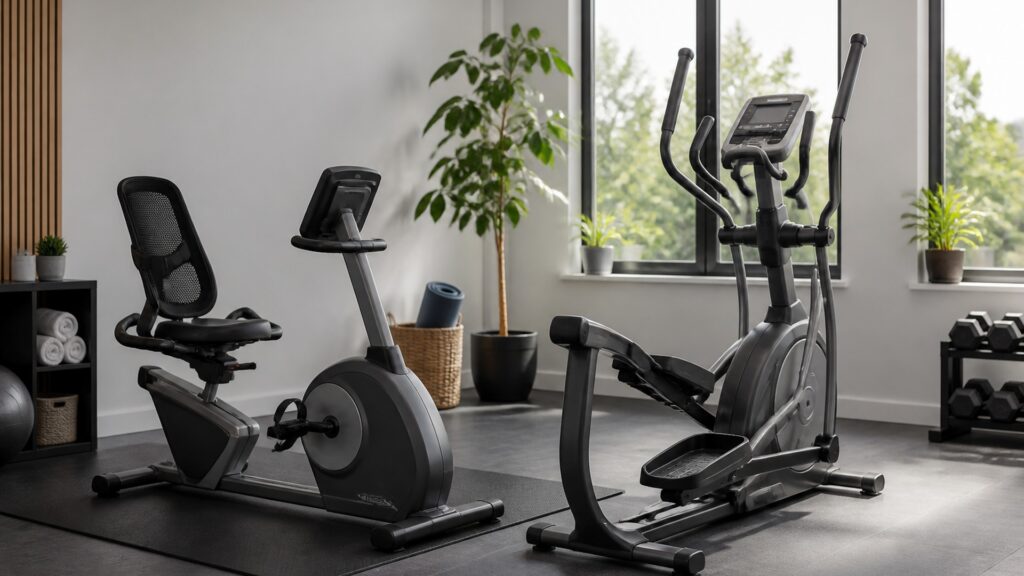
When to Use Recumbent Exercise Bikes Instead of Compact Ellipticals

Use a recumbent exercise bike instead of a compact elliptical when seated support, lower balance demand, and controlled pedaling matter more than standing stride motion. A compact elliptical can save space, but it still asks the user to stand on moving pedals.

The recumbent bike is the better fit when the user wants a supported ride with easier entry, a backrest, and predictable resistance. The compact elliptical is better when standing movement and smaller placement needs matter more.

By: Review Streets Research Lab
Updated: October 6, 2026
Explainer · 8-12 min read
recumbent exercise bikes explainer hero image for Review Streets
What You'll Learn

When Supported Pedaling Beats A Small Elliptical

A practical decision path for choosing seated cycling over compact standing stride work.

  • Why seated support changes the choice
  • How balance demand differs
  • Where compact size still helps
  • Why entry and exit matter
  • What to test before choosing

Tip: Adjust the machine first, then judge the workout at the pace and resistance the user will actually repeat.

Definitions

Key Concepts Behind Recumbent Exercise Bikes Instead Of Compact Ellipticals

These concepts connect the equipment design to comfort, setup, and workout use.

Recumbent Position

A recumbent position lets the user sit back with the legs pedaling forward.

  • Example: cycling with back support instead of leaning over handlebars
  • Check: adjust the seat before judging comfort
  • Limit: support does not guarantee the right fit

Seat Adjustment

Seat adjustment changes the distance between the user and the pedals.

  • Example: sliding the seat until the knee stays slightly bent
  • Check: test the range for the intended user
  • Limit: poor adjustment can make pedaling uncomfortable

Back Support

Back support is the seat structure that helps hold the torso during riding.

  • Example: a ventilated backrest on a home recumbent bike
  • Check: sit for several minutes, not only briefly
  • Limit: support still needs good posture

Pedaling Resistance

Pedaling resistance controls how hard the user must push the pedals.

  • Example: magnetic resistance increasing during an interval
  • Check: try several levels while seated
  • Limit: harder resistance is not always better

Console Control

Console control is how easily the user starts, adjusts, and tracks a ride.

  • Example: changing resistance without leaving the seat position
  • Check: use controls during a normal cadence
  • Limit: many programs can still be confusing

Mounting Access

Mounting access is how easily the user can sit down and stand up from the bike.

  • Example: a step-through frame with handles near the seat
  • Check: practice entry and exit safely
  • Limit: access varies widely by model

Tip: The right cardio machine is the one whose position, resistance, and controls fit the routine.

Support

Choose The Bike When The Seat Matters

A recumbent bike gives the rider a seat and backrest. That can matter more than compact size when comfort and support are the main needs.

  • Check seat distance.
  • Test backrest comfort.
  • Make sure the rider can pedal smoothly.

Support is the main reason to choose the bike.

Balance

Seated Pedaling Lowers Balance Demand

A compact elliptical still requires the user to stand and stabilize on moving pedals. The recumbent bike keeps the rider seated.

  • Practice entry and exit.
  • Use handles near the seat.
  • Compare confidence on both machines.

Lower balance demand can make workouts easier to repeat.

Motion

Pedaling And Elliptical Stride Feel Different

The bike uses circular pedaling from a supported seat. The compact elliptical uses standing stride motion in a smaller frame.

  • Try each motion for several minutes.
  • Check knee and hip comfort.
  • Notice which feels easier to maintain.

The better motion is the one the user will keep using.

Compact Case

Use Compact Ellipticals When Standing Motion Matters

A compact elliptical may be better when the user wants standing cardio and has limited space. The tradeoff is that the stride may feel shorter or less stable.

  • Measure the use zone.
  • Test stride comfort.
  • Check wobble at normal pace.

Compact design helps when space is the real constraint.

Decision

Choose By Support Need First

The decision should start with the user's body position preference. Seated support points toward the bike; standing movement points toward the elliptical.

  • Choose the bike for support.
  • Choose compact elliptical for standing stride.
  • Let comfort decide close calls.

The machine that fits the user's body is the better choice.

Quick Reality Check

Where The Bike Wins And Where Compact Wins

The choice is seated support versus smaller standing motion.

Recumbent Bikes Win When

The user wants back support and lower balance demand.

Controlled seated pedaling is easier to repeat.

Compact Ellipticals Win When

Standing stride motion is the goal.

The room cannot support larger cardio equipment.

Common Myths

Misconceptions About Recumbent Bikes And Compact Ellipticals

Small footprint and seated support solve different problems.

Compact always means easier

Standing on moving pedals can still be challenging.

Recumbent bikes are only for easy rides

Resistance can make the ride demanding.

Seated support removes fit issues

Seat distance and back support still need testing.

The smaller machine is always better for home

Support, comfort, and access may matter more than size.

Tip: Test the actual fit and motion before trusting category claims.

FAQ

Frequently Asked Questions About Recumbent Bikes Versus Compact Ellipticals

Short answers for practical cardio equipment decisions.

When should I choose the recumbent bike?

Choose it when seated support and lower balance demand matter most.

When should I choose the compact elliptical?

Choose it when standing motion and small footprint matter more.

Which is easier to get on?

Many recumbent bikes are easier, but frame design still matters.

Can both support cardio?

Yes, but they use different body positions and motions.

What is the practical takeaway?

Use the recumbent bike when supported pedaling fits the user better than compact standing stride work.

Bottom Line

Use a recumbent exercise bike instead of a compact elliptical when seated support, access, and lower balance demand matter more than standing stride motion.

Choose compact elliptical only when standing movement and space saving are the real priorities.

Next Steps

Go Deeper or Compare Your Options

Use these Review Streets paths to compare related categories and practical next decisions.