
Elastic Tension
Elastic tension is resistance created as the band stretches.
- Example: a band row getting harder near the end
- Check: notice where tension peaks
- Limit: exact resistance is harder to measure
Use resistance bands instead of barbells when the workout needs portability, elastic tension, assistance, warmup work, or resistance from a non-vertical angle. Bands solve problems a barbell cannot solve easily, especially when space, travel, or joint-friendly setup matters.
Barbells still make more sense when the goal is heavy fixed loading, standardized lifts, and precise progression. The better choice depends on whether the session needs elastic tension or a stable loadable bar.
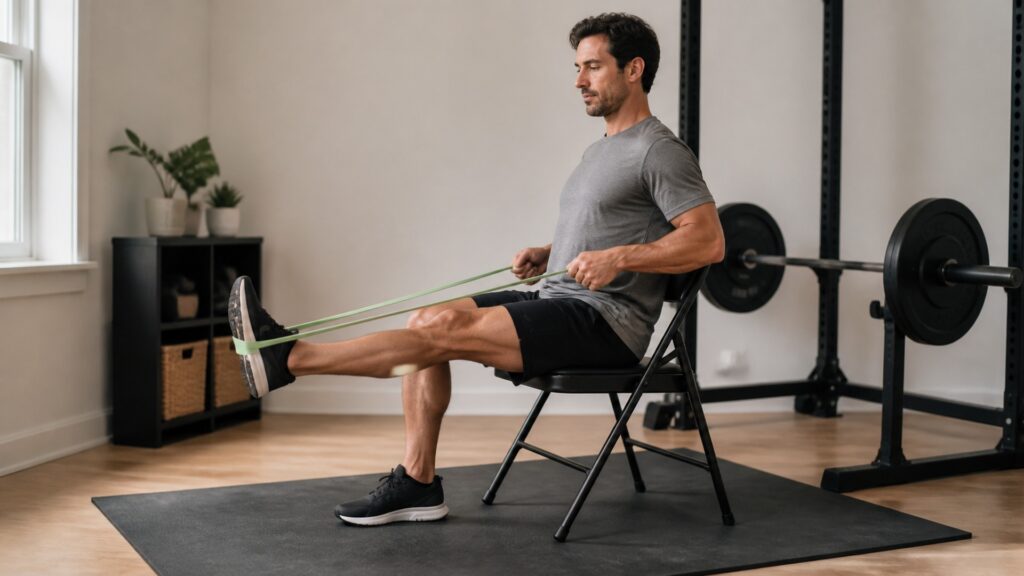
A practical decision path for choosing elastic resistance over heavy barbell loading.
Tip: Choose bands when elastic tension solves the workout problem better than fixed load.
These concepts explain why bands and barbells solve different resistance problems.
Elastic tension is resistance created as the band stretches.
Anchor point is where the band is fixed or held to create the line of pull.
Fixed loading uses a known amount of weight that does not change during the rep.
Assistance uses a band to reduce part of bodyweight or guide a movement.
Portability is how easily equipment travels and stores.
Resistance path is the direction the tool pulls against the body.
Tip: The right equipment choice depends on how resistance is created, adjusted, and repeated.
Bands are easy to pack, store, and use in small spaces. That makes them useful when a bar, plates, rack, or platform is not available.
Bands make resistance training possible with very little equipment.
Bands get harder as they stretch. That can fit warmups, accessories, lockout work, and control drills better than a fixed barbell load.
Elastic tension is the band advantage.
Barbells add load. Bands can also reduce effective load or guide movement, which helps with pull-ups, dips, mobility, and range practice.
Assistance is one job a barbell does not perform well.
Barbells are better for squats, deadlifts, presses, and other lifts where stable, measurable loading is the goal.
Heavy standardized loading remains the barbell's strength.
Bands and barbells can work together. Bands can warm up or add tension while barbells handle main loading.
The session goal should decide the tool.
The choice depends on portability, resistance path, and load needs.
The user needs portable elastic tension, assistance, or angled pull.
Warmups and accessories benefit from variable tension.
The user needs heavy fixed load and standardized progression.
The exercise is built around a bar path and rack setup.
Elastic resistance is not a weaker version of barbell loading.
Bands can support warmups, accessories, assistance, and strength work.
Barbells are better for heavy loading, not every training job.
Bands still need secure setup and inspection.
Many programs use both for different roles.
Tip: Use the tool that creates the resistance the exercise needs.
Short answers for practical equipment and training decisions.
Use bands when portability, assistance, elastic tension, or non-vertical resistance matters.
Barbells are better for heavy fixed loading and standardized strength progression.
Yes, when tension and progression are consistent.
Yes. Bands can warm up, assist, or add tension around barbell work.
Use bands for elastic resistance and barbells for heavy fixed load.
Resistance bands are better than barbells when the workout needs portable elastic tension, assistance, or a different line of pull.
Barbells remain better when heavy fixed loading and standardized progression are the priority.
Use these Review Streets paths to compare related categories and practical next decisions.
Review elastic tension and setup basics.
Explore the resistance bands category.
Compare related strength-training tools.
Choose a retailer
Prices checked regularly. We may earn a commission at no cost to you.