
Elastic Tension
Elastic tension is resistance created as the band stretches.
- Example: a band row getting harder near the end of the pull
- Check: notice where tension peaks
- Limit: exact resistance is harder to measure than a fixed weight
Use resistance bands instead of dumbbells when the workout needs portable elastic tension, a different line of pull, assistance, warmup work, or a small-space setup. Bands can create resistance without carrying a rack of weights.
Dumbbells still make more sense when the goal is precise fixed loading, easier progress tracking, or controlled strength exercises where gravity-based resistance fits the movement.
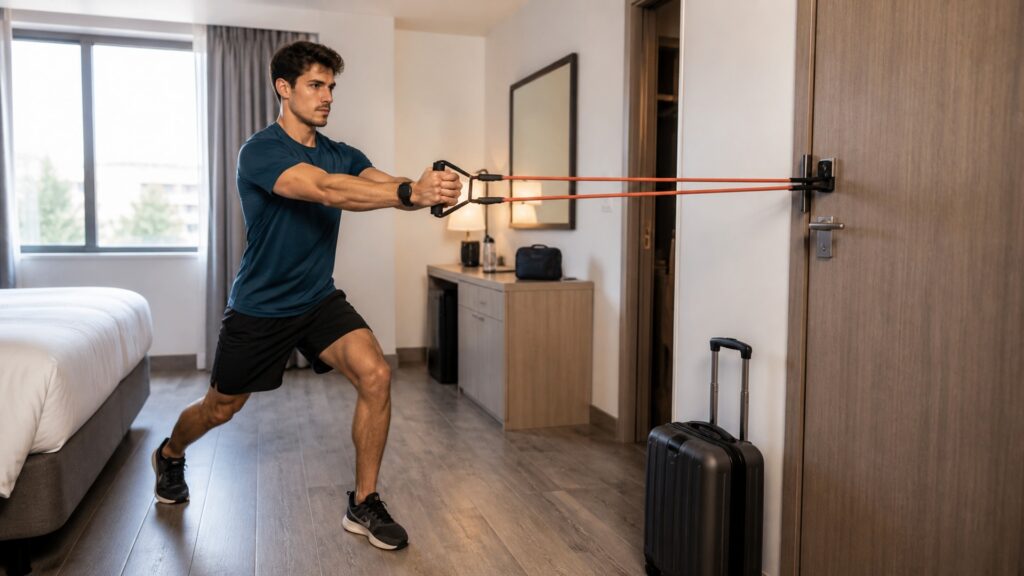
A practical guide to how resistance bands create tension, where they fit, and what to check before using them.
Tip: Choose bands when elastic tension or portability solves the problem better than fixed weight.
These concepts explain how elastic tension, setup, and resistance path affect band training.
Elastic tension is resistance created as the band stretches.
Anchor point is where the band is fixed or held to create a line of pull.
Resistance curve is how difficulty changes through the range of motion.
Assistance uses band tension to reduce or guide bodyweight during a movement.
Portability is how easily equipment travels and stores.
Band wear is damage that weakens elastic material over time.
Tip: With bands, setup is part of the resistance. Anchor point, stretch length, and band condition all matter.
Bands are easier to pack, store, and set up than dumbbells. That makes them useful for hotel rooms, small apartments, and quick sessions.
Portability is one of the clearest reasons to choose bands.
Dumbbells resist downward through gravity. Bands can pull from an anchor point, which opens different rows, presses, rotations, and assistance options.
Bands win when direction of pull matters.
Bands can assist pull-ups, dips, mobility drills, and range practice. That is a different job than dumbbell loading.
Assistance is a real band advantage.
Dumbbells are easier to measure and repeat. A 25-pound dumbbell stays 25 pounds, while band tension changes with stretch.
Fixed weight is still easier to measure.
The best choice depends on whether elastic tension helps the movement. Some routines use dumbbells for primary lifts and bands for warmups, assistance, or finishers.
The exercise should decide the tool.
The tools create resistance differently.
The user needs travel-friendly elastic tension, assistance, or an angled pull.
The exercise benefits from variable tension.
The user needs fixed load and straightforward progress tracking.
The exercise benefits from gravity-based strength work.
The lighter-looking tool is not automatically easier or weaker.
Bands can be the better tool when elastic tension fits the goal.
Dumbbells are easier to measure, but bands can still create useful strength tension.
Bands need secure anchors and inspection.
Many routines use both for different jobs.
Tip: Choose by resistance path, not by which tool looks more serious.
Short answers for practical band training and equipment decisions.
Choose bands for portability, assistance, warmups, angled tension, or small-space training.
Dumbbells are better for fixed loading and easy progress tracking.
Yes, when tension and progression are consistent.
They can be, especially when the setup is simple and controlled.
Use bands when elastic tension helps; use dumbbells when fixed weight helps.
Resistance bands are better than dumbbells when portability, assistance, or angled elastic tension matters most.
Dumbbells remain better when fixed loading and precise progression are the priority.
Use these Review Streets paths to compare related categories and practical next decisions.
Review elastic tension and band setup basics.
Explore the resistance bands category.
Compare related strength-training tools.
Choose a retailer
Prices checked regularly. We may earn a commission at no cost to you.