
When to Use Retail Displays Instead of Barcode Equipment

Use retail displays instead of barcode equipment when the primary job is to communicate with shoppers through a coordinated physical or digital presentation. Displays organize products, prices, graphics, navigation, lighting, demonstrations, and screens so people can perceive relationships and meaning in a store. Barcode equipment focuses on producing or capturing compact machine-readable identifiers.

The boundary is the work unit and completion condition. A display succeeds through accurate, visible, available, compliant presentation; barcode work succeeds when the correct identifier is read and accepted as a valid operational event. Many retail processes need both systems, but one cannot stand in for the other.

By: Review Streets Research Lab
Updated: September 1, 2026
Explainer · 8-12 min read
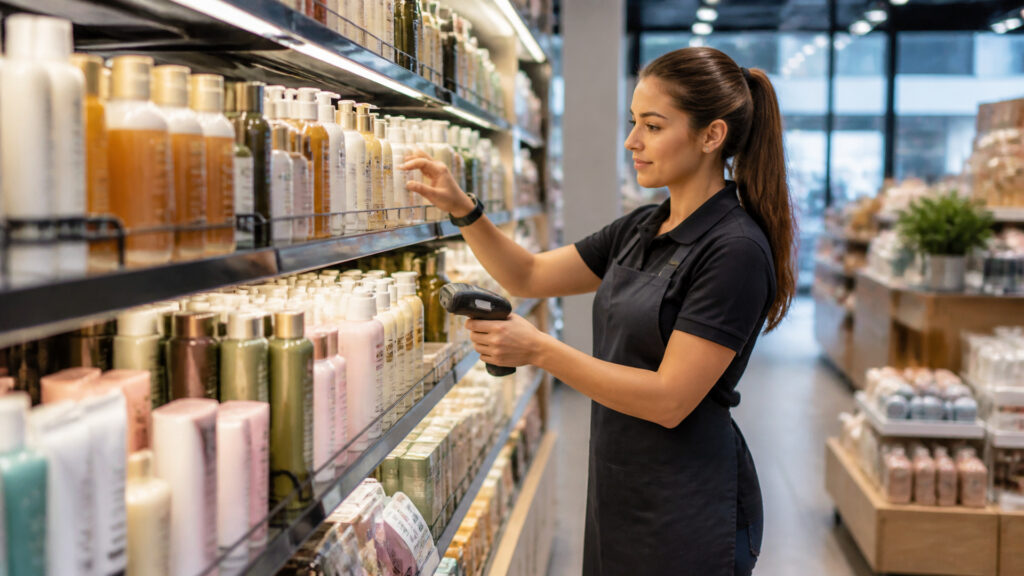
Editorial business scene illustrating retail displays and barcode equipment
What You'll Learn

Work-Unit Decision Map

Start with the human communication outcome or machine identification event, then assign distinct acceptance tests where both appear.

  • Use Displays for Human Interpretation
  • Use Them for Coordinated Presentation
  • Use Them When Environment Matters
  • Keep Identification Separate
  • Prefer Barcode Equipment for Operational Events
  • How item identifier changes the conclusion

Tip: Choose from the required work unit rather than the visible equipment.

Definitions

Decision Boundaries and Combined Use

Each definition assigns a distinct operating job within retail displays instead of barcode equipment, including the evidence that can support it and the claim it cannot make.

Retail display

A coordinated physical or digital presentation serving shoppers in a retail environment.

  • In this analysis, the term has one bounded function: it communicates context and meaning.
  • Its evidence stops at this point: it does not validate item transactions.
  • Verify item identifier through an independent artifact before applying retail display to a real store case.

Barcode equipment

Printers and scanners that create or capture machine-readable identifiers.

  • In this analysis, the term has one bounded function: it supports rapid identification.
  • Its evidence stops at this point: it does not provide a complete shopper presentation.
  • Verify barcode symbol through an independent artifact before applying barcode equipment to a real store case.

Product storytelling

The use of arrangement, copy, imagery, demonstrations, lighting, or motion to explain value and relationships.

  • In this analysis, the term has one bounded function: it supports understanding.
  • Its evidence stops at this point: it must avoid unsupported claims.
  • Verify label printer through an independent artifact before applying product storytelling to a real store case.

Item identifier

A controlled key linking a physical product, asset, container, or location to a system record.

  • In this analysis, the term has one bounded function: it supports lookup.
  • Its evidence stops at this point: it is not the record itself.
  • Verify scan capture through an independent artifact before applying item identifier to a real store case.

Navigation message

A category, location, service, queue, or directional cue helping shoppers orient themselves.

  • In this analysis, the term has one bounded function: it supports movement.
  • Its evidence stops at this point: it must match the actual environment.
  • Verify lookup response through an independent artifact before applying navigation message to a real store case.

Inventory event

A validated receive, move, count, pick, return, or sale action tied to an identifier and context.

  • In this analysis, the term has one bounded function: it changes operational state.
  • Its evidence stops at this point: it requires application acceptance.
  • Verify inventory event through an independent artifact before applying inventory event to a real store case.

Tip: Challenge every selection condition with a source, an observed condition, and a named decision recorded in the work-unit decision record.

Use

Use Displays for Human Interpretation

Choose a display when shoppers need to notice, compare, understand, navigate, or experience products and offers in a spatial context.

  • State the shopper outcome requiring shopper communication
  • Name the operational event requiring product storytelling
  • Inspect the surrounding conditions for merchandise grouping
  • Apply an independent acceptance test to price presentation
  • Document the handoff involving navigation message
  • Reject substitution when campaign environment

Preserve the reason this work unit requires shopper communication, machine identification, or both with separate controls.

Use

Use Them for Coordinated Presentation

Fixtures, product groupings, prices, graphics, lighting, demonstrations, and screens combine into a message larger than one identifier.

  • State the shopper outcome requiring product storytelling
  • Name the operational event requiring merchandise grouping
  • Inspect the surrounding conditions for price presentation
  • Apply an independent acceptance test to navigation message
  • Document the handoff involving campaign environment
  • Reject substitution when item identifier

Preserve the reason this work unit requires shopper communication, machine identification, or both with separate controls.

Use

Use Them When Environment Matters

Viewing distance, traffic, adjacency, accessibility, availability, safety, effective dates, and local layout determine whether the communication works.

  • State the shopper outcome requiring merchandise grouping
  • Name the operational event requiring price presentation
  • Inspect the surrounding conditions for navigation message
  • Apply an independent acceptance test to campaign environment
  • Document the handoff involving item identifier
  • Reject substitution when barcode symbol

Preserve the reason this work unit requires shopper communication, machine identification, or both with separate controls.

Keep

Keep Identification Separate

A barcode within a display can link to information or support checkout, but its symbol quality and transaction validation remain barcode-system responsibilities.

  • State the shopper outcome requiring price presentation
  • Name the operational event requiring navigation message
  • Inspect the surrounding conditions for campaign environment
  • Apply an independent acceptance test to item identifier
  • Document the handoff involving barcode symbol
  • Reject substitution when label printer

Preserve the reason this work unit requires shopper communication, machine identification, or both with separate controls.

Prefer

Prefer Barcode Equipment for Operational Events

Use barcode printers and scanners when the primary task is producing or capturing identifiers to drive receiving, movement, counting, picking, returns, or sales.

  • State the shopper outcome requiring navigation message
  • Name the operational event requiring campaign environment
  • Inspect the surrounding conditions for item identifier
  • Apply an independent acceptance test to barcode symbol
  • Document the handoff involving label printer
  • Reject substitution when scan capture

Preserve the reason this work unit requires shopper communication, machine identification, or both with separate controls.

Quick Reality Check

Operational Proof for Retail Displays Instead of Barcode Equipment

The decision is credible when its intended audience, work unit, environmental conditions, and completion test are explicit before displays and barcode components are combined.

Evidence for a Defensible Equipment Choice

A display acceptance test can assess message accuracy, product grouping, price visibility, navigation, stock, accessibility, and physical condition at the assigned zone.

Barcode acceptance should separately verify encoded value, symbol construction, print quality, read behavior, and the application response in its true transaction context.

Signals That Cannot Decide the Choice Alone

Embedding a barcode in a display does not make the surrounding presentation an identification system or allow a scan log to prove shopper exposure.

A visually strong campaign cannot substitute for barcode controls when receiving, counting, picking, returns, or checkout require validated item events.

Common Myths

Misconceptions About Retail Displays Instead of Barcode Equipment

These claims fail because they allow one evidence stream to substitute for the separate selection condition required by retail displays instead of barcode equipment.

Does adding a QR code make a display barcode equipment?

No. The presentation still serves shopper interpretation, while the code creates a separate optional identification handoff. Its destination, consent, accessibility, symbol quality, and application response require independent control. Keep both acceptance tests independently reviewable afterward.

Can scan counts measure display exposure?

No. Scans represent selected interactions from people able and willing to capture the code. They omit non-scanners and cannot establish visibility, comprehension, availability, or causal influence on purchasing. Keep both acceptance tests independently reviewable afterward.

Is a beautiful display enough when products need scanning?

No. Visual quality cannot establish encoded-value accuracy, print quality, read reliability, item mapping, or transaction acceptance. Barcode evidence remains necessary wherever identification drives receiving, counting, returns, or checkout. Keep both acceptance tests independently reviewable afterward.

Should stores choose only one equipment type?

Not when the process needs both communication and identification. Use displays for human interpretation and barcode tools for machine events, then specify the handoff, owner, evidence, and recovery for each.

Tip: Choose from the required work unit rather than the visible equipment.

FAQ

Frequently Asked Questions About Retail Displays Instead of Barcode Equipment

The answers below turn the work-unit decision map into practical ownership, testing, exception, and closure decisions.

Which outcome points toward a retail display?

Choose a display when shoppers must notice, compare, understand, navigate, or experience products and offers in a location whose layout, adjacency, stock, visibility, accessibility, and timing affect meaning. Keep both acceptance tests independently reviewable afterward.

Which outcome points toward barcode equipment?

Choose barcode equipment when a controlled identifier must be produced or captured so an application can validate receiving, movement, counting, picking, returns, sale, or another operational event. Keep both acceptance tests independently reviewable afterward.

How should a display barcode be tested?

Test the surrounding claim and presentation for shopper accuracy, then test encoded data, symbol construction, contrast, quiet zones, scan behavior, destination, and application response as a separate identification control. Keep both acceptance tests independently reviewable afterward.

What evidence supports a combined design?

Preserve the approved display version, installed-zone evidence, product availability, identifier specification, verifier or read-test result, application mapping, transaction response, exceptions, and the accountable owners of both work units. Keep both acceptance tests independently reviewable afterward.

When should the initial choice be revisited?

Revisit it when the audience, artifact, operational event, environment, accessibility requirement, product handling, or completion evidence changes. A new scan handoff or shopper interaction may require both systems. Keep both acceptance tests independently reviewable afterward.

Bottom Line

Use retail displays when the required outcome is shopper interpretation within a controlled store environment.

Use barcode equipment when the required outcome is reliable machine identification and a validated inventory or transaction event. Combine them only with separate quality and completion tests.

Next Steps

Continue From This Selection Condition

Open the neighboring article when the next question changes the work unit, evidence source, or control owner; use the direct category for adjacent retail displays decisions.

How Store Fixtures Work

Continue into the neighboring mechanism that changes how campaign environment and label printer should be governed.

Retail Displays

Browse the direct Retail Displays category for related systems involving shopper communication, item identifier, and lookup response.

Quick Summary

Retail Displays Instead of Barcode Equipment Explained

  • Define the selection condition before comparing equipment.
  • Keep shopper communication tied to its authoritative source.
  • Test price presentation through an observed store condition.
  • Route item identifier failures to a named recovery owner.
  • Accept lookup response only with independent closure evidence.