
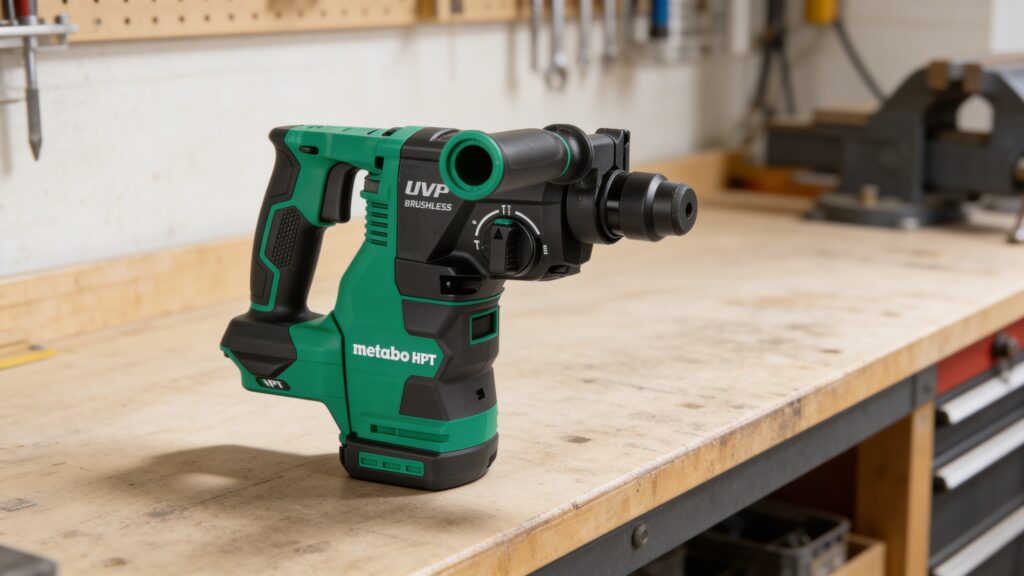
When to Use Rotary Hammer Drills Instead of Hammer Drills

Rotary hammer drills and hammer drills are often treated as closely related tools, yet they operate through different internal mechanisms and are built for different kinds of material resistance. The confusion usually comes from their similar names and overlapping use in masonry work, even though the way each tool delivers force, manages impact, and handles sustained drilling loads is not the same.

This explainer walks through the conditions that separate one drilling system from the other, with attention to material type, drilling depth, bit size, and the role of impact energy. By the end, the reader will understand how rotary hammer drills fit into heavier masonry applications and why their function differs from that of a standard hammer drill.

By: Review Streets Research Lab
Updated: April 19, 2026
Explainer · 8–12 min read
Construction worker using a rotary hammer drill on a concrete wall to demonstrate when a rotary hammer drill is more suitable than a standard hammer drill
What You’ll Learn

When Rotary Hammer Systems Matter Most

A focused explanation of how impact mechanisms, material resistance, and drilling demands determine when a rotary hammer system becomes the more appropriate tool design.

  • How rotary hammer mechanisms deliver force differently from standard hammer drill systems
  • Why dense concrete changes the importance of impact energy and motion
  • How bit diameter and hole depth affect mechanical load and efficiency
  • What sustained masonry drilling reveals about tool design and internal stress
  • Why chiseling capability points to a different underlying drive system entirely
  • How material hardness changes the balance between rotation and percussion
  • What causes standard hammer drills to struggle in heavier concrete applications

Tip: Think in terms of resistance: as material density, hole size, and drilling duration rise, the required impact system changes.

Definitions

Key Systems Behind Rotary Hammer and Hammer Drill Use

Understanding these core systems makes it easier to see why similar-looking tools behave differently once material density, hole size, and impact demands increase.

Impact Mechanism

This is the system that creates the striking action during drilling. Its design determines how force is generated, transferred, and repeated as the bit meets resistance.

  • Hammer drill: Uses mechanical contact to create rapid, lighter impacts
  • Rotary hammer: Uses a piston system to deliver heavier impact energy
  • Effect: The mechanism changes how the tool handles dense masonry

Rotational Drive

The rotational drive turns the bit while the impact system works alongside it. How rotation and percussion are balanced affects cutting action, speed, and stability in hard material.

  • Balance: Rotation clears debris while impact fractures the material
  • Load: More resistance increases demand on the drive system
  • Behavior: Different materials change how rotation contributes to progress

Material Resistance

Material resistance is the amount of opposition the bit encounters as it cuts. Concrete, masonry, and similar surfaces place very different demands on the internal system than wood or metal.

  • Density: Harder material absorbs more energy before it breaks
  • Friction: Resistance increases heat, drag, and internal stress
  • Response: Tool design determines how well force stays effective

Bit Interface

The bit interface is the connection between the tool and the cutting accessory. It affects how securely force is transferred and how well the bit tolerates repeated impact.

  • Retention: A stronger interface limits slippage during percussion
  • Transfer: Better coupling sends more energy into the bit
  • Stress: Repeated impacts place constant load on the connection

Hole Demand

Hole demand refers to the combined burden created by diameter, depth, and drilling duration. As that burden rises, the required force delivery system changes with it.

  • Diameter: Larger holes require more energy per rotation cycle
  • Depth: Deeper drilling increases drag and debris removal demands
  • Duration: Longer runs expose differences in sustained mechanical capacity

Impact Energy

Impact energy is the force delivered in each striking event. It helps explain why one system can continue breaking dense material even when another begins losing effectiveness.

  • Magnitude: Heavier blows remove material more decisively per strike
  • Frequency: Repetition matters, but strike strength also matters
  • System role: Energy delivery shapes drilling behavior under sustained resistance

Tip: The real distinction is not tool size but how rotation, impact energy, and resistance interact as one drilling system.

Power Path

How Force Is Generated and Delivered in Masonry Drilling

Masonry drilling depends on more than rotation alone. The system must generate impact, maintain rotational movement, and transfer both forms of force into the bit as resistance builds.

  • The motor creates the rotational motion that keeps the bit cutting
  • An impact mechanism adds repeated striking force during contact with dense material
  • The drive system coordinates rotation and percussion under changing load
  • The bit interface transfers that combined energy into the drilling surface
  • Material resistance determines how much of that force becomes useful progress

The effectiveness of the tool depends on how well each stage preserves force as drilling conditions become more demanding.

Motors

Motor Output Matters Less Than the Impact System It Supports

The motor provides the rotational foundation of the tool, but masonry performance is shaped by how that motion works with the impact mechanism. Rotation alone cannot explain why two tools behave differently in concrete.

  • Rotational role keeps the bit advancing and clearing broken material
  • Load response changes as the bit meets denser surfaces and deeper resistance
  • System pairing determines whether motor energy is supported by meaningful percussion

In dense material, motor behavior only makes sense when viewed as part of the larger drilling system.

Gearing

Rotational Transmission Shapes How the Tool Handles Resistance

The transmission system governs how rotational force reaches the bit under load. This affects how steadily the tool can keep cutting while the impact mechanism breaks material ahead of it.

  • Lower-speed, higher-force delivery helps sustain motion in harder masonry
  • Transmission design influences how smoothly torque reaches the bit
  • Internal force management affects stability as hole diameter and depth increase

As resistance rises, the way rotational force is managed becomes a visible part of drilling behavior.

Heat Management

Heat Builds as Resistance Turns Energy Into Internal Stress

Not all input energy becomes cutting progress. In masonry drilling, friction, repeated impact, and sustained load generate heat that changes how the system performs over time.

  • Dense material creates friction that raises temperature at the bit and drive components
  • Repeated percussion adds mechanical stress throughout the internal system
  • As heat rises, force transfer becomes less stable and less efficient

Thermal buildup reveals how hard the system is working to maintain effective drilling under continuous resistance.

User Control

Tool Behavior Reflects How Force Is Balanced During Operation

Control is not separate from mechanism; it is the visible expression of how the internal system manages motion, impact, and resistance. The way a tool tracks, vibrates, and reacts under load reflects its underlying design.

  • Stable force delivery keeps the bit aligned as the material pushes back
  • Excess vibration often signals less efficient transfer of impact energy
  • Changing resistance affects how balanced the tool feels through the drilling cycle

What the operator feels in use is often the clearest sign of how the system is handling real material demands.

Quick Reality Check

Where Hammer Drills Hold Up — and Where Rotary Hammers Matter

A quick balance of how each system behaves once material density, hole size, impact load, and drilling duration begin to change.

Where Hammer Drills Fit

Hammer drills handle lighter masonry work well when the drilling load stays moderate and the mechanical hammering system does not have to overcome sustained resistance.

In smaller holes and less demanding concrete, their combined rotation and lighter impacts can remain effective without requiring a heavier force-delivery mechanism.

Where Rotary Hammers Matter

Rotary hammers become more relevant when drilling loads increase and the material absorbs enough energy to overwhelm lighter impact systems over time.

The pneumatic mechanism delivers stronger blows per cycle, which helps maintain progress in dense concrete, deeper holes, and longer drilling runs.

Common Myths

Misconceptions About Rotary Hammers and Hammer Drills

These tools are often treated as interchangeable, even though their impact systems, force delivery, and material response differ in important ways.

They differ only in size and weight

The main difference is mechanical, not cosmetic. A hammer drill uses a lighter mechanical hammering action, while a rotary hammer uses a piston-driven system that delivers heavier impact energy into dense material.

Any masonry bit load feels the same

Load changes significantly with hole diameter, depth, and concrete density. As resistance rises, lighter impact systems lose efficiency sooner because less of each strike is turned into meaningful material breakage.

More speed always means faster drilling

In masonry, drilling progress depends on how well impact and rotation work together, not on rotation alone. Higher speed without enough strike energy can increase friction without removing material efficiently.

Hammer drills handle dense concrete indefinitely

They can handle some concrete work, but sustained drilling in dense material increases stress, heat, and energy loss. That is where a heavier impact mechanism begins to matter more than simple rotational force.

Rotary hammers are just stronger drills

A rotary hammer is not simply a more forceful version of the same system. It uses a different method of creating and transferring impact, which changes how the tool behaves under sustained masonry resistance.

Tip: The clearest way to think about it is to match the drilling system to the resistance pattern, not just the task label.

FAQ

Frequently Asked Questions About Rotary Hammers and Hammer Drills

Clear answers to common follow-up questions about impact systems, drilling resistance, and why these tools separate as masonry demands increase.

What really separates a rotary hammer from a hammer drill?

The key difference is the impact mechanism. A hammer drill creates lighter percussion through mechanical contact, while a rotary hammer uses a piston-driven system that delivers heavier blows with each strike.

Does a hammer drill work in concrete at all?

Yes, but its effectiveness depends on how much resistance the concrete creates. In lighter drilling, rotation plus lighter impacts can remain effective, but dense material exposes the limits of that mechanism more quickly.

Why does hole size change which system makes sense?

Larger holes increase the amount of material that must be fractured and cleared during each rotation cycle. That raises load on the impact system, which is why stronger per-strike energy becomes more important.

Why does drilling depth matter in masonry work?

As depth increases, the bit faces more friction, more debris removal, and more sustained resistance. The system must keep delivering useful impact energy longer, not just begin the hole effectively.

Is higher drill speed the main factor in faster progress?

Not by itself. In masonry, drilling progress depends on the relationship between rotation, impact strength, and material breakage; more speed without enough effective percussion can simply increase drag and heat.

Why do rotary hammers handle dense concrete differently?

The pneumatic system delivers heavier impact energy per cycle, which helps break dense material more decisively. That changes how efficiently the bit advances once lighter hammering systems begin losing effectiveness.

Does material type matter as much as tool type?

Yes, because the material determines how much resistance the system must overcome. Brick, block, and dense concrete do not absorb force the same way, so the same tool can behave very differently across surfaces.

Why do these tools feel different during extended drilling?

Extended drilling reveals how the system handles sustained load, vibration, and energy transfer over time. What feels manageable at the start can change once resistance, heat, and repeated impact accumulate through the drilling cycle.

Tip: To diagnose which system fits the job, track the resistance pattern: material density, hole size, depth, and how long effective impact must be sustained.

Bottom Line

The real difference is how each tool creates and sustains impact energy. As material resistance, hole size, and drilling duration increase, lighter hammering systems lose effectiveness sooner than piston-driven impact systems.

Once that mechanism is clear, it becomes easier to interpret drilling behavior as a function of force delivery, not just tool category.

Next Steps

Continue Into Related Rotary Hammer Guides

These related pages extend the distinction into broader drill categories, structural differences, and the criteria that shape clearer tool-level decisions.

Rotary Hammer Lists

Collection pages that organize rotary hammer coverage by workload, drilling context, and the broader categories used to sort the field.

Rotary Hammer Comparisons

Comparison pages that examine how rotary hammer designs differ in impact systems, handling characteristics, and the kinds of drilling demands they address.

Rotary Hammer Buying Guides

Guide pages that explain which mechanical features, use patterns, and material demands matter when narrowing options within this tool category.

Quick Summary

When Rotary Hammers Matter

  • Hammer drills use lighter mechanical impacts paired with standard rotational drilling
  • Rotary hammers use piston-driven systems that deliver heavier impact energy
  • Dense concrete increases resistance, reducing the effectiveness of lighter hammering systems
  • Hole diameter and depth raise load across the drilling mechanism
  • Tool choice reflects impact system design, not just size or speed