
Ground Contact
Ground contact is how the shoe meets the surface with each stride.
- Example: outsole grip on wet pavement
- Check: match traction to surface
- Limit: traction cannot fix every footing risk
Use running shoes instead of general running accessories when the run's main need is better ground contact, fit, cushioning, traction, or stride support. Shoes should take priority when the problem starts underfoot.
General running accessories are useful for storage, visibility, hydration support, weather, phone access, or comfort extras. They should not distract from the foundation: a shoe that fits the runner, route, and workout.
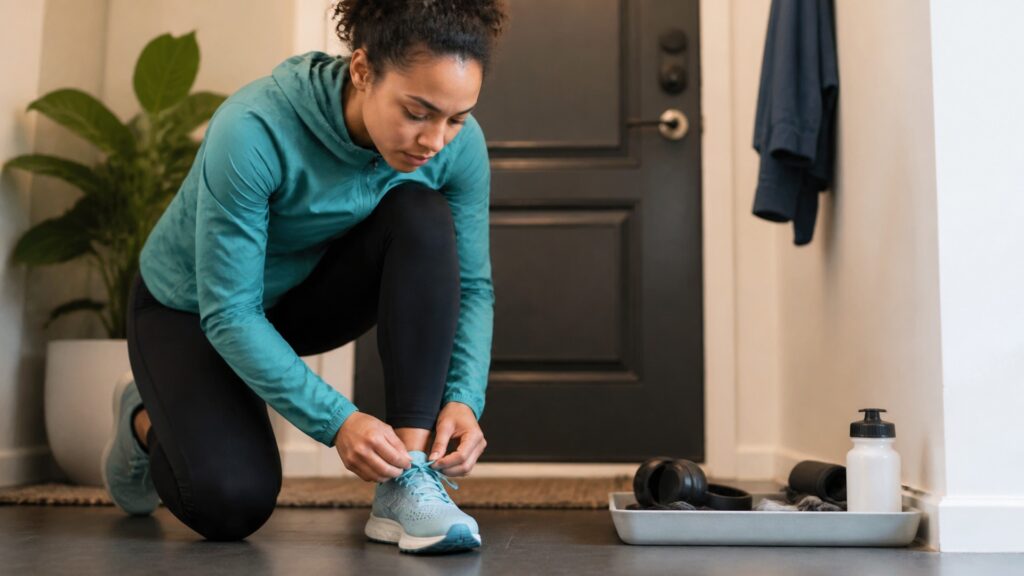
A decision path for prioritizing running shoes over add-on accessories.
Tip: Fix the underfoot problem before adding gear around it.
These concepts separate footwear needs from general accessory needs.
Ground contact is how the shoe meets the surface with each stride.
Cushioning response is how the midsole absorbs and returns force during running.
Fit security is how well the shoe holds the foot without slipping, squeezing, or rubbing.
Ride geometry is how the shoe shape guides transition from landing to toe-off.
Surface match is how well the shoe fits road, trail, track, treadmill, or mixed terrain.
Training role is the type of run the shoe is best suited to support.
Tip: Accessories can help, but shoes carry the repeated impact of the run.
If the runner lacks grip, cushioning, fit, or control, accessories will not solve the core issue. Shoes are the foundation because every stride uses them.
Footwear comes first when the problem is underfoot.
A phone belt or reflective band cannot fix blisters, slipping, unstable landings, or poor traction. Those problems need a shoe decision.
The rest of the setup works better when the shoes are right.
Accessories still matter when the runner needs visibility, storage, hydration, sun protection, warmth, or phone access. They support the run around the shoe.
Accessories are useful when they solve a problem shoes do not solve.
It is easy to buy accessories because they are simpler than choosing shoes. But if foot comfort or route grip is weak, accessories are not the priority.
The best upgrade is the one that removes the main friction.
A long, dark, hot, or remote run may need good shoes plus accessories. The choice is about priority, not permanent exclusion.
A complete setup answers both underfoot and around-the-run needs.
The decision depends on whether the main need is underfoot or around the run.
Fit, traction, cushioning, support, or surface match is the limiting factor.
The runner needs better comfort and control with every stride.
The main need is visibility, storage, hydration support, weather, or phone access.
The shoes already work for the route and workout.
Accessories cannot replace the foundation of the run.
They may be easier to buy, but they do not fix shoe fit or traction.
Shoes solve underfoot needs, while accessories solve storage, visibility, hydration, and weather needs.
The most important gear is the one solving the main problem.
Running setups often need shoes plus selected accessories for specific conditions.
Tip: Prioritize the gear that solves the biggest limit.
Short answers for deciding what to upgrade first.
Buy shoes first when fit, traction, cushioning, or route control is the issue.
Accessories are better when shoes already work and the need is visibility, storage, hydration, weather, or phone access.
Yes, especially visibility and emergency-access accessories, but they do not replace shoe fit or grip.
Yes. Belts, vests, and carried items can change how the full setup feels.
Use shoes to solve underfoot problems and accessories to solve support problems around the run.
Use running shoes instead of accessories when fit, traction, cushioning, or ground contact is the main issue.
Accessories are valuable once the footwear foundation already supports the route and workout.
Use these Review Streets paths to compare related categories and practical next decisions.
Compare shoes with fluid-carrying gear.
Decide when footwear is the priority.
Explore related running gear categories.
Choose a retailer
Prices checked regularly. We may earn a commission at no cost to you.