
Ground Contact
Ground contact is how the shoe meets the surface with each stride.
- Example: outsole grip on wet pavement
- Check: match traction to surface
- Limit: traction cannot fix every footing risk
Use running shoes instead of running hydration gear when the main problem is foot comfort, traction, cushioning, surface grip, or stride support. Shoes are the priority when the run depends on safe, comfortable ground contact more than carried fluid.
Hydration gear becomes the priority when heat, distance, duration, or limited refill access makes drinking during the run the limiting factor. Many longer or hotter runs need both, but shoes solve the foot-to-ground problem first.
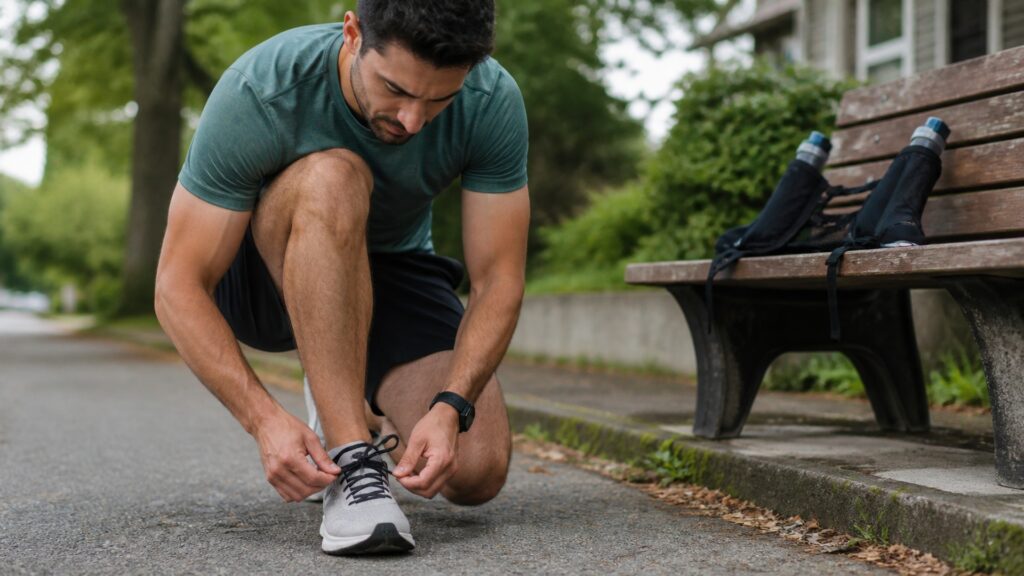
A decision path for choosing running shoes as the higher-priority gear.
Tip: Choose shoes for ground contact. Choose hydration gear for fluid access.
These concepts separate footwear needs from fluid-carrying needs.
Ground contact is how the shoe meets the surface with each stride.
Cushioning response is how the midsole absorbs and returns force during running.
Fit security is how well the shoe holds the foot without slipping, squeezing, or rubbing.
Ride geometry is how the shoe shape guides transition from landing to toe-off.
Surface match is how well the shoe fits road, trail, track, treadmill, or mixed terrain.
Training role is the type of run the shoe is best suited to support.
Tip: Shoes are the priority when the run's main risk is underfoot.
If the runner is dealing with rubbing, slipping, pressure, or unstable footing, hydration gear will not solve the main issue. Footwear comes first.
A good run starts with shoes that fit the foot.
Wet pavement, loose dirt, trails, treadmills, and road surfaces all change the shoe decision. Hydration gear does not replace traction.
Surface demands belong to footwear.
Heat, long duration, remote routes, and limited refill points can make hydration gear essential. In those cases, shoes and hydration gear solve different problems.
Fluid access matters when the body needs it during the session.
Most runners need appropriate shoes before they need a bottle, belt, or vest. Hydration gear builds on top of a run that the feet can already handle.
Footwear is the foundation of the running setup.
Long, hot, or remote runs may need both reliable shoes and hydration gear. The choice is about priority, not permanent exclusion.
The complete setup should solve both ground and fluid needs.
The choice depends on whether ground contact or fluid access is the main issue.
Fit, traction, cushioning, support, or surface match is the limiting factor.
The runner needs better comfort and control with every stride.
Heat, distance, duration, or refill gaps make drinking during the run important.
The runner needs bottles, flasks, reservoirs, belts, or a vest.
The two categories solve different problems.
Fluid access cannot fix rubbing, slipping, traction, or cushioning issues.
Shoes help movement, but heat and distance can still require fluid planning.
Priority should come from the run's limiting factor, not price.
Many runs need shoes first and hydration gear as conditions demand.
Tip: Use the category that solves the most immediate problem.
Short answers for prioritizing gear.
Shoes should come first when fit, traction, cushioning, or surface support is the main concern.
Hydration gear should come first when drinking during the run is the main unresolved need.
Often, yes. Long or hot runs may need reliable shoes and fluid access.
Indirectly, because extra carried weight may make stability and comfort more important.
Prioritize shoes for ground contact and hydration gear for fluid access.
Use running shoes instead of hydration gear when the run's main issue is fit, traction, cushioning, or surface control.
Use hydration gear when fluid access becomes the limiting factor.
Use these Review Streets paths to compare related categories and practical next decisions.
Compare shoes with fluid-carrying gear.
Decide when footwear is the priority.
Explore related running gear categories.
Choose a retailer
Prices checked regularly. We may earn a commission at no cost to you.