
Mixing Insert
A mixing insert helps break up powder as liquid moves through the bottle.
- Example: a wire ball or grid inside the shaker
- Check: see whether clumps remain after shaking
- Limit: some thick formulas still stay gritty
Use shaker bottles instead of exercise bikes only when the real need is mixing or carrying workout drinks, not creating a cardio session. A shaker bottle helps with protein, electrolyte, pre-workout, or meal-replacement mixes. An exercise bike provides indoor cycling training.
These items are not direct substitutes. The shaker bottle supports preparation and recovery around training, while the exercise bike supplies the workout itself.
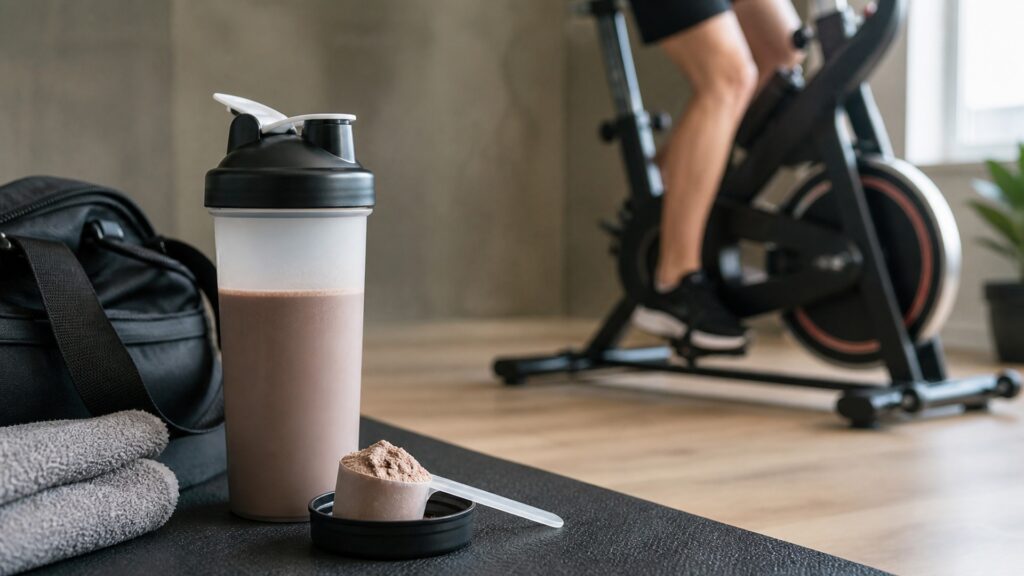
A practical decision path for mixing support versus indoor cycling equipment.
Tip: Judge the gear by the problem it solves during the workout, not by the size of the feature list.
These concepts keep the decision tied to real training conditions, comfort, and setup.
A mixing insert helps break up powder as liquid moves through the bottle.
A leak seal keeps liquid inside the lid, cap, and threads during shaking or carry.
Bottle shape affects mixing movement, grip, cupholder fit, and cleaning.
Measurement marks help repeat liquid amounts for powders or electrolytes.
Cleaning access is how easily the bottle, lid, seal, and insert can be washed and dried.
Use Case Fit is the part of shaker bottle use that matters most for this decision.
Tip: The right hydration setup is the one that stays comfortable, accessible, and clean enough to use repeatedly.
A shaker bottle is useful when the user needs a cleaner, faster way to mix powder with liquid and carry it without leaks.
The bottle solves drink preparation.
An exercise bike is relevant when the user needs indoor cardio, adjustable resistance, and a repeatable cycling station.
The bike solves training access.
A shaker bottle can fit around many workouts because it helps with drinks before, during, or after training. It does not replace the exercise platform.
Support gear belongs around the workout.
Exercise bikes cost more, take up space, and require repeated use to justify the purchase. That commitment makes sense only when indoor cycling is the intended habit.
The bike has to earn its space.
If drink prep is messy, start with the bottle. If cardio access is missing, consider the bike. If both are real needs, they can support different parts of the routine.
The right choice follows the missing piece.
The bottle supports drinks; the bike supplies indoor cardio.
Powder drinks need better mixing, carry, or cleanup.
The user needs a low-cost support item.
Indoor cycling training is the goal.
A stationary cardio machine fits the routine.
The phrase sounds like a swap, but the products solve different problems.
It supports drink routines but does not provide exercise.
Some users still need drinks around workouts.
A bottle is enough only when the problem is drink prep.
Not if the user already has workouts and only needs mixing support.
Tip: A hydration pack is useful only when it makes drinking easier without creating new friction.
Short answers for practical training and gear decisions.
Choose it when powder mixing, leak-free carry, or cleanup is the immediate problem.
Choose it when indoor cardio training is the missing piece.
Yes. The bottle can support drink routines around cycling or other workouts.
No. A bike provides exercise, while a shaker bottle prepares drinks.
Use shaker bottles for drink prep and exercise bikes for indoor cardio.
Use shaker bottles instead of exercise bikes only when the missing need is drink mixing or carry, not cardio equipment.
Choose the bike for indoor cycling. Choose the bottle for protein, electrolyte, or pre-workout drink support.
Use these Review Streets paths to compare related categories and practical next decisions.
Explore the shaker bottle category.
Explore indoor cycling equipment.
Review the shaker bottle system.
Choose a retailer
Prices checked regularly. We may earn a commission at no cost to you.