
Sprint Output
Sprint output is how fast an athlete moves over a set distance or phase.
- Example: a timed 20-yard sprint
- Check: measure with consistent setup
- Limit: speed alone does not cover all sport movement
Use speed training equipment instead of agility training equipment when the workout needs acceleration work, sprint mechanics, resisted sprinting, timing feedback, top-speed rhythm, or repeatable straight-line efforts. Agility equipment is better when the workout needs footwork paths, direction changes, reaction choices, and spatial cues.
The difference matters because a fast sprint drill and a good agility drill do not train the same thing. Speed equipment should be the first choice when the primary goal is faster output over a defined path.
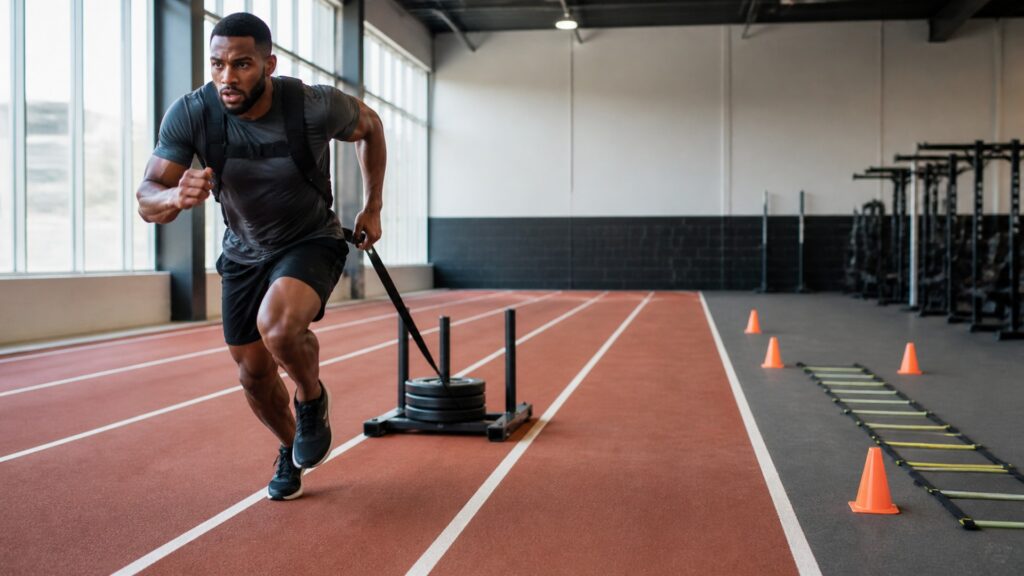
A practical decision path for choosing sprint-focused tools over direction-change tools.
Tip: Choose speed tools when the drill needs measured fast output.
These concepts clarify the practical signals readers should check before choosing equipment or planning workouts.
Sprint output is how fast an athlete moves over a set distance or phase.
An agility cue tells the athlete where, when, or how to change movement.
Resisted sprinting adds load to acceleration or sprint work.
Direction change is braking, turning, and reaccelerating into a new path.
Timing feedback compares efforts over the same distance or setup.
Training priority is the main quality the session is trying to improve.
Tip: The best equipment choice is the one that matches the training job, available space, and user's current ability.
Speed equipment belongs when the session is about acceleration, sprint mechanics, resisted starts, or timing a repeatable distance. These tools make straight-line speed easier to organize and measure.
Speed tools are strongest when faster output is the goal.
Agility equipment is better when the athlete must brake, turn, react, or move through changing spaces. Cones, ladders, hurdles, and markers organize movement decisions more than pure sprint output.
Agility tools are strongest when movement choice is the goal.
If the drill needs added load while sprinting, speed equipment usually fits better than agility gear. The load should be light enough to preserve the sprint pattern.
Resistance should support the speed quality being trained.
A complete athletic program may train speed and agility separately. Speed gear can develop acceleration and timing, while agility gear develops braking, transitions, and reaction.
The categories work together when each has its own job.
If the athlete lacks measurable sprint speed, start with speed equipment. If the athlete struggles with direction change or movement decisions, agility gear may matter more.
The first limitation should guide the first purchase.
The choice depends on whether the session needs faster output or better movement decisions.
The goal is acceleration, sprint timing, resisted starts, or stride rhythm.
The drill follows a defined path and needs repeatable measurement.
The goal is direction change, reaction, foot placement, or braking.
The drill needs spatial cues more than measured sprint output.
Fast-looking drills can train different qualities.
They may help rhythm and foot placement, but they do not replace sprint-specific work.
Speed tools can help acceleration, but agility still needs braking and path changes.
Load can slow decisions and change the drill if it does not match the goal.
Start with the tool that addresses the clearest limitation.
Tip: Treat strong claims as reasons to inspect the workout fit more closely.
Short answers for practical training and buying decisions.
Choose it when the main goal is acceleration, sprint mechanics, timing, or resisted sprinting.
Choose it when the main goal is direction change, footwork, reaction, or spatial organization.
Yes, but speed and agility drills should keep distinct goals and rest needs.
Both can need space, but sprinting also needs runout for safe slowing.
Use speed equipment for fast output over a defined path and agility gear for changing paths and decisions.
Use speed training equipment when the workout needs sprint output, timing, or resisted acceleration.
Use agility training equipment when the workout needs direction changes, reaction, and spatial cues.
Use these Review Streets paths to compare related categories and practical next decisions.
Review sprint-focused tools and setup.
Compare the categories in more detail.
Explore agility tools for direction-change work.
Choose a retailer
Prices checked regularly. We may earn a commission at no cost to you.