When to Use Water Resistance Rowers Instead of Front Drive Ellipticals

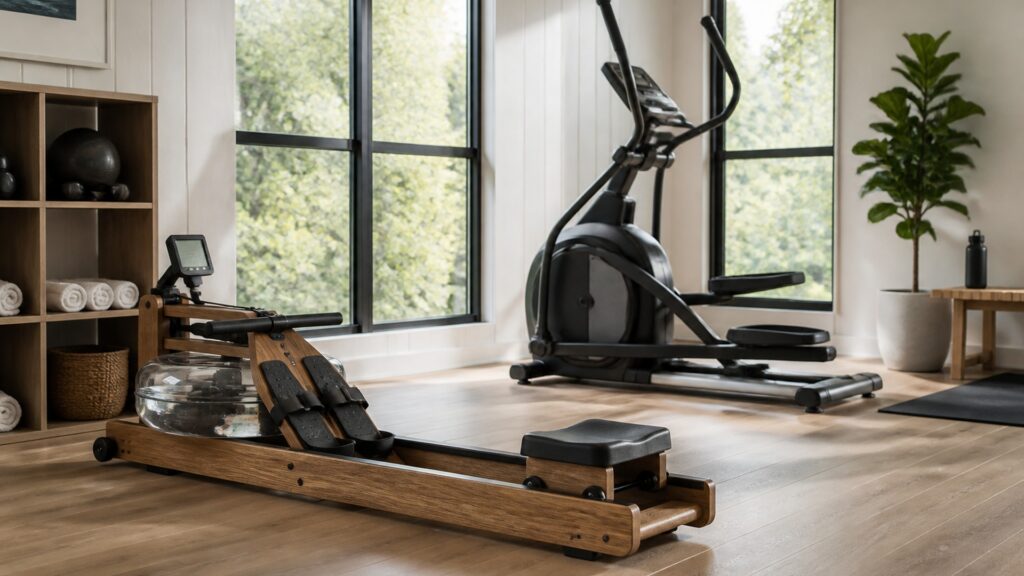
Use a water resistance rower instead of a front drive elliptical when the workout should feel like seated rowing, not standing stride cardio. The rower uses a sliding seat, handle pull, and water tank drag. The front drive elliptical keeps the user upright while the pedals follow a guided path from a front-mounted drive system.

The rower is usually the better fit for people who want rowing rhythm, water feel, and a stroke that responds to effort. The front drive elliptical is usually the better fit for people who want standing low-impact movement with less rowing technique and no water tank to maintain.

By: Review Streets Research Lab
Updated: October 7, 2026
Explainer · 8-12 min read
water resistance rowers explainer hero image for Review Streets
What You'll Learn

When A Water Rower Is The Better Fit

A practical decision path for choosing water-tank rowing over front-drive elliptical motion.

  • When seated rowing is the main workout goal
  • Why water drag feels different from elliptical resistance
  • Where front drive ellipticals stay easier for standing cardio
  • How tank care, sound, stride, and balance change the decision
  • What to test before choosing either machine

Tip: Choose the workout motion first. Water rowing and front-drive elliptical stride solve different problems.

Definitions

Key Concepts Behind Choosing Water Rowers

These concepts clarify when a water resistance rower makes more sense than a front drive elliptical.

Water Resistance Rower

A water resistance rower uses paddles moving through a tank to create rowing effort.

  • Example: a tank that churns harder when the user pulls harder
  • Check: try light and hard strokes
  • Limit: tank care and sound are part of ownership

Front Drive Elliptical

A front drive elliptical places the drive system toward the front and guides the user through a standing pedal stride.

  • Example: a standing cardio machine with pedals moving around a front flywheel
  • Check: test stride comfort and frame stability
  • Limit: front drive feel can vary widely by model

Seated Stroke

Seated stroke is the coordinated leg drive, torso swing, arm pull, and recovery used on a rower.

  • Example: sliding forward and driving back with the handle
  • Check: practice the sequence slowly
  • Limit: poor timing can make rowing uncomfortable

Standing Stride

Standing stride is the upright pedal movement used on an elliptical.

  • Example: moving the feet through an oval path while standing
  • Check: notice posture and balance
  • Limit: low-impact does not mean no effort

Tank Feel

Tank feel is the resistance and sound created as paddles move through water.

  • Example: a swishing response that rises with harder strokes
  • Check: listen at normal workout effort
  • Limit: some homes need a quieter machine

Use Fit

Use fit is how well the machine supports the user's real workout routine.

  • Example: choosing a rower for steady rowing sessions three times a week
  • Check: compare the machine to the sessions that will repeat
  • Limit: a good feature list cannot fix the wrong motion

Tip: The better choice is the machine whose motion and ownership demands match the routine.

Motion

Choose The Rower When You Want A Real Rowing Stroke

A water rower makes sense when the seated stroke is the main attraction. It asks the user to coordinate legs, body, arms, and recovery while the tank responds to effort.

  • Choose it for rowing rhythm.
  • Use it when seated full-body cardio is appealing.
  • Avoid it if the user dislikes stroke technique.

The rower should be chosen because rowing is the desired workout.

Standing Cardio

Choose The Elliptical When Upright Stride Matters More

A front drive elliptical is usually better when the user wants standing cardio without a sliding seat, handle pull, or tank care. It can be simpler to step onto and use casually.

  • Check stride comfort.
  • Test balance and handle support.
  • Compare the front-drive feel at normal cadence.

The elliptical is the better fit when standing movement is the point.

Resistance Feel

Water Drag Responds Differently Than Elliptical Resistance

Water resistance rises with stroke effort. Elliptical resistance is usually tied to a setting, cadence, and stride path. That makes pacing feel different on each machine.

  • Try easy and hard rowing strokes.
  • Compare elliptical effort at several resistance settings.
  • Notice which style is easier to repeat.

The preferred resistance feel should support the workout, not fight it.

Home Fit

Tank Care And Footprint Matter

The water rower may store upright, but it still has tank weight, rail length, and water care. The front drive elliptical may stay assembled and need a stable standing footprint.

  • Measure use and storage space.
  • Review water treatment needs.
  • Check mounting and stride clearance for the elliptical.

The machine has to fit the home as well as the workout.

Decision

Use The Machine That Removes The Bigger Barrier

A water rower removes the barrier when the user wants engaging seated rowing. A front drive elliptical removes the barrier when the user wants upright low-impact movement with less technique.

  • Choose the rower for rowing feel.
  • Choose the elliptical for standing stride.
  • Let comfort decide close calls.

The right machine is the one the user will actually return to.

Quick Reality Check

Where Each Machine Makes More Sense

Both can support cardio, but they fit different preferences.

Water Rowers Make Sense When

The user wants seated rowing with responsive water drag.

Tank sound, stroke rhythm, and storage plan fit the home.

Front Drive Ellipticals Make Sense When

The user wants standing low-impact stride motion.

A fixed elliptical footprint is easier than rower setup and tank care.

Common Myths

Misconceptions About Water Rowers Versus Front Drive Ellipticals

These machines can both be cardio tools without feeling alike.

The rower is automatically the harder workout

Effort depends on pace, resistance, duration, and technique on either machine.

Front drive ellipticals are always easier

They can be simpler, but stride comfort, posture, and resistance still matter.

Water resistance is maintenance-free

The tank may need treatment, inspection, and careful storage.

The smaller footprint wins

Operating space and comfort matter more than stored dimensions.

Tip: Try the real motion before comparing small features.

FAQ

Frequently Asked Questions About Water Rowers Versus Front Drive Ellipticals

Short answers for choosing between rowing and standing cardio.

When should I choose the water rower?

Choose it when seated rowing, water feel, and stroke-based effort are the workout you want.

When should I choose the front drive elliptical?

Choose it when upright low-impact stride cardio is more appealing than rowing.

Which takes more technique?

The water rower usually takes more technique because stroke order affects comfort.

Which needs more maintenance?

The water rower usually needs more care because of the tank.

What is the practical takeaway?

Use the water rower for rowing feel and the front drive elliptical for standing stride cardio.

Bottom Line

Use a water resistance rower when seated rowing and responsive tank drag are the main reasons to buy.

Choose a front drive elliptical when standing low-impact stride, simpler motion, and no tank maintenance matter more.

Next Steps

Go Deeper or Compare Your Options

Use these Review Streets paths to compare related categories and practical next decisions.