
Plate Load
Plate load is the amount of removable weight added to a bar, machine, sled, or storage system.
- Example: adding two 10 lb plates to a barbell
- Check: confirm the total load includes both sides
- Limit: plates need compatible equipment
Use weight plates instead of barbells when the workout needs removable load for a machine, sled, landmine, storage system, or other compatible setup rather than a straight bar held in the hands. Plates are not a complete barbell substitute, but they can be the better choice when the bar itself is not the exercise tool.
Barbells remain better when the movement requires a standard bar path, grip, rack setup, or heavy bilateral lift. The choice depends on whether the session needs a loaded barbell or a plate-loaded system.
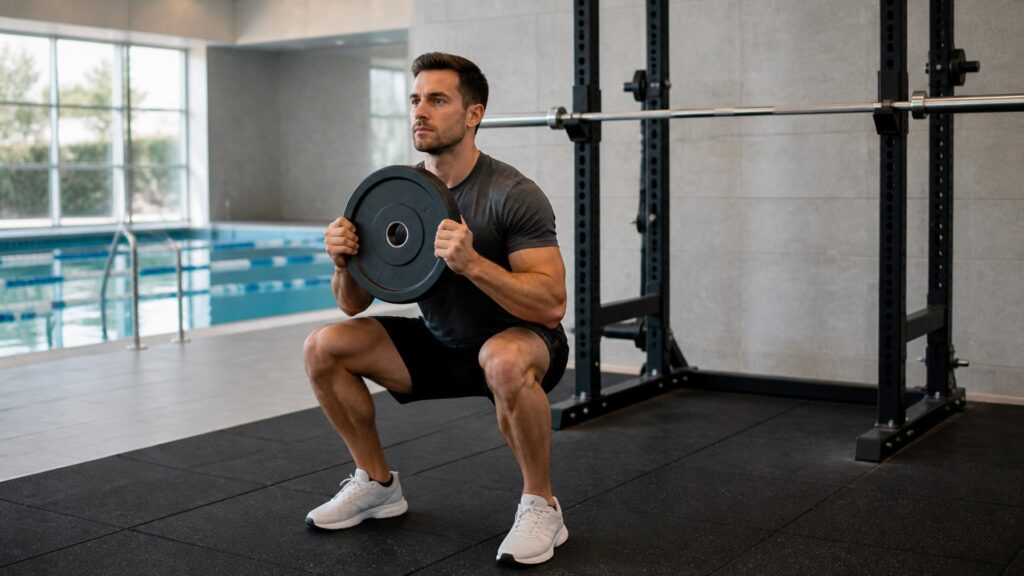
A practical decision path for choosing plate loading, machines, sleds, landmines, or barbell work.
Tip: Use plates when the equipment needs load; use a barbell when the bar is the implement.
These concepts explain when removable plate loading matters more than the bar itself.
Plate load is the amount of removable weight added to a bar, machine, sled, or storage system.
Sleeve diameter is the size of the bar or machine post the plate fits on.
Increment is the smallest useful weight change available.
Grip cutout is an opening or handle shape that makes a plate easier to carry.
Calibration is how closely a plate matches its labeled weight.
Storage fit is how well plate size, thickness, and quantity work in the room.
Tip: The right equipment choice depends on how resistance is created, adjusted, and repeated.
Plate-loaded machines do not need a loose barbell. They need compatible plates that fit the loading posts and balance correctly.
Machines are a clear plate-first use case.
Sleds usually use plates as removable load while the sled creates the movement and friction.
Sled work needs plates, not a barbell.
Landmines and some specialty tools may use a bar plus plates, but the movement is not a standard barbell lift.
Specialty setups often depend on plates.
Squats, deadlifts, bench presses, overhead presses, and rows often need the barbell's grip, length, sleeves, and predictable path.
The barbell is the right tool when the lift is built around the bar.
If the exercise loads a machine, sled, landmine, or storage system, plates may be the primary tool. If the exercise is a barbell lift, the barbell is primary and plates are supporting load.
The setup decides the choice.
The tools overlap but do not replace each other.
The user needs removable load for machines, sleds, landmines, or compatible systems.
The workout needs loading without a free barbell lift.
The movement requires a standard bar path, grip, rack, and sleeve system.
The goal is heavy conventional barbell strength work.
Plates and barbells are parts of a loading system, not direct substitutes.
Plates can load other systems, but they do not provide the bar path or grip.
Machines, sleds, and landmines can also use plates.
Movement path, compatibility, and setup matter too.
Barbells usually need plates to become adjustable.
Tip: Use plates when load is needed and a barbell when the bar defines the movement.
Short answers for practical equipment and training decisions.
Use plates when loading machines, sleds, landmines, or other compatible equipment without a standard barbell lift.
Use a barbell when the exercise requires the bar's grip, length, sleeves, and movement structure.
Yes, on compatible machines, sleds, landmines, and some accessory drills.
No. They provide load, while the barbell provides the implement and path for many lifts.
Choose plates for loading systems and barbells for bar-based lifts.
Weight plates are better than barbells when the workout needs removable load for a compatible system instead of a standard bar lift.
Barbells remain better when the bar itself defines the movement, grip, and loading path.
Use these Review Streets paths to compare related categories and practical next decisions.
Explore the weight plates category.
Review plate loading and setup basics.
Compare related strength-training equipment.
Choose a retailer
Prices checked regularly. We may earn a commission at no cost to you.