
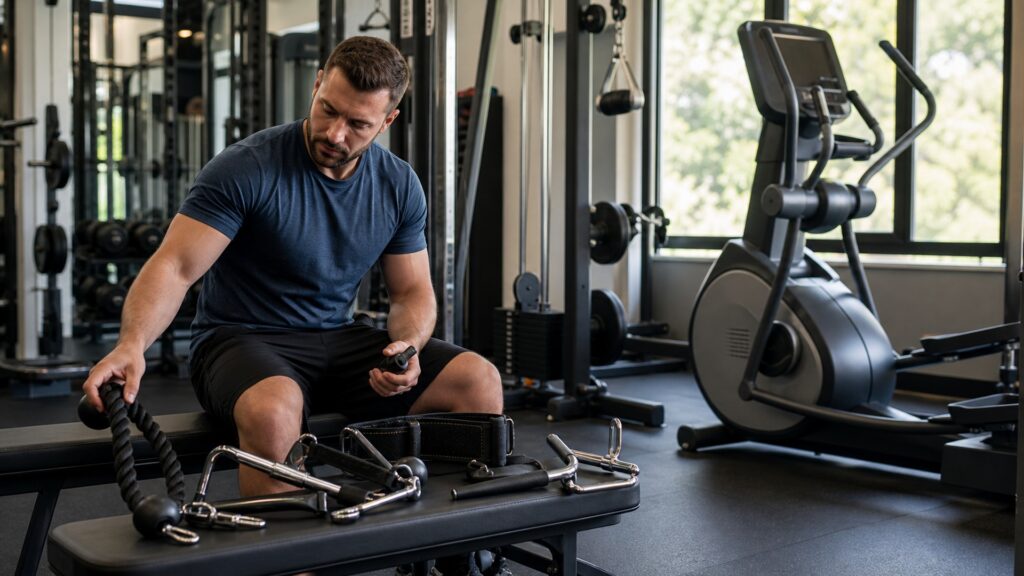
When to Use Weightlifting Accessories Instead of Elliptical Machines

Use weightlifting accessories instead of an elliptical machine when the problem is supporting strength training, not getting cardio. Belts, straps, wraps, collars, wedges, sleeves, and similar tools help with lifting setup, grip, bracing, comfort, plate security, or position.

Use an elliptical machine when the problem is indoor low-impact cardio. An elliptical provides the workout itself through a repeated stepping motion. Weightlifting accessories only make sense when there is already a lift or strength session for them to support.

By: Review Streets Research Lab
Updated: September 24, 2026
Explainer · 8-12 min read
weightlifting accessories explainer hero image for Review Streets
What You'll Learn

When Strength Support Is The Better Fit

A practical decision path for choosing lifting accessories versus a cardio machine.

  • When accessories solve a strength-session problem
  • When an elliptical machine is the relevant tool
  • Why the categories are not direct substitutes
  • How space, cost, and training goals change the choice
  • What to check before buying either product

Tip: Start with the training job the product needs to perform, then choose the tool that fits that job.

Definitions

Key Concepts Behind Weightlifting Accessories Instead of Elliptical Machines

These concepts keep the article tied to the product category and the reader's real decision.

Strength-Session Support

Strength-session support is help with a specific lifting task such as grip, bracing, wrist position, plate security, or setup.

  • Example: using collars for barbell work or straps for selected pulls
  • Check: name the lift the accessory supports
  • Limit: support gear does not create a cardio workout

Low-Impact Cardio

Low-impact cardio is aerobic exercise with less pounding than running or jumping.

  • Example: using an elliptical for a steady indoor session
  • Check: decide whether the missing need is conditioning
  • Limit: cardio equipment does not solve lifting setup problems

Exercise Dependence

Exercise dependence means the accessory is useful only because another lift is being performed.

  • Example: a belt helping during heavy squats
  • Check: identify the exercise before choosing the tool
  • Limit: an unused lift makes the accessory irrelevant

Complete Cardio Station

A complete cardio station provides the movement path and workout surface.

  • Example: an elliptical with pedals, handles, resistance, and display
  • Check: test comfort, footprint, and controls
  • Limit: one machine mainly covers one cardio style

Commitment Level

Commitment level is the cost, storage, and space required by the product.

  • Example: wraps fitting in a bag while an elliptical needs floor space
  • Check: compare actual storage and use area
  • Limit: small accessories still need organization

Routine Fit

Routine fit is whether the product supports workouts the user repeats often.

  • Example: buying wraps for pressing days or an elliptical for regular cardio
  • Check: place the item in a normal week
  • Limit: a useful item can still be unnecessary

Tip: A useful choice should make the intended workout easier to set up, perform, or repeat.

Use Case

Choose Accessories When A Lift Needs Support

Weightlifting accessories are the better choice when the user already lifts and needs help with a specific part of the session. The tool should connect directly to the lift.

  • Use straps for selected pulling work.
  • Use belts or wraps when support is appropriate.
  • Use collars when plates need to stay secure.

Accessories should solve a lifting problem, not replace the workout.

Cardio

Choose The Elliptical When The Workout Is Cardio

An elliptical machine is the better answer when the user wants indoor conditioning with a low-impact stepping motion. It provides the session rather than supporting another exercise.

  • Use it for home cardio access.
  • Check stride comfort and machine size.
  • Make sure the machine fits the room and routine.

The elliptical belongs in the decision when cardio access is the missing piece.

Comparison

Do Not Treat Them As The Same Purchase

The products answer different questions. Accessories support strength exercises. Ellipticals provide cardio exercise.

  • Accessories will not replace cardio equipment.
  • An elliptical will not secure plates or assist grip.
  • The budget decision should start with the training need.

They only compete when the user must prioritize one problem.

Practical Fit

Size And Cost Point To Different Commitments

Many accessories are small and relatively affordable. An elliptical is a larger home-equipment purchase with placement, noise, and use frequency to consider.

  • Buy small gear only when it has a job.
  • Measure the elliptical space before ordering.
  • Consider weekly use, not good intentions.

The commitment should match the need.

Decision

Ask What Would Improve The Next Session

If the next session needs better lifting support, accessories make sense. If the next session needs an available cardio machine, the elliptical makes sense.

  • Start with the next workout.
  • Identify the missing tool.
  • Choose the item that removes that barrier.

The best choice solves the immediate training gap.

Quick Reality Check

Where Each Choice Fits

Weightlifting accessories and elliptical machines serve different workout roles.

Accessories Fit When

The user needs grip, bracing, plate security, or setup support for lifting.

Strength training is already part of the routine.

Ellipticals Fit When

The user wants low-impact indoor cardio.

A dedicated machine is worth the space and cost.

Common Myths

Misconceptions About Accessories Versus Ellipticals

A smaller product is not automatically less useful, and a larger machine is not automatically the better answer.

Accessories are just cheaper exercise equipment

Accessories support lifts. They do not provide a cardio workout.

An elliptical can replace lifting support

It can support conditioning, but it does not help grip, bracing, or plate security.

Every strength routine needs an elliptical

Some lifters handle cardio elsewhere or prefer different conditioning tools.

Small accessories do not affect training much

A small tool can matter when it solves a precise lifting issue.

Tip: Judge each product by the role it actually serves in the routine.

FAQ

Frequently Asked Questions About Accessories And Ellipticals

Short answers for practical training and buying decisions.

When should I choose accessories?

Choose accessories when a lift needs support with grip, bracing, wrist position, plate security, comfort, or setup.

When should I choose an elliptical?

Choose an elliptical when the main need is low-impact indoor cardio.

Can accessories replace cardio equipment?

No. They support strength work but do not provide a cardio session.

Can an elliptical replace lifting accessories?

No. It does not solve lifting setup or support needs.

What is the practical takeaway?

Choose accessories for strength-session support and an elliptical for indoor cardio.

Bottom Line

Use weightlifting accessories when the session needs lifting support, and use an elliptical machine when the routine needs indoor cardio.

The right purchase depends on whether the user is improving strength work or adding a cardio station.

Next Steps

Go Deeper or Compare Your Options

Use these Review Streets paths to compare related categories and practical next decisions.