
Acceleration Pattern
Acceleration pattern is how the athlete starts and builds speed.
- Example: driving out from a cone start
- Check: watch first steps and body angle
- Limit: fast starts still need control
Movement pattern matters in agility training equipment because the tool shapes how the athlete starts, stops, cuts, shuffles, pivots, accelerates, and reacts. The same cone or ladder can teach a useful pattern or reinforce a sloppy one depending on spacing, speed, and intent.
Agility equipment should make the desired movement pattern easier to practice and coach. If the drill rewards rushed feet, poor braking, or uncontrolled turns, the equipment is organizing the wrong lesson.
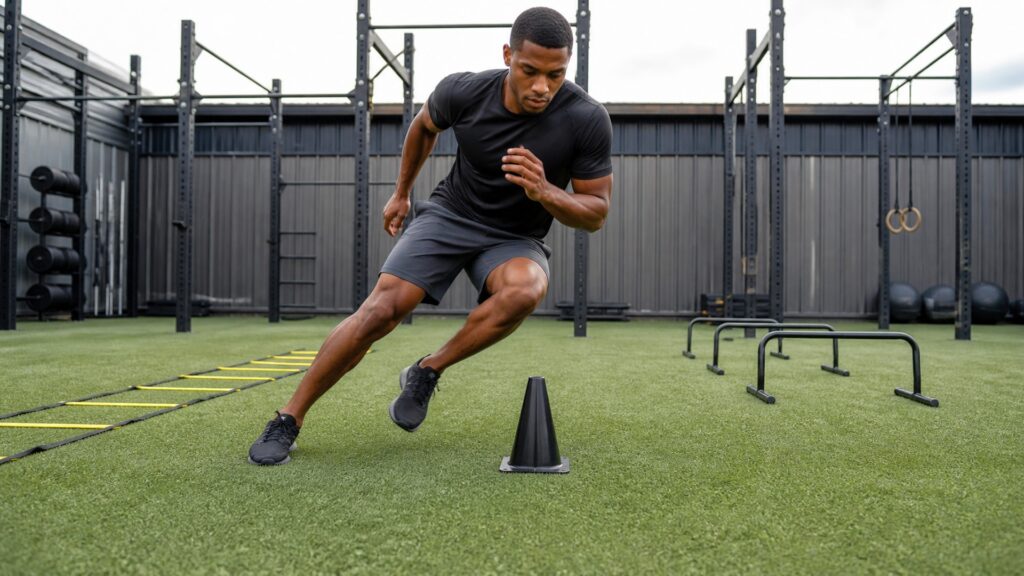
A practical look at starts, stops, cuts, lateral work, pivots, and reaction drills.
Tip: Start with the swimming situation, then choose the gear detail that solves that specific problem.
These concepts keep the decision tied to fit, water conditions, training purpose, and realistic limits.
Acceleration pattern is how the athlete starts and builds speed.
Deceleration pattern is how the athlete slows before a stop or cut.
Cutting pattern is how the athlete plants and redirects movement.
Lateral pattern is side-to-side movement such as shuffling or crossing over.
Rhythm pattern is the step timing used in repeated footwork.
Reactive pattern is movement chosen after a cue instead of fully planned in advance.
Tip: The useful feature is the one that makes the swim clearer, safer, or easier to repeat.
Cone spacing and marker angles decide whether the athlete practices quick feet, longer acceleration, sharp cuts, or controlled stops.
The layout teaches the pattern.
Change of direction starts with slowing down. If the athlete cannot brake well, adding speed or sharper angles can make the pattern worse.
Better braking makes better cuts possible.
Ladders can sharpen step timing, coordination, and foot placement. They should be connected to broader movement practice instead of treated as the whole agility plan.
Rhythm is useful when it supports real movement.
Reaction cues change where or when the athlete moves. They can make the drill more realistic after the planned pattern is safe.
Reaction adds value only when control remains.
A basketball closeout, tennis split step, soccer cut, or general fitness shuffle can require different patterns. Equipment should match the movement the athlete actually needs.
Movement pattern keeps agility training honest.
It keeps agility equipment from becoming random obstacles.
It links spacing, angle, speed, and cue choice to the goal.
It helps coaches spot poor braking or uncontrolled turns.
It still needs strength, mobility, and coaching judgment.
It cannot make an advanced pattern safe for every athlete.
The pattern matters more than how complicated the setup looks.
Fast feet help only when the athlete can stop, cut, and react under control.
Sharper angles require more control and may not match the goal.
Ladders train rhythm, but not full acceleration, braking, and open-space reaction.
Cues help only when the athlete understands and controls the movement.
Tip: Strong claims still need to match the swimmer, pool, and session.
Short answers for practical swimming decisions.
They determine what the athlete is actually practicing with the equipment.
Beginners should start with simple starts, stops, shuffles, and controlled changes of direction.
No. Ladders can support rhythm and coordination, but agility also needs braking, cutting, reaction, and space control.
Progress one variable at a time: distance, speed, angle, reaction, or complexity.
Use agility equipment to practice the movement pattern you want, then judge control before speed.
Agility training equipment movement pattern matters because spacing, angle, cue, and speed decide what the athlete actually practices.
The best setup teaches controlled starts, stops, cuts, and reactions instead of rushed motion.
Use these Review Streets paths to compare related categories and practical next decisions.
Explore tools for footwork, change of direction, and reaction drills.
See how cones, ladders, hurdles, cues, and timers shape practice.
Browse related fitness training equipment categories.
Choose a retailer
Prices checked regularly. We may earn a commission at no cost to you.