
Training Function
Training function is the specific job a tool performs inside an agility drill.
- Example: cones defining a cut angle
- Check: name the movement skill first
- Limit: a tool without a job becomes clutter
Training function matters in agility training equipment because each tool should create a specific movement task. Cones, ladders, hurdles, markers, bands, reaction lights, and timers are useful only when they help the athlete practice footwork, braking, direction change, reaction, or spacing with more control.
Agility equipment should make movement practice clearer, not just busier. The tool has to match the training job: rhythm, acceleration, deceleration, cutting, reaction, coordination, or repeatable measurement.
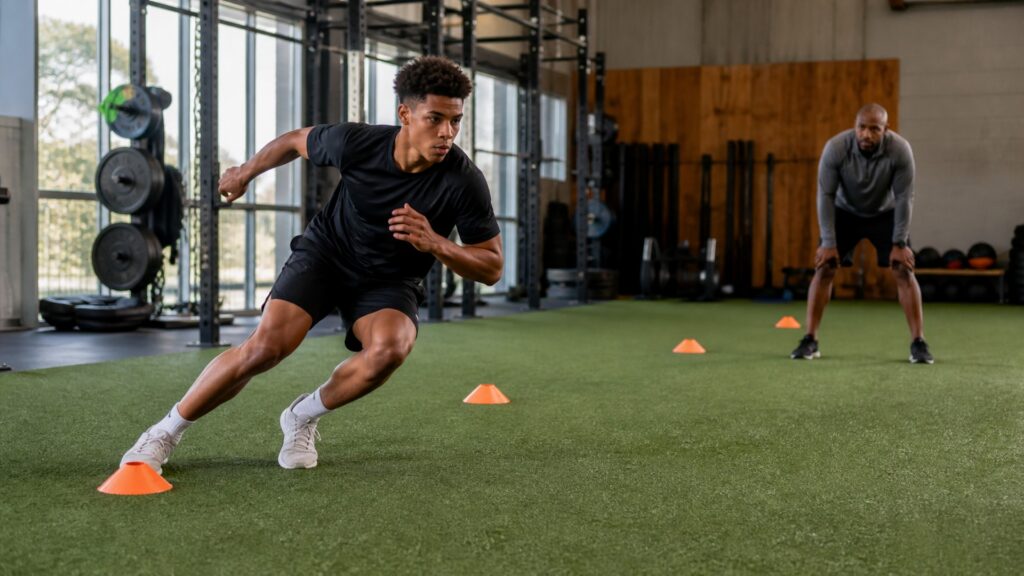
A practical way to judge whether the equipment improves the drill or only adds clutter.
Tip: Start with the swimming situation, then choose the gear detail that solves that specific problem.
These concepts keep the decision tied to fit, water conditions, training purpose, and realistic limits.
Training function is the specific job a tool performs inside an agility drill.
Footwork rhythm is the timing and sequence of steps during a pattern.
Braking skill is the ability to slow down under control before changing direction.
Reaction job is the decision cue built into the drill.
Load purpose is why resistance or bands are included.
Measurement role is how time, distance, or reps are used to judge progress.
Tip: The useful feature is the one that makes the swim clearer, safer, or easier to repeat.
Training function starts with the movement problem. A ladder, cone, hurdle, or timing gate should be chosen because it helps the athlete practice that problem more clearly.
A clear job turns equipment into training.
Agility ladders can train rhythm, accuracy, and quick step changes. They should not be treated as proof that the athlete can cut, brake, or react in sport.
The ladder is useful when its role stays specific.
Cones and markers define angles, distances, and stopping points. They help the athlete repeat the same movement problem until control improves.
Markers are valuable because they make the movement path visible.
Reaction lights, partner movement, or coach commands can make drills less scripted. That function matters after the athlete can move safely through the basic pattern.
Reaction tools should create decisions, not confusion.
Timing tools can motivate and track progress, but they can also reward sloppy reps. Time should be reviewed beside braking, posture, and repeatability.
Measurement works when it supports better movement.
Training function keeps agility equipment tied to the drill's real purpose.
It separates coordination, braking, reaction, speed, and measurement jobs.
It helps coaches choose the right tool for the athlete.
It cannot replace strength, mobility, or sport-specific coaching.
It can fail if the drill is too advanced or poorly spaced.
More equipment does not automatically create better agility.
A ladder can train rhythm, but agility also needs braking, cutting, reacting, and control.
Timing helps only when movement quality stays high.
Lights provide cues; they do not judge mechanics.
A drill is better when it matches the athlete's current control and goal.
Tip: Strong claims still need to match the swimmer, pool, and session.
Short answers for practical swimming decisions.
It explains what the tool is supposed to improve inside the drill.
It depends on the goal. Cones define space, ladders train rhythm, hurdles shape body control, and cues add decisions.
Beginners should first learn safe stopping and direction changes, then add reaction cues gradually.
Look for cleaner movement, better control, repeatability, and progress in the specific skill being trained.
Choose agility equipment by the training job, not by how complex the drill looks.
Agility training equipment training function matters because each tool should create a clear job for movement practice.
The best tools make footwork, braking, reaction, spacing, or timing easier to coach and repeat.
Use these Review Streets paths to compare related categories and practical next decisions.
Explore tools for footwork, change of direction, and reaction drills.
See how cones, ladders, hurdles, cues, and timers shape practice.
Browse related fitness training equipment categories.
Choose a retailer
Prices checked regularly. We may earn a commission at no cost to you.