
Fixed Path
A fixed path means both hands move the same bar through one shared line.
- Example: pressing a barbell from the chest
- Check: make sure the path fits the lift
- Limit: the shared bar can expose mobility limits
Movement pattern matters because a barbell asks the body to move around one shared load. The path of the bar, the position of the lifter, and the setup of the rack all affect how the exercise feels and what it trains.
A barbell can support squats, presses, hinges, rows, and pulls, but each pattern has different demands. The bar should match the lift instead of forcing every movement into the same path.
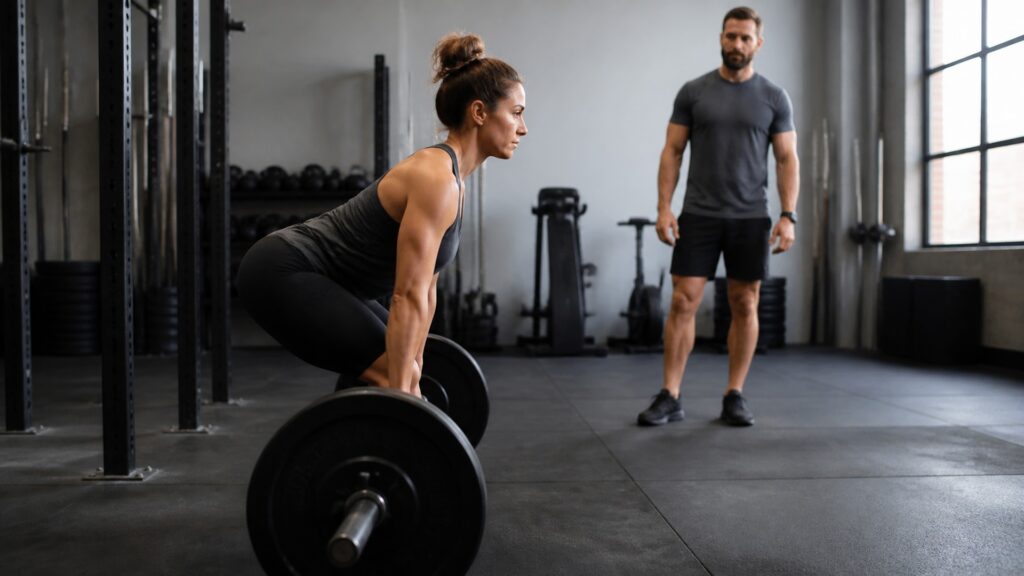
A practical look at squatting, pressing, hinging, pulling, and controlling a shared load.
Tip: The bar path should serve the lift, not fight it.
These concepts explain how barbells organize motion.
A fixed path means both hands move the same bar through one shared line.
Load progression is the ability to add weight in controlled steps over time.
Rack setup is how the bar starts, returns, and stays supported between attempts.
Grip and centering keep the bar balanced before and during the lift.
Brace and control keep the body stable while the bar moves.
Spotter or safeties provide a backup when a lift may fail.
Tip: Movement pattern is the link between the bar, the body, and the goal.
The bar moves as one object. That makes the path easy to observe but also less forgiving when the lifter's setup does not fit the movement.
A clear path helps only when it matches the lift.
High-bar, low-bar, front squat, and other squat styles place the shared load differently. That changes torso angle, balance, and mobility needs.
Bar position changes the squat pattern.
Bench and overhead presses ask the lifter to control wrist, elbow, shoulder, torso, and bar path together. Small changes can affect comfort and strength.
Pressing with a bar is a pattern skill.
Deadlifts, rows, and pulls depend on how the lifter positions the body around the bar. Distance from the body and start height matter.
Hinge patterns rely on setup before effort.
Mobility, limb length, experience, injury history, and equipment can make one barbell pattern feel better than another.
Movement pattern should fit the lifter and goal.
A shared bar creates useful structure and real constraints.
They make bar path and load easy to track.
They support repeatable compound movement practice.
They can restrict hand path or range of motion.
They may require mobility or setup the lifter does not yet have.
A bar path is not automatically correct because it uses a barbell.
Body proportions and lift style change the pattern.
Many lifts use a mostly vertical path, but setup and body movement still vary.
A heavy lift can still use poor position.
Some lifters need modifications, different lifts, or gradual practice.
Tip: The pattern should match the exercise, lifter, and purpose.
Short answers about bar path and lift selection.
It determines how the load travels and which positions the lifter must control.
Grip, stance, bar position, rack height, and exercise choice all matter.
Yes. Grip, stance, lift variation, and range can be adjusted when appropriate.
Avoid or modify it when the path causes pain, instability, or poor control.
Choose barbell movements that fit the lift, lifter, setup, and goal.
Movement pattern matters because the barbell turns strength work into a shared-load path that must fit the body and exercise.
The right pattern makes the lift repeatable, controllable, and useful for the training goal.
Use these Review Streets paths to compare related categories and practical next decisions.
Review the core bar, sleeve, grip, and loading basics.
Compare shared-bar lifting with independent-hand loading.
Explore the barbell category.
Choose a retailer
Prices checked regularly. We may earn a commission at no cost to you.