
Fixed Path
A fixed path means both hands move the same bar through one shared line.
- Example: pressing a barbell from the chest
- Check: make sure the path fits the lift
- Limit: the shared bar can expose mobility limits
Safety factors matter because barbells can place heavy shared loads over the body, near joints, or above a bench or rack. Setup, collars, safeties, spotters, bar path, fatigue, and load choice all influence whether the lift stays controlled.
A safer barbell session is not just about using less weight. It is about matching the lift to the lifter, setting the station correctly, planning the exit, and stopping before form breaks down.
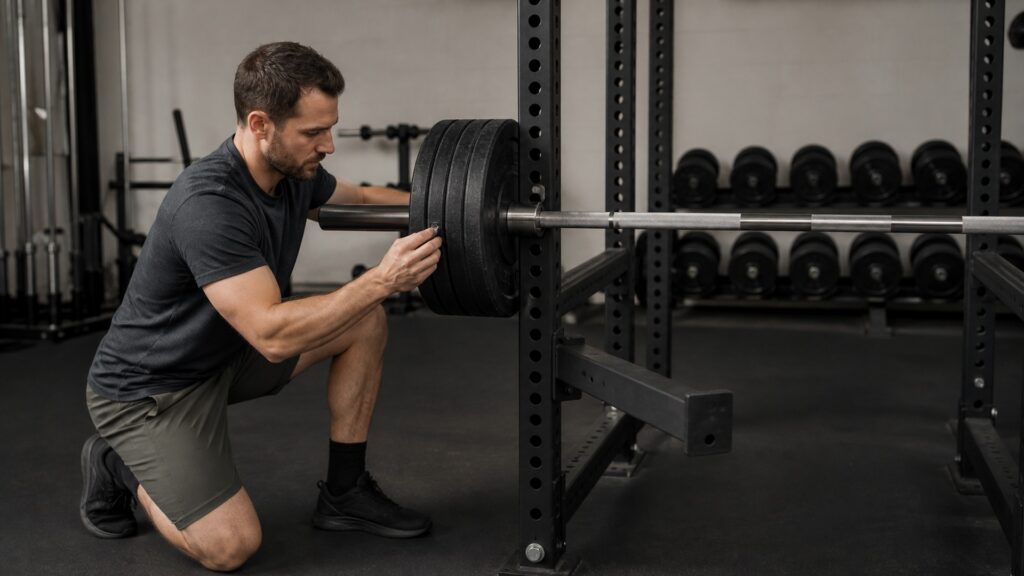
A practical look at rack setup, safeties, collars, spotters, load choice, and fatigue.
Tip: Set the station before loading the bar.
These concepts explain where barbell risk comes from.
A fixed path means both hands move the same bar through one shared line.
Load progression is the ability to add weight in controlled steps over time.
Rack setup is how the bar starts, returns, and stays supported between attempts.
Grip and centering keep the bar balanced before and during the lift.
Brace and control keep the body stable while the bar moves.
Spotter or safeties provide a backup when a lift may fail.
Tip: Safety improves when setup, load, and exit plan are decided before effort rises.
J-hooks, safety arms, pins, bench position, and platform space should be set before the bar gets heavy. Poor setup can make a normal rep harder to start or finish.
The safest lift starts before the first working set.
Collars help keep plates from shifting during lifts where the bar tilts, moves fast, or travels through a long range.
Balanced loading supports control.
A spotter helps only when they know the lift, the signal, and the expected assistance. Some lifts are better protected by safeties than by a person alone.
Spotting is a plan, not just a person nearby.
Barbell weight can rise quickly because plates are easy to add. The lifter should earn increases through stable reps, not through hope.
Load choice is a safety decision.
As sets accumulate, grip, brace, bar speed, and focus can fade. A weight that moved well early may become less controlled later.
Fatigue is part of the risk picture.
Safety factors help when they are built into the session before load rises.
They reduce preventable setup and failed-rep problems.
They keep load, backup, and technique connected.
A rack does not help if safeties are set wrong.
A spotter cannot fix every poor load choice.
Safety is more than choosing a light weight.
Some lifts and bar angles make collars important.
Spotters help only when the plan is clear and the lift suits spotting.
Experience does not remove the need for rack, plate, and safety checks.
Fatigue can change later reps quickly.
Tip: Safety comes from setup, load, technique, and exit planning together.
Short answers about setup, backup, and load control.
Setup is often first: rack height, safeties, collars, space, and exit plan.
Use collars when plates may shift, especially when the bar tilts or moves dynamically.
Use a spotter for lifts where assistance is practical, especially heavy bench pressing.
For some lifts, properly set safeties are more reliable than a spotter alone.
Plan the failed rep before loading the bar heavily.
Safety factors matter because barbells can place heavy shared loads where setup and failed-rep planning matter.
A safer barbell session uses correct setup, controlled loading, and a clear backup before fatigue arrives.
Use these Review Streets paths to compare related categories and practical next decisions.
Review the core bar, sleeve, grip, and loading basics.
Compare shared-bar lifting with independent-hand loading.
Explore the barbell category.
Choose a retailer
Prices checked regularly. We may earn a commission at no cost to you.