
Fixed Path
A fixed path means both hands move the same bar through one shared line.
- Example: pressing a barbell from the chest
- Check: make sure the path fits the lift
- Limit: the shared bar can expose mobility limits
Training function matters because barbells are built for loaded strength work that can be repeated, measured, and progressed. The shared bar lets a lifter use both sides of the body together while adding weight in clear steps.
A barbell can support squats, presses, deadlifts, rows, pulls, and Olympic-style lifts, but its value depends on the training job. It should be chosen for the lift, the lifter, the rack setup, and the level of control needed.
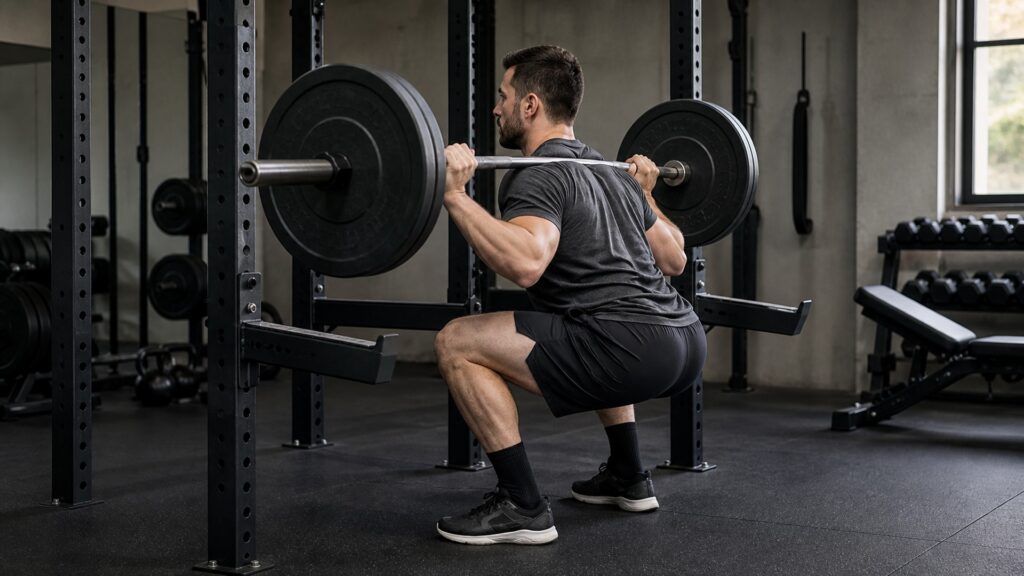
A practical look at progression, compound lifts, rack setup, technique practice, and training limits.
Tip: Use the barbell when the session needs repeatable loaded practice.
These concepts explain why barbells serve a specific strength role.
A fixed path means both hands move the same bar through one shared line.
Load progression is the ability to add weight in controlled steps over time.
Rack setup is how the bar starts, returns, and stays supported between attempts.
Grip and centering keep the bar balanced before and during the lift.
Brace and control keep the body stable while the bar moves.
Spotter or safeties provide a backup when a lift may fail.
Tip: A barbell is useful when the lift needs a stable shared load and clear progression.
A barbell lets the lifter add or remove plates in known amounts. That makes strength work easier to measure across weeks.
The barbell earns its role through repeatable progression.
Squats, bench presses, overhead presses, rows, and deadlifts all use the shared bar to train coordinated force through a clear movement.
The barbell is strongest when the movement suits the tool.
Because the bar path is repeatable, small setup changes become easier to notice. Grip, foot position, brace, and bar placement all matter.
Training function includes skill practice, not just load.
A barbell often needs a rack, collars, plates, platform, bench, or safeties. Those pieces affect how smoothly and safely the lift can happen.
The setup is part of the training function.
Some sessions need unilateral work, quick conditioning, simple home storage, or low-skill movement. A barbell may be too demanding for those jobs.
A barbell works best when its structure matches the plan.
Training function matters because the barbell is powerful but specific.
They support measurable strength progression.
They fit many compound lifts with clear loading.
They can be awkward for small spaces or quick circuits.
They can encourage load increases before control is ready.
A barbell is not automatically the right strength tool for every session.
Load matters only when the lift stays controlled.
Beginners can learn barbell basics with appropriate coaching and light loads.
Some goals are better served by dumbbells, kettlebells, machines, or bodyweight work.
Each barbell lift has its own setup, path, and risk pattern.
Tip: Match the barbell to the training job before adding load.
Short answers about where barbells fit in strength work.
A barbell supports repeatable loaded strength work with clear progression.
Use a barbell when the lift benefits from a shared load, stable grip, and measurable plate changes.
Many lifts benefit from a rack, bench, or safeties, though deadlifts and some pulls start from the floor.
Yes, when the setup, load, and instruction match the lifter.
Use barbells for structured strength practice when the movement and setup support control.
Training function matters because barbells make loaded strength work measurable, repeatable, and scalable.
The right barbell session starts with the lift and setup, then adds load only when control is present.
Use these Review Streets paths to compare related categories and practical next decisions.
Review the core bar, sleeve, grip, and loading basics.
Compare shared-bar lifting with independent-hand loading.
Explore the barbell category.
Choose a retailer
Prices checked regularly. We may earn a commission at no cost to you.