
Fixed Path
A fixed path means both hands move the same bar through one shared line.
- Example: pressing a barbell from the chest
- Check: make sure the path fits the lift
- Limit: the shared bar can expose mobility limits
Workout role matters because barbells can serve as the main strength lift, a technical practice tool, a power movement, or an accessory station. The same bar can be useful or distracting depending on where it sits in the session.
A barbell usually deserves planning. It asks for setup time, warmup sets, load decisions, space, and often backup equipment. That makes its role different from a quick finisher or casual movement choice.
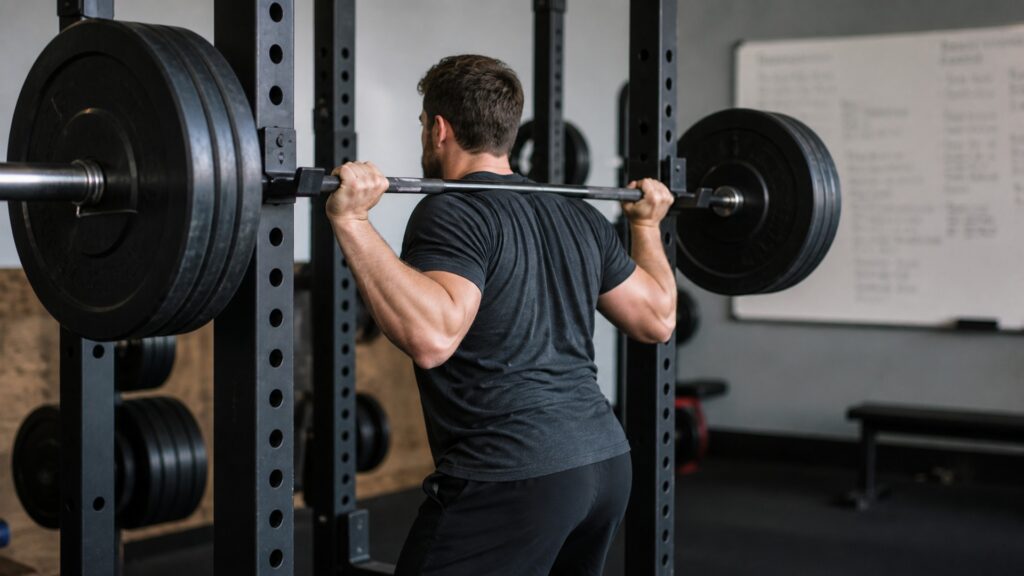
A practical look at main lifts, warmups, skill practice, assistance work, and heavy attempts.
Tip: Give the barbell a clear job before loading it.
These concepts explain how barbells fit inside a session.
A fixed path means both hands move the same bar through one shared line.
Load progression is the ability to add weight in controlled steps over time.
Rack setup is how the bar starts, returns, and stays supported between attempts.
Grip and centering keep the bar balanced before and during the lift.
Brace and control keep the body stable while the bar moves.
Spotter or safeties provide a backup when a lift may fail.
Tip: The workout role decides how heavy, technical, and central the barbell should be.
A squat, press, deadlift, row, or pull can become the main strength focus because it is measurable and repeatable.
The main-lift role deserves attention and space.
Some sessions use lighter barbell work to practice bar path, timing, brace, and position. That role is different from testing maximum load.
Technique work uses the bar for learning.
Olympic-style pulls, cleans, snatches, and speed-focused lifts need precise setup and timing. They should not be treated like random conditioning.
Power work needs a role that preserves quality.
Rows, Romanian deadlifts, front squats, and close-grip presses can support a broader plan. Their role should fit the main workout instead of competing with it.
Secondary barbell work still needs a purpose.
Dumbbells, kettlebells, cables, bands, machines, or bodyweight movements may be better for quick transitions, unilateral work, or lower-skill conditioning.
Role clarity prevents defaulting to the bar.
The barbell is useful when its role is planned.
It anchors measurable strength work.
It supports repeatable technical practice.
It can slow down sessions that need quick transitions.
It can dominate recovery if every exercise becomes heavy.
A barbell does not have to be the answer to every workout problem.
Some sessions need conditioning, mobility, or unilateral work instead.
Warmups help prepare the pattern and reveal readiness.
Barbells can serve accessory roles when they fit the plan.
Heavy barbell attempts need recovery, backup, and focus.
Tip: Let the barbell's role match the session goal.
Short answers about where barbells belong in a session.
Demanding barbell lifts usually belong early, after preparation.
Yes, when the movement supports the plan and does not overwhelm recovery.
No. Use the barbell when it matches the main training goal.
They prepare the movement pattern and help test readiness before heavier sets.
Give each barbell lift a clear role before adding weight or volume.
Barbell workout role matters because the bar can anchor, teach, support, or distract from a session.
The best role is the one that matches the session's main goal and available setup.
Use these Review Streets paths to compare related categories and practical next decisions.
Review the core bar, sleeve, grip, and loading basics.
Compare shared-bar lifting with independent-hand loading.
Explore the barbell category.
Choose a retailer
Prices checked regularly. We may earn a commission at no cost to you.