Why Battery Capacity Matters in Cordless Drills

Battery capacity is one of the most referenced specifications in cordless drills, yet it is often misunderstood or oversimplified. It is commonly treated as a single indicator of power or quality, when in reality it describes a specific electrical characteristic that governs how energy is stored and delivered. Without understanding what battery capacity represents and how it interacts with the rest of the system, the number alone can create misleading assumptions about performance and use.

This explainer walks through what battery capacity means, how it is measured, and how it fits into the broader electrical system of a cordless drill. By the end, readers will understand the relationship between capacity, energy flow, and runtime, as well as how battery capacity differs from voltage, output, and mechanical load.

By: Review Streets Research Lab
Updated: April 20, 2026
Explainer · 8–12 min read
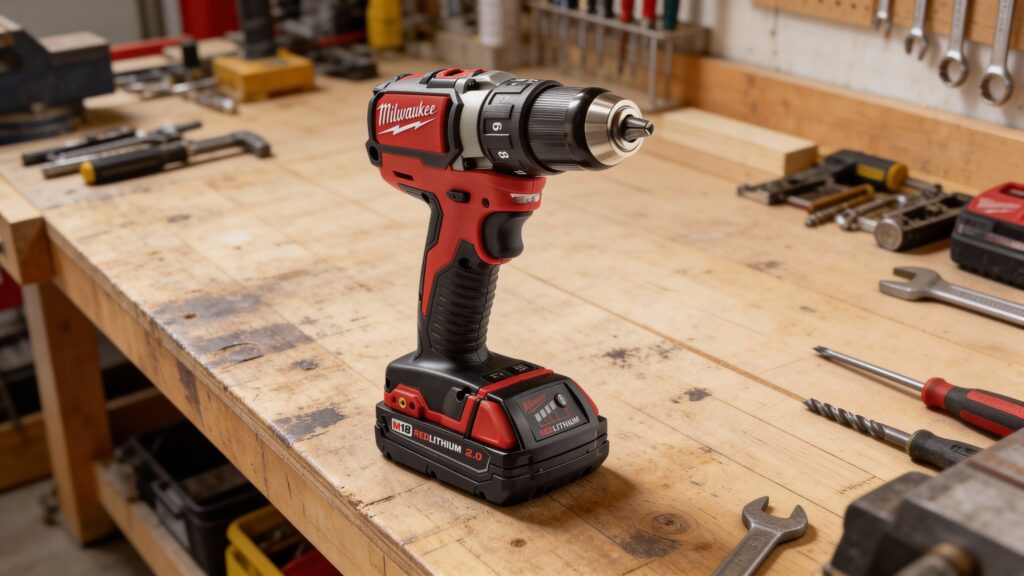
Why battery capacity matters in cordless drills, showing a cordless drill with removable battery on a workbench
What You’ll Learn

How Battery Capacity Shapes Drill Behavior

A system-level explanation of how battery capacity functions within a cordless drill, clarifying how stored energy, electrical limits, and load interact during operation.

  • What battery capacity represents electrically, beyond simple runtime assumptions
  • How amp-hours relate to stored charge across different voltage systems
  • Why current draw determines how quickly capacity is consumed
  • How internal resistance causes heat, losses, and voltage sag
  • What role battery management systems play in limiting usable capacity
  • How temperature changes effective capacity during sustained operation
  • Why capacity alone cannot predict delivered power or torque

Tip: Think of capacity as stored charge, then follow how electrical demand and resistance govern how quickly that charge can be used.

Definitions

Key Concepts That Define Battery Capacity

Battery capacity becomes clear when each part is defined by its role in storing energy, moving current, and enforcing limits during real electrical load.

Battery Capacity (Ah)

A measure of stored charge inside the pack. It sets how much charge is available, while the rest of the system determines how quickly it is used.

  • Meaning: Total charge available to support operation over time
  • Usable range: Reduced by heat, cutoff limits, and voltage sag
  • Context: Interpreted alongside voltage and current draw, not alone

Battery Management System

The circuitry in the pack that monitors cells and controls boundaries. It protects the cells while shaping how capacity can be accessed under demand.

  • Monitoring: Tracks cell voltage, temperature, and pack-level conditions
  • Protection: Limits current or shuts down at unsafe thresholds
  • Balancing: Keeps cell groups aligned so stored charge remains usable

Current Draw

The rate at which the tool pulls charge from the battery. It rises with mechanical resistance and increases losses and heat inside the electrical path.

  • Demand: Set by load, speed setting, and applied force
  • Losses: Higher current increases heat in cells and conductors
  • Runtime: Faster draw shortens time even with the same capacity

Voltage Sag

A drop in delivered voltage when current demand increases. It comes from internal resistance and becomes more pronounced as cells warm and deplete.

  • Cause: Resistance converts some electrical energy into heat
  • Effect: Lowers delivered voltage even when charge remains stored
  • Thresholds: Can trigger cutoffs before the pack is fully depleted

Watt-Hours (Wh)

A measure of stored energy that includes both capacity and voltage. It links battery specifications to the total energy available for work and losses.

  • Definition: Energy quantity calculated from amp-hours times voltage
  • Comparison: Normalizes storage across different voltage architectures
  • Delivered energy: Reduced by sag, heat, and protection limits

Discharge Rate

How quickly stored charge is consumed relative to capacity. Higher discharge rates change efficiency and temperature, altering how much capacity is usable.

  • Rate effect: Faster discharge increases internal losses within cells
  • Temperature: Heat rise can constrain output and usable capacity
  • Capacity shift: Effective capacity declines as discharge rate increases

Tip: Treat capacity as stored charge, then track what limits energy flow: current demand, internal resistance, temperature, and protection thresholds.

Power Path

How Battery Capacity Becomes Usable Energy in a Drill

Battery capacity is stored charge, but the drill can only use it through an electrical path with limits and losses. Following that path explains why capacity is not fully “available” in practice.

  • The pack supplies charge; voltage sets potential, current draw sets rate
  • Internal resistance converts part of that energy into heat and voltage sag
  • Electronics regulate current and enforce cutoff thresholds to protect cells
  • The motor and drivetrain translate electrical input into mechanical load demand
  • As load rises, the system consumes energy faster and heats more quickly

Capacity only becomes runtime when the system can move energy without hitting thermal or protection limits.

Motors

How Motor Behavior Changes Current Draw and Capacity Use

The motor is where electrical energy is converted into rotation, and its efficiency shapes how much current is required for a given mechanical demand. That current draw directly governs how quickly stored charge is depleted.

  • Higher mechanical load increases motor current, accelerating capacity consumption
  • Lower efficiency turns more input energy into heat rather than useful rotation
  • Speed control and torque production change the electrical demand profile over time
  • Rising motor temperature increases resistance, compounding losses in the system

When the motor demands more current, capacity is consumed faster and system temperatures rise.

Gearing

How Gear Reduction Converts Electrical Demand Into Mechanical Work

Gearing determines the relationship between motor speed, torque, and the load seen by the motor. By changing that relationship, the gearbox alters current draw and how efficiently capacity is translated into work.

  • Lower gear reduces motor speed but lowers the load per revolution
  • Higher gear raises required motor torque, increasing current draw under resistance
  • Mechanical losses in gears add heat and reduce delivered work from the same energy
  • Transient load changes create current spikes that intensify voltage sag

Gear choice and mechanical efficiency change the electrical demand that drains capacity.

Heat Management

Why Heat Reduces Usable Capacity Before Charge Is Exhausted

Heat is produced wherever current flows through resistance, including cells, wiring, and electronics. As temperatures rise, the system constrains current and reaches voltage cutoffs sooner, reducing accessible capacity.

  • Cell resistance increases with temperature, causing larger voltage sag under load
  • Protective circuitry limits current when thermal thresholds are approached
  • Higher discharge rates generate more heat, lowering effective capacity in use
  • Voltage cutoffs may trigger earlier when heat and sag combine at high load

In sustained operation, heat can end output before the pack is truly empty.

User Control

How Control Inputs Shape Load and Energy Flow

Control inputs determine how the drill ramps speed and how load is applied, which changes the electrical demand profile over time. Small changes in demand can shift current draw, heat generation, and accessible capacity.

  • Smoother acceleration reduces transient current spikes that deepen voltage sag
  • More consistent engagement avoids repeated stall conditions that generate heat quickly
  • Speed settings change the torque requirement at the motor for the same task
  • Intermittent load produces cooling intervals that delay thermal limiting behavior

Capacity is consumed according to the load history, not the printed number alone.

Quick Reality Check

Where Cordless Drills Shine — and Where They Don’t

A simple, practical balance: what cordless drills handle beautifully, and the situations where their limits show up.

What Cordless Drills Do Well

Cordless drills excel at portability and convenience. With no cord to manage, they’re easier to maneuver in tight spaces, on ladders, or across job sites.

Modern battery and motor designs allow many cordless drills to handle the majority of household and professional drilling tasks without feeling underpowered.

Where Cordless Drills Have Limits

Because they rely on batteries, cordless drills can lose performance as heat builds or batteries drain. Sustained heavy drilling can trigger power reductions.

For continuous, high-load tasks, corded tools still have an advantage in delivering unlimited runtime without thermal throttling.

Common Myths

Misconceptions About Battery Capacity in Cordless Drills

Battery capacity is often treated as a simple power upgrade, but its real impact depends on load, heat, and how the system manages current.

Higher amp-hours always mean more power

Amp-hours mainly describe stored energy for runtime, not peak torque at the bit. Maximum output is constrained by the controller’s current limits, motor efficiency, gearing, and the battery’s ability to deliver current safely.

Capacity only affects runtime, nothing else

Capacity mostly affects how long you can work, but it can also influence consistency under sustained load. Packs with more parallel cell capacity often run cooler and sag less, reducing performance drop during longer drilling.

A bigger battery makes any drill stronger

A larger pack cannot override conservative electronics or a weaker drivetrain inside the tool. If the controller limits current early or thermal protection engages quickly, added capacity extends time more than it increases capability.

Capacity matters the same for every task

Capacity shows up most when loads are sustained and heat accumulates over time. In short, light tasks with frequent pauses, differences may be subtle beyond longer time between charging.

Power drop is always a battery problem

Performance drop often comes from system protection, not battery health alone. As temperatures rise, the pack and controller reduce output to prevent damage, so the same drill can feel strong early and noticeably weaker later.

Tip: Think of capacity as part of a system—runtime, heat, and voltage sag together explain why performance stays steady or fades under sustained load.

FAQ

Frequently Asked Questions About Battery Capacity in Cordless Drills

Clear explanations for common questions about how battery capacity influences runtime, consistency, and performance under load in cordless drills.

What does battery capacity actually measure in a cordless drill?

Battery capacity measures how much energy the pack can store, typically expressed in amp-hours. It primarily affects how long the drill can run, not the maximum torque or speed it can produce at the bit.

Does higher battery capacity make a drill more powerful?

Higher capacity does not directly increase peak power. Maximum output is limited by the controller, motor, and gearing, while capacity mainly helps the drill maintain performance longer before heat or voltage sag reduces output.

Why do larger-capacity batteries sometimes feel more consistent?

Batteries with greater capacity often spread electrical load across more cells, which can reduce heat buildup and voltage drop. This can help the drill deliver steadier performance during sustained or demanding tasks.

Can battery capacity affect heat and power reduction?

Yes. Higher-capacity packs may run cooler under the same load, delaying thermal limits. However, once temperature thresholds are reached, the battery and controller still reduce output to protect internal components.

Does battery capacity matter for light or short tasks?

For brief or low-resistance tasks, capacity differences may be difficult to notice. Performance is usually limited by tool design rather than stored energy, with capacity mainly extending time between recharging.

How does capacity interact with the drill’s electronics?

The electronic controller governs how much current the battery can deliver at any moment. Even with a high-capacity pack, conservative current limits or heat protection can cap usable power during heavy loads.

Why can the same battery feel weaker after extended use?

As the battery warms and voltage drops under sustained load, the system reduces output to prevent damage. This behavior is normal and reflects thermal and electrical protection, not immediate battery degradation.

Is battery capacity more important than the drill itself?

Capacity supports performance, but it cannot overcome limits in the motor, gearing, or electronics. Real-world results come from how well the entire system balances energy storage, heat control, and power delivery.

Tip: When diagnosing fading performance, consider runtime demands, heat buildup, and voltage sag together rather than treating battery capacity as a single, isolated factor.

Bottom Line

Battery capacity shapes runtime and consistency, not peak drill power. Under sustained load, higher capacity can reduce heat and voltage sag, helping output stay steadier before protective limits begin.

With this model, you can interpret capacity ratings as stored energy and stability over time, rather than expecting them to automatically increase torque or speed.

Next Steps

Go Deeper or Compare Your Options

If you want to apply what capacity changes in real use, these guides connect battery behavior to tool selection, tradeoffs, and the specs that matter most.

Cordless Drills Lists

A structured set of cordless drill lists that helps you compare options by use case, load type, and the kind of runtime demands that make capacity noticeable.

Drill Comparisons

Side-by-side comparisons that highlight how power delivery, heat control, and battery behavior differ, so you can see where capacity changes outcomes under sustained work.

Cordless Drill Buying Guides

Practical guidance on interpreting capacity, voltage, and runtime claims, with a clear framework for matching battery setup to the way you actually drill and drive.

Quick Summary

Battery Capacity Explained

  • Capacity measures stored energy that mainly determines runtime between recharges.
  • Higher capacity can reduce voltage sag during sustained, high-current drilling.
  • Lower sag helps electronics maintain output before thermal protections begin limiting.
  • Added capacity does not inherently increase peak torque or top speed.
  • Weight and heat dissipation shape whether capacity gains feel noticeable.