
Workout Role
Workout role is the specific job a tool performs in a session.
- Example: using a pull-up bar for main pulling strength
- Check: name the tool's job before using it
- Limit: one tool can have several roles, but not all at once
Workout role matters in bodyweight training equipment because the same tool can support warm-up, strength, skill, mobility, or accessory work depending on how it is used. A pull-up bar can be a main strength station, a grip-training tool, or a mobility support. Parallettes can support push-ups, holds, or range-of-motion work.
Without a clear role, bodyweight gear can become a random add-on. The tool should have a job in the session: build strength, scale a movement, improve control, support mobility, or fill a gap the rest of the routine does not cover.
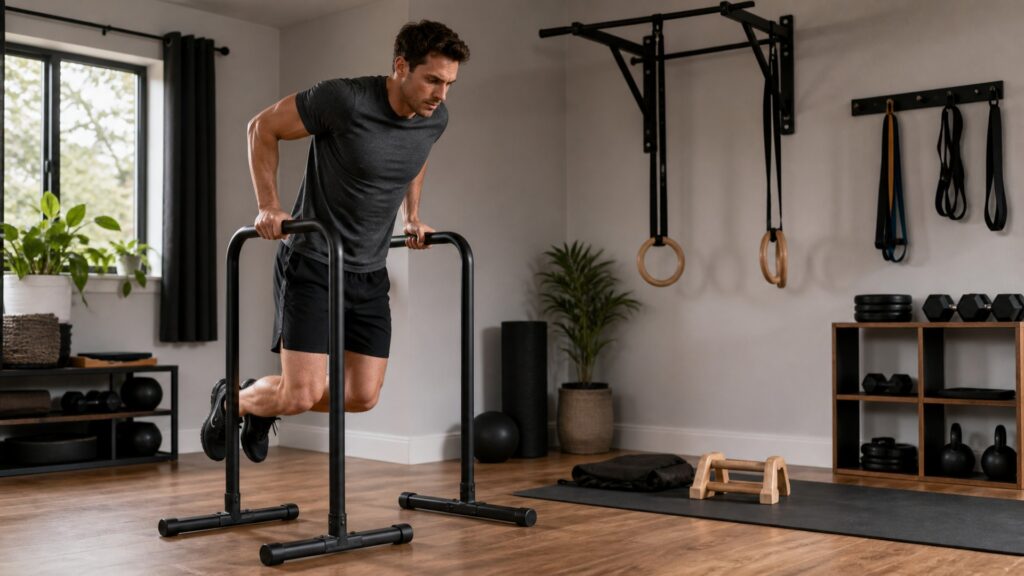
A practical way to decide whether a bodyweight tool belongs in the main workout, warm-up, accessory block, or skill practice.
Tip: Assign the equipment a job before the session starts. Main lift, accessory, skill drill, and warm-up are different roles.
These concepts clarify how bodyweight tools fit into a full training session.
Workout role is the specific job a tool performs in a session.
A main strength block is the part of the workout where the most important strength exercise is trained.
Accessory work supports the main goal with smaller or more targeted exercises.
Skill practice trains control, balance, or coordination before fatigue is high.
Mobility support uses equipment to assist positions or controlled range.
A routine gap is a missing movement or progression the current setup does not cover.
Tip: A bodyweight tool is more useful when its role in the session is obvious.
Bodyweight equipment can serve many purposes, but each session should use it for one clear reason. That reason changes exercise choice, volume, rest, and difficulty.
A defined role keeps the workout focused.
A tool used early can support skill and strength. The same tool used late may be better for light assistance, mobility, or controlled accessory volume.
Where the tool appears affects what it can train well.
A main strength exercise may progress through harder leverage or more reps. A warm-up or mobility role should progress more cautiously and may not need to become harder every week.
The role determines what progress should look like.
Grip, bracing, shoulder position, and controlled exits can fade quickly. That matters because the body is the load and the tool often depends on clean alignment.
A good role accounts for how the user will feel at that point in the session.
A new bodyweight tool should solve a repeated training need. If it duplicates a role already covered, it may add clutter instead of better training.
The best bodyweight equipment makes the routine more complete.
Role-based planning keeps bodyweight tools connected to the session instead of the equipment shelf.
It clarifies whether the tool is for strength, skill, mobility, warm-up, or accessory work.
It prevents duplicate equipment from crowding out the main routine.
It cannot make an unsafe setup appropriate.
It does not replace progression planning, recovery, or technique judgment.
The same tool can be useful or distracting depending on its job.
A tool should appear when it supports the session goal, not because it is available.
It can also support warm-ups, accessories, mobility, and skill practice.
Too many jobs for one session can make training unfocused.
Hard variations belong where they fit the goal and safety of the session.
Tip: A clear role turns simple equipment into a useful training decision.
Short answers for placing bodyweight tools inside a routine.
Start with the session goal, then decide whether the tool supports main strength, skill, accessory work, mobility, or warm-up.
Yes, but assign one role at a time so volume and difficulty stay clear.
Usually yes. Skill work is easier to control before fatigue is high.
Buy or use it only if it solves a real setup, comfort, or progression problem.
Bodyweight equipment matters most when its workout role is clear and connected to the full routine.
Bodyweight training equipment workout role matters because the same tool can serve very different jobs.
Assign each tool a role in the session, then match difficulty, order, volume, and progression to that role.
Use these Review Streets paths to compare related categories and practical next decisions.
Explore body-resistance tools and related equipment.
Review the mechanics behind support, leverage, and control.
Browse related fitness training equipment categories.
Choose a retailer
Prices checked regularly. We may earn a commission at no cost to you.