
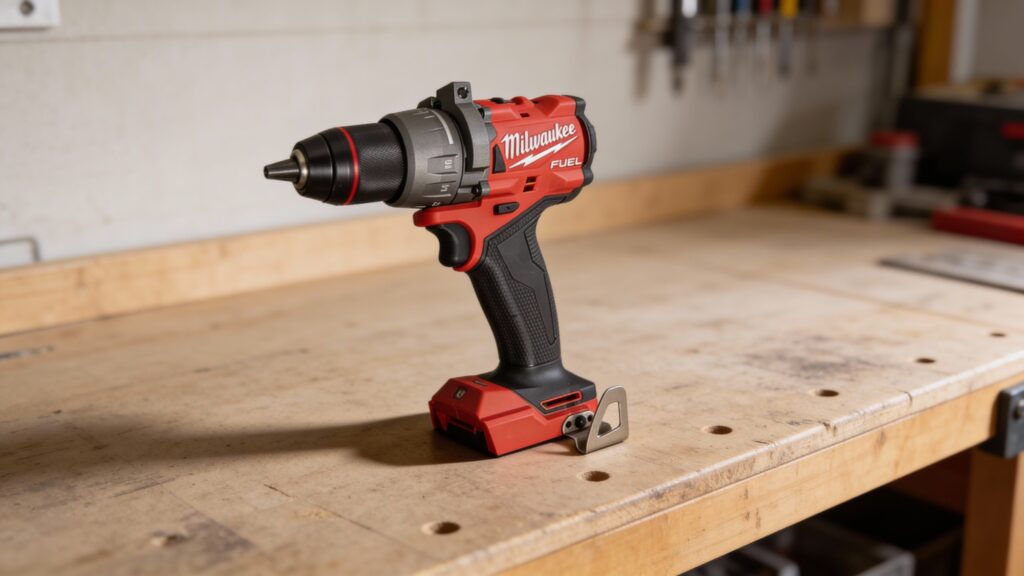
Why Brushless Motors Matter in Cordless Drills

Brushless motors are frequently referenced in discussions about modern cordless drills, yet the underlying system is often misunderstood. Rather than relying on physical brushes to transfer electricity, these motors use electronic control to manage current flow and rotor movement. This shift changes how energy is converted into motion, affecting internal heat, friction, and mechanical interaction within the tool.

This explainer outlines how brushless motor systems function at a structural level. It walks through the role of electronic controllers, sensor feedback, and electromagnetic sequencing inside a cordless drill. By the end, readers will understand how brushless designs differ mechanically and electrically from brushed systems, and how those differences shape the way power is generated and regulated.

By: Review Streets Research Lab
Updated: April 20, 2026
Explainer · 8–12 min read
Brushless motor cordless drill with exposed internal components highlighting efficiency and power
What You’ll Learn

Inside Brushless Drill Systems

An editorial breakdown of internal systems that govern energy flow, motion control, and mechanical transfer within modern cordless drills platforms.

  • How electronic controllers regulate current flow and timing inside brushless motor assemblies
  • Why eliminating physical brushes changes friction, heat generation, and electromagnetic efficiency
  • How sensor feedback coordinates rotor position with switching sequences during operation
  • How power conversion losses accumulate across battery cells, electronics, and motor windings
  • Why thermal buildup originates from electrical resistance, load demand, and airflow constraints
  • How torque output is shaped by motor speed, gearing ratios, and control logic
  • How system design influences smoothness, responsiveness, and consistency under variable loads

Tip: Viewing the drill as a controlled energy system clarifies how each internal stage affects behavior.

Definitions

Core Components in a Brushless Drill System

These definitions map the electrical and mechanical chain that creates rotation, clarifying where control occurs and why certain limits appear under load.

Battery Pack

The energy reservoir that supplies DC power to the electronics and motor. Its internal resistance and cell arrangement shape available current and voltage stability.

  • Voltage: Sets the baseline electrical potential driving current through the system
  • Amp-hours (Ah): Indicates stored charge that supports longer energy delivery periods
  • Cells: Determine current capability, heat generation, and pack-level voltage behavior

Electronic Controller

The control stage that interprets trigger input and modulates power electronically. It switches current, manages limits, and coordinates motor commutation in brushless designs.

  • Signal shaping: Converts trigger movement into a controlled electrical command profile
  • Current limiting: Constrains draw to protect components and maintain stability
  • Switching control: Times power pulses to match motor position and demand

Motor

The electromagnetic converter that turns electrical input into rotation. Brushless designs move commutation from mechanical contacts to electronically timed field switching.

  • Stator field: Creates the rotating magnetic influence that drives the rotor
  • Rotor assembly: Responds to field timing, producing torque through magnetic interaction
  • Commutation: Determines when windings energize, affecting smoothness and heating patterns

Gearbox + Clutch

The mechanical transfer stage that trades speed for torque through gearing, while the clutch sets a repeatable torque threshold by allowing controlled slip.

  • Reduction ratio: Converts high motor speed into lower output speed with higher torque
  • Load management: Changes how the motor experiences resistance as material pushes back
  • Torque limiting: Uses a set release point to cap output force consistently

Chuck

The clamping interface that transfers rotation to the bit through jaw pressure and friction. Its alignment and grip determine how efficiently torque reaches the work.

  • Clamping force: Establishes friction that resists bit slip under changing load
  • Concentricity: Controls how centered the bit spins, influencing vibration and accuracy
  • Contact surfaces: Wear or contamination alters grip consistency and repeatable tightening

Torque

The rotational force produced at the output, arising from motor electromagnetic action and gear reduction. It reflects how the system converts current into turning effort.

  • Current-to-torque: Motor torque scales with magnetic field strength driven by current
  • Gear multiplication: Output torque increases as speed decreases through reduction stages
  • Thermal constraint: Heating limits sustained torque by restricting allowable current over time

Tip: Treat the drill as an energy chain where electrical limits and mechanical ratios jointly determine how rotation is generated and sustained.

Power Path

How Electrical Energy Becomes Rotation at the Bit

A cordless drill operates as a chain of conversions, moving energy from stored chemical potential to controlled electrical flow and then to mechanical output. Brushless systems make the control stages more central to this process.

  • The battery provides DC power whose voltage and internal resistance set baseline limits
  • The controller shapes current into timed switching events rather than continuous contact transfer
  • The motor converts managed current into torque through electromagnetic field interaction
  • The gearbox converts high motor speed into lower speed with greater turning force
  • The chuck transmits torque through clamping friction and alignment at the bit interface

Observed behavior at the bit reflects cumulative losses and constraints across every stage in the chain.

Motors

What Changes When Commutation Moves From Brushes to Electronics

The defining difference is how the motor switches magnetic fields to keep the rotor turning. In brushed systems, commutation is mechanical; in brushless systems, commutation is controlled electronically by the drive circuitry.

  • Brushed motors use a commutator and brushes to route current through rotating contacts
  • Brushless motors energize stator windings in timed sequences to pull the rotor forward
  • Electronic commutation depends on control logic that aligns switching with rotor position cues
  • Removing sliding contacts changes where friction, arcing, and contact heating occur

The practical signature is a motor whose behavior is largely defined by electronics as much as magnetics.

Gearing

How Gear Reduction Shapes Torque and Load Behavior

The gearbox determines how motor speed is traded for usable turning force at the chuck. Because brushless control can hold speed differently under load, gear ratio and gear train losses become especially visible.

  • Reduction gearing multiplies torque while decreasing output speed in predictable proportions
  • Two-speed ranges change the operating point of the motor and controller under resistance
  • Gear mesh quality influences frictional losses, vibration transmission, and acoustic character
  • Clutch mechanisms cap transmitted torque by allowing controlled slip at a set threshold

What feels like “power” is often the combined effect of gear ratio and how load is managed.

Heat Management

Why Temperature Becomes a System Limit

Heat accumulates when electrical current meets resistance and when mechanical parts dissipate energy as friction. In brushless drills, electronics actively monitor conditions and adjust switching to stay within thermal bounds.

  • Battery cell resistance converts current draw into heat inside the pack during sustained demand
  • Power electronics generate heat during rapid switching and under higher current throughput
  • Motor windings heat as copper losses rise with current and magnetic loading
  • Thermal sensors and control limits reduce allowable current as temperatures approach thresholds

Sustained output is therefore governed by heat flow and thermal protection logic, not only motor capacity.

User Control

How Control Electronics Translate Input Into Motor Behavior

User input is not applied directly to the motor; it is interpreted and enforced by the controller as a regulated command. Brushless systems rely on this translation to set speed, manage torque response, and maintain stability across changing loads.

  • Trigger input is mapped to a control signal that governs switching frequency and duty cycle
  • Closed-loop feedback can adjust output to maintain target behavior as resistance changes
  • Startup and low-speed control depend on how the controller sequences commutation events
  • Mechanical balance and grip geometry affect how torque reaction is transmitted to the user

The perceived “feel” of a drill is largely the result of control logic interacting with mechanics and load.

Quick Reality Check

Where Brushless Systems Help — and Where Limits Remain

A quick reality check on brushless drill behavior, highlighting where electronic control clarifies performance and where system constraints still apply.

Where Brushless Control Helps

Brushless drills can regulate torque and speed through electronic commutation, shaping current delivery instead of relying on mechanical contact switching at the motor.

Under changing resistance, the controller can adjust switching and current limits to keep rotation stable, rather than letting brush contact and commutator geometry dominate behavior.

Where Constraints Still Appear

Battery resistance, power electronics losses, and motor winding heat still accumulate during sustained load, narrowing the allowable current window regardless of commutation method.

When thermal thresholds are approached, control logic reduces current and switching demand, which can present as slower rotation or softer torque response at the chuck.

Common Myths

Common Misunderstandings About Brushless Drill Systems

Brushless drills are often reduced to a single label, even though their behavior is shaped by electronics, gearing, heat, and battery limits.

Brushless means the motor makes power differently

Brushless primarily changes how commutation is performed, moving switching from mechanical brushes to electronic timing. The motor still produces torque through electromagnetic interaction, while system output depends on current limits, gearing, and heat.

Voltage alone predicts how a drill will behave

Voltage sets electrical potential, but usable output depends on current delivery and losses across the pack, electronics, and windings. Under load, internal resistance and controller limits can drop effective voltage at the motor.

Amp-hours translate into higher drilling force

Amp-hours describe stored charge, which supports longer energy delivery over time. Instantaneous torque is constrained by allowable current, thermal conditions, and the control strategy that governs switching and protection thresholds.

Brushless eliminates heat as a meaningful constraint

Removing brushes changes one source of contact loss, but heat still arises from electrical resistance in cells, electronics, and windings. As temperatures rise, protection logic reduces allowable current, which changes speed and torque response.

Stalling indicates a weak motor

Stalling usually reflects the system reaching a control or mechanical limit rather than a single motor shortfall. High resistance can push current toward protection thresholds, while gearing and bit load determine whether the rotor can maintain rotation.

Tip: Think in terms of an energy chain where electronics regulate current, mechanics transform torque, and temperature sets the sustainable operating window.

FAQ

Frequently Asked Questions About Brushless Drill Behavior

Clear explanations of common questions that arise once brushless motors, electronic control, gearing, and heat limits are considered together.

What actually determines how “powerful” a cordless drill feels?

Perceived power comes from the combined system, including how much current the battery can supply, how the controller limits that current, how efficiently the motor converts it, and how gearing multiplies torque while managing heat.

Does a higher voltage drill always drill faster?

Voltage establishes electrical potential, but rotation speed at the bit depends on motor characteristics, controller switching behavior, and gear ratios. Under load, internal resistance and current limits can reduce effective voltage seen by the motor.

What does amp-hour (Ah) mean—and does it make the drill stronger?

Amp-hours indicate how much charge the battery stores, which influences how long energy can be delivered. Peak torque is governed by allowable current and thermal conditions, though higher-capacity packs may hold voltage more steadily as heat builds.

Why does my drill slow down or shut off during tough drilling?

This behavior usually reflects protection limits being reached rather than a fault. As current and temperature rise, the controller reduces switching demand or interrupts output to keep the battery, electronics, and motor within safe operating ranges.

When should I use low gear vs high gear?

Low gear reduces output speed while multiplying torque, lowering the electrical load on the motor. High gear allows faster rotation but increases current demand as resistance rises during heavier drilling.

What’s the practical advantage of a brushless drill?

Brushless designs move commutation into the controller, eliminating sliding contacts and allowing more precise current timing. This shifts losses toward electronics and windings, which can be actively managed to maintain consistent behavior under changing loads.

Why do some chucks slip or wobble?

Chuck performance depends on jaw geometry, clamping force, and alignment. Wear, contamination, or uneven tightening reduces friction at the bit interface, while runout arises when rotational axes between the chuck and spindle are not well aligned.

What matters more for performance: the drill or the battery?

The battery often sets the upper boundary because it determines how much current can be supplied without overheating. The drill’s electronics and motor can only operate within those electrical and thermal constraints.

Tip: Diagnose behavior by tracing where limits appear first—current delivery, control response, mechanical load, or heat accumulation—rather than assuming a single weak component.

Bottom Line

Brushless drills are controlled energy systems, not simple motors on batteries. Electronic commutation, current limits, gearing, and thermal protection collectively determine how rotation is produced and how consistently that output can be maintained.

With this system model in mind, drill behavior becomes easier to interpret because changes in speed or torque can be traced to control, load, or heat.

Next Steps

Continue With Lists, Comparisons, or Guides

With the brushless system model in place, these pages extend the framework into broader overviews, format-based comparisons, and decision-oriented guidance.

Cordless Drill Lists

A curated list format that organizes cordless drills by intended workload and core design traits, using clear category framing for faster orientation.

Cordless vs Corded Overview

A structured comparison of power delivery and thermal limits, showing how continuous supply differs from battery-managed output across sustained and intermittent loads.

Cordless Drill Buying Guide

A spec-focused guide that translates motors, electronics, gearing, and battery behavior into a clearer reading of capability, limitations, and expected operating patterns.

Quick Summary

Why Brushless Motors Matter

  • Drill output emerges from an energy chain of battery, controller, motor, and gearing
  • Brushless systems shift commutation to electronics, changing where losses and heat originate
  • Sustained torque is limited by current delivery, thermal buildup, and protection logic
  • Gearing transforms motor speed into usable torque while shaping load behavior
  • Trigger feel reflects controller mapping, feedback, and how the system manages load