Why Business Infrastructure Matters

Business Infrastructure matters because the subject changes how an organization must provide power connectivity space and equipment and size capacity for normal demand and growth. The decision reaches beyond a feature checklist because Physical Infrastructure, Capacity Planning, and Environmental Control must keep working when volume, exceptions, and competing priorities appear.

The operating path must separate critical systems from single failure points, control temperature moisture and physical access, and monitor condition and service thresholds before owners can fund replacement before failure. This explainer uses availability and incident recovery to examine the consequences of single points of failure, deferred replacement, capacity shortfalls, and unmonitored environments.

By: Review Streets Research Lab
Updated: August 4, 2026
Explainer · 8-12 min read
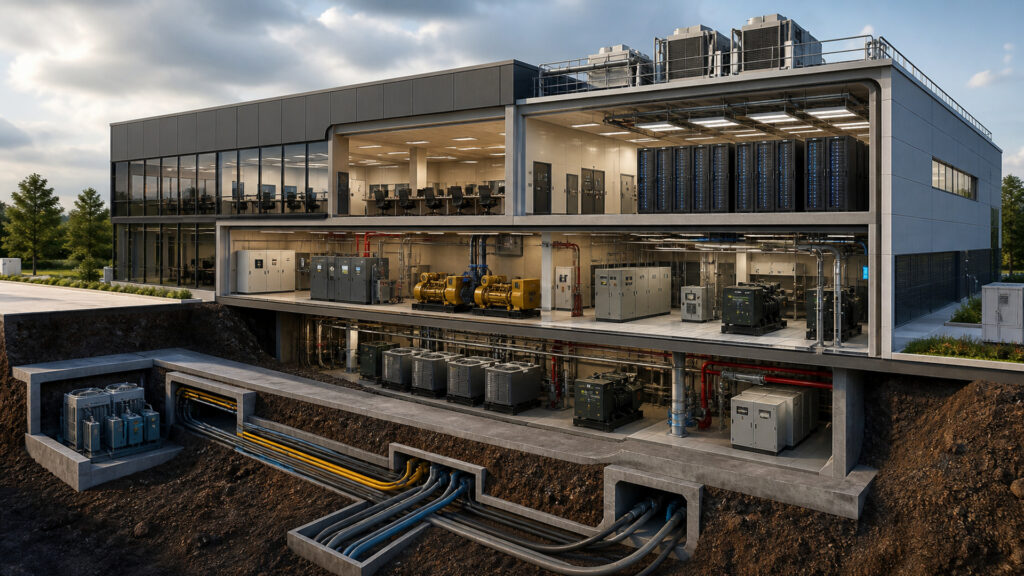
Editorial business scene illustrating business infrastructure
What You'll Learn

Understanding Business Infrastructure

Follow the components, sequence, constraints, and evidence that determine whether business infrastructure fits the operating need.

  • Why Physical Infrastructure matters in the complete system
  • Why Digital Infrastructure matters in the complete system
  • Why Capacity Planning matters in the complete system
  • Why Redundancy matters in the complete system
  • Why Environmental Control matters in the complete system
  • Why Lifecycle Reserve matters in the complete system

Tip: Read the concept as part of a system, then connect it back to the use case.

Definitions

Key Concepts That Define Business Infrastructure

These definitions connect the main idea to the variables, limits, and practical signals readers need to compare options.

Physical Infrastructure

Physical Infrastructure supports the requirement to provide power connectivity space and equipment within business infrastructure. Buyers should connect its configuration to availability, because weak design can expose single points of failure during normal work or exceptions.

  • Physical Infrastructure in practice: Teams provide power connectivity space and equipment
  • Failure signal for Physical Infrastructure: Watch for single points of failure
  • Measurement for Physical Infrastructure: Track availability with its exceptions

Digital Infrastructure

Digital Infrastructure supports the requirement to size capacity for normal demand and growth within business infrastructure. Buyers should connect its configuration to capacity utilization, because weak design can expose deferred replacement during normal work or exceptions.

  • Digital Infrastructure in practice: Teams size capacity for normal demand and growth
  • Failure signal for Digital Infrastructure: Watch for deferred replacement
  • Measurement for Digital Infrastructure: Track capacity utilization with its exceptions

Capacity Planning

Capacity Planning supports the requirement to separate critical systems from single failure points within business infrastructure. Buyers should connect its configuration to incident recovery, because weak design can expose capacity shortfalls during normal work or exceptions.

  • Capacity Planning in practice: Teams separate critical systems from single failure points
  • Failure signal for Capacity Planning: Watch for capacity shortfalls
  • Measurement for Capacity Planning: Track incident recovery with its exceptions

Redundancy

Redundancy supports the requirement to control temperature moisture and physical access within business infrastructure. Buyers should connect its configuration to capital renewal, because weak design can expose unmonitored environments during normal work or exceptions.

  • Redundancy in practice: Teams control temperature moisture and physical access
  • Failure signal for Redundancy: Watch for unmonitored environments
  • Measurement for Redundancy: Track capital renewal with its exceptions

Environmental Control

Environmental Control supports the requirement to monitor condition and service thresholds within business infrastructure. Buyers should connect its configuration to availability, because weak design can expose single points of failure during normal work or exceptions.

  • Environmental Control in practice: Teams monitor condition and service thresholds
  • Failure signal for Environmental Control: Watch for single points of failure
  • Measurement for Environmental Control: Track availability with its exceptions

Lifecycle Reserve

Lifecycle Reserve supports the requirement to fund replacement before failure within business infrastructure. Buyers should connect its configuration to capacity utilization, because weak design can expose deferred replacement during normal work or exceptions.

  • Lifecycle Reserve in practice: Teams fund replacement before failure
  • Failure signal for Lifecycle Reserve: Watch for deferred replacement
  • Measurement for Lifecycle Reserve: Track capacity utilization with its exceptions

Tip: Keep the definitions connected; the strongest answer usually comes from the whole system, not one term.

Operating Sequence

How Business Infrastructure Moves from Input to Result

Physical Infrastructure establishes the starting condition as teams provide power connectivity space and equipment. Next, Digital Infrastructure supports the need to size capacity for normal demand and growth, and Capacity Planning helps them separate critical systems from single failure points. The sequence remains dependable only when Redundancy preserves context for control temperature moisture and physical access. Exceptions move through Environmental Control so people can monitor condition and service thresholds, while Lifecycle Reserve provides evidence when owners fund replacement before failure.

  • provide power connectivity space and equipment
  • size capacity for normal demand and growth
  • separate critical systems from single failure points
  • control temperature moisture and physical access
  • monitor condition and service thresholds
  • fund replacement before failure

Infrastructure is valuable because it quietly sustains operations; its quality becomes visible when demand changes or a hidden dependency fails.

Core Components

The Components That Make Business Infrastructure Dependable

Physical Infrastructure, Digital Infrastructure, and Capacity Planning govern the early decisions in this system. Redundancy and Environmental Control carry the work through execution, while Lifecycle Reserve supports completion and review. Their boundaries matter: a strong Physical Infrastructure cannot compensate for capacity shortfalls, and a capable Environmental Control still needs ownership tied to capacity utilization.

  • Define how Physical Infrastructure contributes before comparing products or providers
  • Define how Digital Infrastructure contributes before comparing products or providers
  • Define how Capacity Planning contributes before comparing products or providers
  • Define how Redundancy contributes before comparing products or providers

For business infrastructure, reliability is created by the handoffs among components, not by one impressive feature viewed alone.

System Fit

How Business Infrastructure Connects with Existing Work

To size capacity for normal demand and growth, the organization must align Digital Infrastructure with existing records, identities, schedules, permissions, or physical conditions. The requirement to control temperature moisture and physical access also connects Redundancy with owners outside the immediate system. Mapping those dependencies early limits single points of failure and deferred replacement, while preserving the meaning needed to interpret availability.

  • Document who will size capacity for normal demand and growth, including normal and exception paths
  • Document who will separate critical systems from single failure points, including normal and exception paths
  • Document who will control temperature moisture and physical access, including normal and exception paths
  • Document who will monitor condition and service thresholds, including normal and exception paths

System fit is credible when Capacity Planning and Lifecycle Reserve retain clear meaning, ownership, and recovery behavior across each boundary.

Constraints

Where Business Infrastructure Commonly Breaks Down

Single points of failure can weaken Physical Infrastructure before later controls have a chance to help. Deferred replacement affects the ability to separate critical systems from single failure points, while capacity shortfalls and unmonitored environments often appear during exceptions, growth, or recovery. Buyers should test those exact conditions and observe incident recovery rather than relying on an ideal demonstration.

  • Create a realistic test for single points of failure and assign the response
  • Create a realistic test for deferred replacement and assign the response
  • Create a realistic test for capacity shortfalls and assign the response
  • Create a realistic test for unmonitored environments and assign the response

A dependable business infrastructure design makes unmonitored environments visible early enough for an accountable owner to protect operations and evidence.

Decision Feedback

How to Evaluate and Improve Business Infrastructure

Use availability to test whether teams can provide power connectivity space and equipment, then pair it with capacity utilization for the next handoff. incident recovery exposes the effect of capacity shortfalls, and capital renewal shows whether the final review is sustainable. Inspecting the exceptions behind those measures helps owners improve Environmental Control without adding unrelated complexity.

  • Availability: Name its owner, baseline, exception source, and review cadence
  • Capacity utilization: Name its owner, baseline, exception source, and review cadence
  • Incident recovery: Name its owner, baseline, exception source, and review cadence
  • Capital renewal: Name its owner, baseline, exception source, and review cadence

Infrastructure is valuable because it quietly sustains operations; its quality becomes visible when demand changes or a hidden dependency fails.

Quick Reality Check

What Business Infrastructure Can Improve - and What It Cannot

Infrastructure is valuable because it quietly sustains operations; its quality becomes visible when demand changes or a hidden dependency fails.

Where the Approach Helps

Physical Infrastructure can help teams provide power connectivity space and equipment consistently when availability has a baseline and accountable owner.

Digital Infrastructure can help teams size capacity for normal demand and growth consistently when capacity utilization has a baseline and accountable owner.

Limits Buyers Should Keep Visible

Capacity Planning cannot remove capacity shortfalls without a defined response, evidence, and review.

Redundancy cannot remove unmonitored environments without a defined response, evidence, and review.

Common Myths

Misconceptions About Business Infrastructure

Common shortcuts and misunderstandings can make the topic seem simpler than it is.

Buying the most advanced option automatically solves business infrastructure

For business infrastructure, Physical Infrastructure cannot deliver the outcome alone. The process must provide power connectivity space and equipment, while owners guard against single points of failure. Treating Physical Infrastructure as self-sufficient hides the required configuration, evidence, and exception review.

Once configured, business infrastructure no longer needs human review

For business infrastructure, Digital Infrastructure cannot deliver the outcome alone. The process must size capacity for normal demand and growth, while owners guard against deferred replacement. Treating Digital Infrastructure as self-sufficient hides the required configuration, evidence, and exception review.

One strong component guarantees the complete system

For business infrastructure, Capacity Planning cannot deliver the outcome alone. The process must separate critical systems from single failure points, while owners guard against capacity shortfalls. Treating Capacity Planning as self-sufficient hides the required configuration, evidence, and exception review.

The lowest initial price produces the lowest long-term cost

For business infrastructure, Redundancy cannot deliver the outcome alone. The process must control temperature moisture and physical access, while owners guard against unmonitored environments. Treating Redundancy as self-sufficient hides the required configuration, evidence, and exception review.

Tip: Treat strong claims as starting points for comparison, not final answers.

FAQ

Frequently Asked Questions About Business Infrastructure

Concise answers to common questions readers may have after the main explanation.

What should a business evaluate first about business infrastructure?

Examine whether the organization can provide power connectivity space and equipment through Physical Infrastructure. Then test the design against single points of failure and connect availability with documented exceptions and accountable Physical Infrastructure ownership.

How can a team tell whether business infrastructure is working?

Examine whether the organization can size capacity for normal demand and growth through Digital Infrastructure. Then test the design against deferred replacement and connect capacity utilization with documented exceptions and accountable Digital Infrastructure ownership.

Which limitation deserves the most attention?

Examine whether the organization can separate critical systems from single failure points through Capacity Planning. Then test the design against capacity shortfalls and connect incident recovery with documented exceptions and accountable Capacity Planning ownership.

How often should the design be reviewed?

Examine whether the organization can control temperature moisture and physical access through Redundancy. Then test the design against unmonitored environments and connect capital renewal with documented exceptions and accountable Redundancy ownership.

Bottom Line

Infrastructure is valuable because it quietly sustains operations; its quality becomes visible when demand changes or a hidden dependency fails.

Before choosing an approach, map how the organization will provide power connectivity space and equipment, control temperature moisture and physical access, and fund replacement before failure; then compare availability, capacity utilization, incident recovery, capital renewal against a realistic baseline.

Next Steps

Go Deeper or Compare Your Options

Use these Review Streets paths to connect the explainer to related categories, comparisons, and next decisions.

Quick Summary

Business Infrastructure Explained

  • Physical Infrastructure supports the need to provide power connectivity space and equipment.
  • Digital Infrastructure supports the need to size capacity for normal demand and growth.
  • Capacity Planning supports the need to separate critical systems from single failure points.
  • Redundancy supports the need to control temperature moisture and physical access.
  • Environmental Control supports the need to monitor condition and service thresholds.