
Chuck size is often treated as a simple specification, yet it represents a core mechanical interface within a cordless drill. It governs how rotational force is transferred to a bit and how securely that bit is retained under load. Misunderstanding chuck size can blur the distinction between compatibility, control, and mechanical limits. This explainer outlines how chuck size is defined, how it relates to bit shank standards, and how internal jaw design affects holding behavior. By the end, the reader will understand how chuck size fits into the broader drilling system and why it functions as a structural constraint rather than a performance shortcut.
Why Chuck Size Matters in Cordless Drills
By: Review Streets Research Lab
Updated: April 20, 2026
Explainer · 8–12 min read
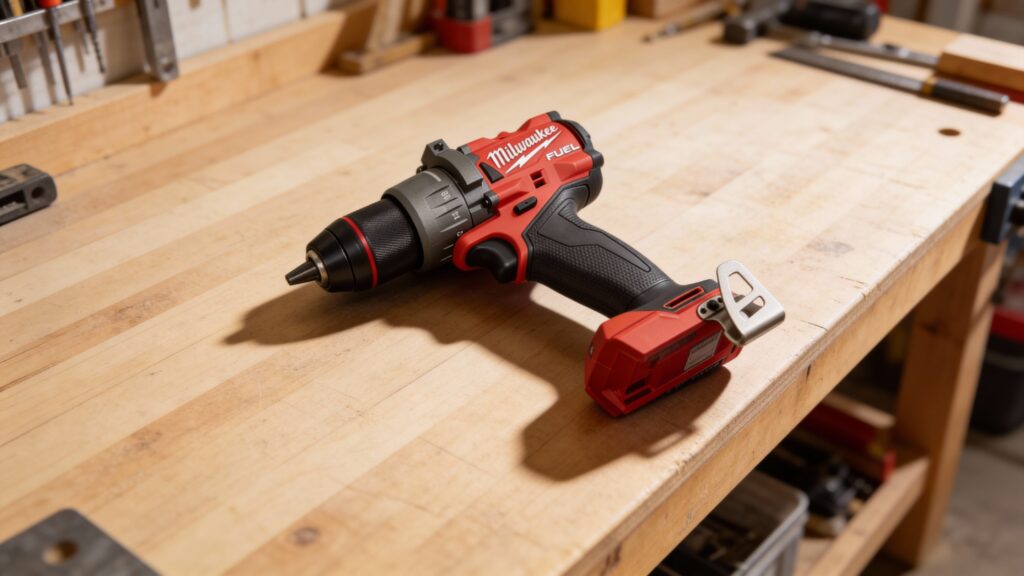
What You’ll Learn
Understanding Chuck Size Mechanics
A focused breakdown of how chuck size functions within the drill system, clarifying bit interface limits, retention forces, and mechanical constraints.
- How chuck size defines maximum bit shank diameter and compatible tooling standards
- How internal jaw geometry influences grip force distribution during rotational load transfer
- Why larger chucks change mass, balance, and torque transmission at the spindle
- How chuck size interacts with gearbox output and spindle shaft dimensions
- What limits chuck tightening range and how that affects bit retention stability
- Why chuck size constrains accessory compatibility independent of motor power capability
- How wear, tolerances, and materials influence holding behavior across chuck sizes
Tip: Think of chuck size as the mechanical gateway that defines the boundary between spindle output and usable tooling.
Definitions
Key Interfaces That Shape Chuck Size Limits
These definitions map the connected parts that determine what a chuck can hold, how force is transferred, and where size becomes a mechanical constraint.
Bit Shank
The cylindrical portion of a bit that the chuck clamps onto. Shank diameter and surface finish determine how much clamping force is needed to prevent slip.
- Diameter: Sets the minimum and maximum jaws can physically close around
- Surface: Smooth shanks demand higher clamping to resist rotation
- Standard: Common shank sizes define practical compatibility boundaries for chucks
Spindle
The rotating shaft that carries torque out of the gearbox and into the chuck. Its geometry and support determine alignment and how loads are carried.
- Interface: Connects the gearbox output to the chuck mounting system
- Support: Bearings and housings manage radial loads created by drilling forces
- Alignment: Small misalignment becomes visible as wobble at the bit tip
Chuck Jaws
The hardened gripping elements that move inward to clamp the shank. Their travel range and contact shape determine the chuck’s usable size window.
- Travel: Limits what diameters can be secured at full closure and opening
- Contact: Jaw geometry controls where force concentrates on the shank
- Wear: Rounded edges reduce effective grip even at high tightening force
Clamping Force
The inward pressure the jaws apply to the shank when the chuck is tightened. It determines whether torque is transmitted by friction or lost as slip.
- Friction: Higher normal force increases resistance to rotational slip at the shank
- Consistency: Uneven force across jaws can trigger micro-slip under cyclic load
- Limit: Tightening torque and mechanism design cap achievable jaw pressure
Runout
The deviation of the bit’s axis from true center as it rotates. It emerges from tolerance stacking across the chuck, spindle, and bearing support.
- Sources: Jaw concentricity, thread fit, and spindle alignment each contribute
- Expression: Small offsets at the chuck become larger at the bit tip
- Load: Side forces can shift seating and amplify visible wobble during drilling
Chuck Capacity
The specified diameter range a chuck can clamp securely. Capacity is set by jaw travel, internal taper geometry, and the space available for the mechanism.
- Maximum: Upper limit is defined by how far jaws can open without losing engagement
- Minimum: Lower limit depends on jaw closure geometry and end-of-travel gaps
- Constraint: Capacity boundaries persist regardless of available motor or gearbox torque
Tip: Treat chuck size as a boundary condition linking bit geometry, jaw mechanics, and spindle alignment into one interface.
Power Path
How Torque Reaches the Bit Through the Chuck Interface
Chuck size matters because the chuck is the final mechanical interface in the power path. It converts spindle torque into usable rotation only when the bit is clamped securely and concentrically.
- The gearbox outputs torque through the spindle, which the chuck mounts onto
- Jaw travel defines the maximum shank diameter that can be clamped
- Clamping force must exceed the slip threshold created by drilling resistance
- Concentricity at the chuck determines whether rotation stays centered at the bit
- Mass at the nose changes how loads are carried by bearings and housings
When the interface is mismatched, available torque becomes heat, slip, or off-axis motion at the bit.
Motors
Motor Behavior Sets the Load the Chuck Must Hold
Chuck size is not isolated from the motor because motor output defines the forces transmitted into the bit interface. The chuck must convert that output into rotation without losing grip under changing load.
- Higher torque pulses increase the tendency for a smooth shank to micro-slip
- Speed changes alter the friction regime at the jaws during tightening and rotation
- Motor control affects how abruptly load is applied to the clamped bit
- Vibration from commutation or control ripple can loosen marginal clamping over time
The chuck’s holding mechanics are stressed by how the motor delivers torque, not just how much.
Gearing
Gearing Changes the Torque Profile the Chuck Must Transmit
The gearbox reshapes motor output into a torque-and-speed profile at the spindle. That profile determines whether the chuck relies on stable friction or drifts toward intermittent slip.
- Lower gear increases spindle torque, raising required jaw pressure for retention
- Higher gear reduces torque but increases speed-related heating at contact surfaces
- Backlash and gear ripple create cyclic loading that can disturb bit seating
- Spindle shaft geometry and bearings limit how much side load the nose can carry
As gearing shifts the load shape, the chuck becomes the boundary between drivetrain output and controlled cutting.
Heat Management
Heat Alters Clamping Stability and Interface Friction
Heat affects chuck performance by changing friction, clearances, and material behavior at the interface. Even small dimensional changes can shift how jaws contact the shank under load.
- Warmth expands components, subtly changing jaw-to-shank contact geometry
- Lubricants and debris films thin or migrate, reducing effective friction at the jaws
- Repeated heating cycles accelerate wear that increases runout and reduces grip
Thermal conditions influence whether the chuck behaves as a stable clamp or a sliding joint.
User Control
Bit Alignment and Balance Depend on the Chuck’s Geometry
Chuck size and construction shape the drill’s front-end geometry, which sets alignment and how forces are managed during drilling. Small deviations at the chuck become large deviations at the bit tip.
- Nose length and mass distribution influence how the drill reacts to side loads
- Runout at the chuck turns into visible wobble as bit length increases
- Grip consistency across jaws affects how smoothly the bit tracks in the hole
- Tightening mechanics influence repeatable seating when bits are swapped frequently
The perceived control of the drill reflects how precisely the chuck centers and retains the rotating tool.
Quick Reality Check
Where Chuck Size Helps — and Where It Constrains
A quick balance of what chuck size enables at the bit interface, and the mechanical boundaries that still shape retention, alignment, and compatibility.
What Larger Chucks Enable
A larger chuck capacity accommodates thicker shanks and some accessory types, widening the physical range of tooling the jaws can close around securely.
That added range comes from greater jaw travel and internal geometry, which can maintain full contact on larger shanks during high-torque, low-speed drilling.
Where Chuck Size Creates Limits
Chuck size does not guarantee grip or precision, because retention depends on jaw condition, tightening force, and how evenly load is shared across contact surfaces.
A larger front-end assembly can increase nose mass and tolerance stack effects, making runout and side-load behavior more noticeable at the bit tip.
Common Myths
Misconceptions About Chuck Size and Drill Capability
Chuck size is often treated like a simple upgrade, but it is an interface limit shaped by geometry, clamping force, and alignment.
A bigger chuck always holds better
Holding is determined by jaw condition, contact geometry, and tightening force, not capacity alone. A larger chuck can still slip if the jaws do not seat evenly or the shank surface reduces friction.
Chuck size directly increases drill power
Chuck size does not create torque; it only transmits what the motor and gearbox deliver through the spindle. If clamping is marginal, more drivetrain output can convert into micro-slip instead of rotation.
All bits fit as long as they tighten
Apparent tightening does not guarantee full jaw engagement across the shank diameter. When the shank is near the edge of the chuck’s range, contact area shrinks and retention can become unstable under changing load.
Runout comes only from bad bits
Runout is often a stack of small tolerances across the jaws, chuck body, mounting threads, spindle, and bearings. A straight bit can still wobble if the interface is slightly off-center or seated inconsistently.
Slipping means the drill is weak
Slip can occur even with ample torque when the friction limit at the jaws is exceeded. Heat, debris films, or worn jaw edges can lower effective grip, allowing the shank to rotate inside the chuck under load.
Tip: Treat chuck size as an interface specification that sets compatibility and clamping geometry, while stability depends on force, alignment, and surface conditions.
FAQ
Frequently Asked Questions About Chuck Size and Drill Mechanics
Clear explanations of how chuck size interacts with bit geometry, torque transfer, alignment, and stability during real drilling conditions.
What does chuck size actually represent?
Chuck size defines the usable diameter range the jaws can clamp securely around a bit shank. It reflects jaw travel, internal geometry, and mechanical limits, not power output or torque capability.
Does a larger chuck make a drill stronger?
No. Torque is generated by the motor and gearbox, then transmitted through the spindle. A larger chuck only changes the range of shank sizes it can hold, not the amount of force produced.
Why can bits slip even when the chuck is tight?
Slip occurs when friction at the jaw-to-shank interface is exceeded. Worn jaws, smooth shanks, uneven contact, heat, or debris can all reduce effective grip even with high tightening force.
How does chuck size affect bit compatibility?
Compatibility depends on whether the shank diameter falls within the chuck’s clamping range. Near the upper or lower limits, contact area shrinks, reducing stability under changing loads.
What causes wobble at the bit tip?
Wobble, or runout, comes from small misalignments across the jaws, chuck body, mounting threads, spindle, and bearings. These tolerances compound and become more visible as bit length increases.
Does chuck size change drilling accuracy?
Indirectly. Larger chucks often add mass and length at the nose, which can amplify side loads and tolerance effects. Accuracy depends more on concentricity and jaw condition than size alone.
Why do larger bits feel harder to control?
Larger bits generate higher cutting resistance and side loads. These forces stress the chuck interface, making alignment errors, runout, or marginal grip more noticeable during rotation.
Is chuck size related to heat buildup?
Heat does not come from size itself, but from slip and friction at the interface. When clamping is marginal, rotational energy converts into heat instead of clean torque transfer.
Tip: When problems appear at the bit, trace them backward through alignment, grip, load, and heat before assuming the drivetrain is the cause.
Bottom Line
Chuck size sets the tool interface limits for grip and compatibility. It shapes what shank diameters can be clamped and how reliably spindle torque becomes controlled rotation without slip or misalignment.
With this model, chuck size reads as a mechanical boundary condition, clarifying why stability issues often trace to interface geometry, wear, and load.
Next Steps
Go Deeper or Compare Your Options
With chuck size in context, these pages extend the framework into broader drill selection, side-by-side tradeoffs, and spec interpretation.
A structured roundup organized by drilling demands, highlighting interface, gearing, and control factors that shape how drills behave in use.
A focused comparison of runtime, heat limits, and load handling, clarifying how each power source changes sustained torque delivery and consistency.
A step-by-step guide to reading specs as a system, including how chuck capacity, runout, and clamping mechanics shape practical compatibility.
Quick Summary
Why Chuck Size Matters
- Chuck size defines the diameter range the jaws can clamp securely
- Capacity affects bit compatibility, but grip depends on jaw contact
- Torque transfer relies on friction, tightening force, and clean seating
- Runout reflects tolerance stacking across jaws, threads, spindle, and bearings
- Nose mass and geometry influence side-load behavior and perceived control
Jump To