Why Compact Pickup Trucks Maintenance Role Matters

Compact pickup maintenance protects the everyday versatility that makes a smaller truck useful. Commuting, short errands, dusty loads, and occasional towing can place different demands on the same vehicle. Keeping the engine or electric systems, tires, brakes, suspension, and cargo equipment in good condition helps the truck move between those roles reliably.

Follow the schedule for the exact model year, powertrain, and use. Compact describes size, not a service plan: a gasoline truck, a hybrid, and any battery-electric model have different requirements. A hybrid still has a combustion engine, while a battery-electric vehicle does not. Neither low mileage nor a small body makes scheduled inspections optional.

By: Review Streets Research Lab
Updated: October 5, 2026
Explainer · 8-12 min read
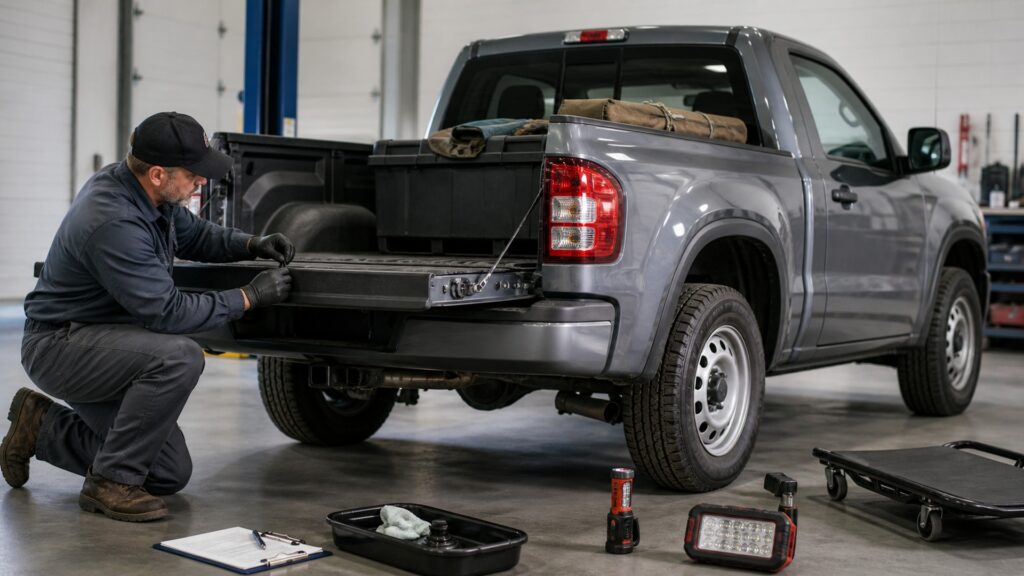
compact pickup trucks explainer hero image for Review Streets
What You'll Learn

Build Maintenance Around the Way the Compact Is Used

Use the actual schedule and the truck's changing tasks to avoid overlooked service.

  • Identify the exact powertrain and required service information
  • Track time-based as well as mileage-based work
  • Include tires, brakes, steering, and suspension
  • Check the effects of towing, dust, short trips, and storage
  • Keep records of completed work and unresolved symptoms

Tip: Describe the use honestly to the service provider. Occasional demanding work may matter even when most mileage is an easy commute.

Definitions

Six Concepts for a Useful Maintenance Plan

These checks connect the schedule to the whole truck.

Powertrain-Specific Service

Maintenance required by the actual engine, hybrid, or electric system.

  • Example: A hybrid compact still needs the engine service specified for that model.
  • Check: Use the correct manual and maintenance schedule.
  • Limit: A size category cannot identify fluid or component requirements.

Time-Based Requirement

Service governed by elapsed time rather than distance alone.

  • Example: A low-mileage vehicle reaches a scheduled calendar requirement.
  • Check: Track dates alongside odometer readings.
  • Limit: Low annual mileage does not suspend every service task.

Demanding Use

Operating conditions that may trigger additional or altered service requirements.

  • Example: Dusty roads or repeated short trips can warrant specific checks in the manual.
  • Check: Review the manufacturer's definitions and instructions.
  • Limit: Do not invent an interval from another vehicle's schedule.

Tire and Brake Condition

The state of the components that carry, grip, and stop the loaded truck.

  • Example: A tire inspection reveals uneven wear before a planned trailer trip.
  • Check: Use correct pressure, ratings, inspections, and service procedures.
  • Limit: A truck that drives smoothly can still have developing wear.

Cargo-Equipment Care

Inspection and upkeep of the equipment used to hold or carry loads.

  • Example: A bed rack or hitch attachment needs its prescribed hardware checks.
  • Check: Follow the equipment maker's instructions.
  • Limit: A vehicle service visit may not automatically cover every added accessory.

Service History

A dated record of inspections, replacements, repairs, and unresolved issues.

  • Example: A receipt records the fluid specification and work performed.
  • Check: Keep records matched to the vehicle and task.
  • Limit: A cleared reminder is not proof that the work was completed.

Tip: Maintenance restores and preserves condition; it does not raise the truck's approved payload or towing capacity.

The Correct Schedule

Start With the Actual Engine and Drive System

Confirm the model year and fitted powertrain before selecting service information. Gasoline and hybrid variants can share a body while differing in components and procedures. All-wheel-drive equipment may also add items absent from another version. Use required fluid specifications and documented intervals, including any service indicators, calendar limits, and special-use instructions that apply.

  • Keep the correct owner's manual accessible.
  • Verify the powertrain and drive configuration.
  • Record completed tasks rather than only reminder resets.

A hybrid badge does not remove engine care, and a familiar model name does not guarantee the same schedule as a previous truck.

Daily Driving

Do Not Confuse Short Trips With Easy Service Conditions

A compact often serves as both a commuter and an errand vehicle. Repeated short trips, prolonged idling, dust, or extreme temperatures can matter to the maintenance schedule. Check how the manufacturer defines demanding use instead of deciding from mileage alone. Calendar requirements are especially easy to miss when the vehicle travels only short distances each week.

  • Review actual trip patterns and environment.
  • Follow applicable special-use requirements.
  • Maintain date-based reminders for infrequently driven vehicles.

A truck with few annual miles can have a very different service pattern from one that covers the same distance on long, steady trips.

Before Loaded Work

Inspect the Parts That Carry and Control the Load

Tires, brakes, steering, and suspension need attention whether the bed is usually empty or regularly loaded. Before a planned haul, check visible condition and follow prescribed maintenance. Report pulling, vibration, abnormal noise, leaks, or uneven tire wear. Load checks remain separate: good maintenance does not make an overweight arrangement acceptable.

  • Use specified cold tire pressures and suitable tire ratings.
  • Keep brake and chassis inspections current.
  • Check the loaded vehicle and trailer equipment limits.

A weekend towing trip is a reason to confirm readiness before departure, not to discover a neglected tire or brake issue after loading.

Bed and Trailer Equipment

Care for the Hardware That Makes It a Pickup

Covers, racks, tie-down equipment, hitch hardware, and trailer connections need the care specified by their manufacturers. Dirt or cargo residue can hide wear or damage, while loose or obstructed equipment can reduce usability. Include these items in a practical inspection routine and tell a service provider about aftermarket equipment that may need separate attention.

  • Inspect attachments and approved mounting hardware as instructed.
  • Keep required lights and connections functional.
  • Clean and inspect cargo areas without damaging fittings or wiring.

An engine service does not establish that a rack, trailer connector, or cargo restraint is ready for the next load.

Follow-Through

Resolve Symptoms and Keep the Evidence of Service

Record when a warning or unusual behavior occurs, including load, temperature, and driving conditions. Give that information to the service provider rather than assuming a particular component has failed. Retain receipts and inspection findings, and complete recommended follow-up for unresolved issues. Hybrid or electric high-voltage work requires appropriately trained personnel and equipment.

  • Note the circumstances of recurring symptoms.
  • Keep fluid, part, and service details where available.
  • Confirm the issue is resolved before relying on demanding use.

A clear service history helps the next technician distinguish completed maintenance from a problem that still needs diagnosis.

Quick Reality Check

Maintenance That Supports Versatility

A compact's different tasks deserve one complete plan.

A Well-Supported Routine

The correct powertrain schedule is followed by time, distance, and applicable use conditions.

Wear systems and added cargo or towing equipment receive their own required checks.

Common Gaps to Avoid

Assuming low mileage, small size, or a hybrid badge removes service requirements.

Treating an oil change or a cleared reminder as proof that the whole truck has been inspected.

Common Myths

Misconceptions About Compact Pickup Maintenance

Small size does not make every task light-duty or every system identical.

Compact pickups all use the same maintenance plan.

Schedules depend on model year, powertrain, equipment, and use.

A hybrid needs no engine service.

A hybrid has a combustion engine with its own required care.

Low mileage means maintenance can always wait.

Time-based tasks and the effects of actual use still apply.

Maintaining the truck increases how much it may tow.

Maintenance supports condition without changing approved ratings.

Tip: Use the manufacturer's schedule to decide what is due, and the vehicle's symptoms to identify problems that cannot wait for the next routine visit.

FAQ

Questions About Compact Pickup Care

Practical answers for a truck that combines commuting and hauling.

Which schedule should I use?

The one for the exact model year, powertrain, drive system, and applicable use conditions.

Do short trips affect maintenance?

They can. Check the manufacturer's definition of demanding use and its required service changes.

What needs attention before occasional towing?

Vehicle condition, tires and brakes, correct load limits, and the hitch and trailer equipment required for the combination.

Are bed accessories included in routine servicing?

Not necessarily. Follow their own instructions and make sure any separate checks are performed.

What records are most useful?

Dates, mileage, work completed, relevant part or fluid details, inspection findings, and unresolved symptoms.

Bottom Line

Compact pickup maintenance keeps a versatile vehicle ready for commuting, cargo, and occasional loaded work.

Use the exact powertrain schedule, account for real operating conditions, and include the tires, chassis, and pickup equipment that engine service alone does not cover.

Next Steps

Go Deeper or Compare Your Options

Use these Review Streets paths to compare related categories and practical next decisions.

Technical references: Ford Maverick owner manual and maintenance information; NHTSA tire-care guidance; DOE maintenance differences by powertrain; Ford towing information and vehicle-specific guides. Use the manual and ratings for your own model year and configuration.