When to Use Compact Pickup Trucks Instead of Electric Pickup Trucks

Use a compact pickup instead of a particular battery-electric pickup when the compact meets the required loads and offers a better fit for parking, daily access, budget, or energy replenishment. A gasoline or non-plug-in hybrid compact can be practical for an owner who lacks dependable charging or whose changing routes are easier to serve with available fuel stops.

Compact and electric describe different things, so they are not inherently competing categories. A pickup can be both compact and electric. The useful decision compares an actual compact configuration with an actual battery-electric alternative, checking dimensions and capability before making assumptions about convenience or cost.

By: Review Streets Research Lab
Updated: October 5, 2026
Explainer · 8-12 min read
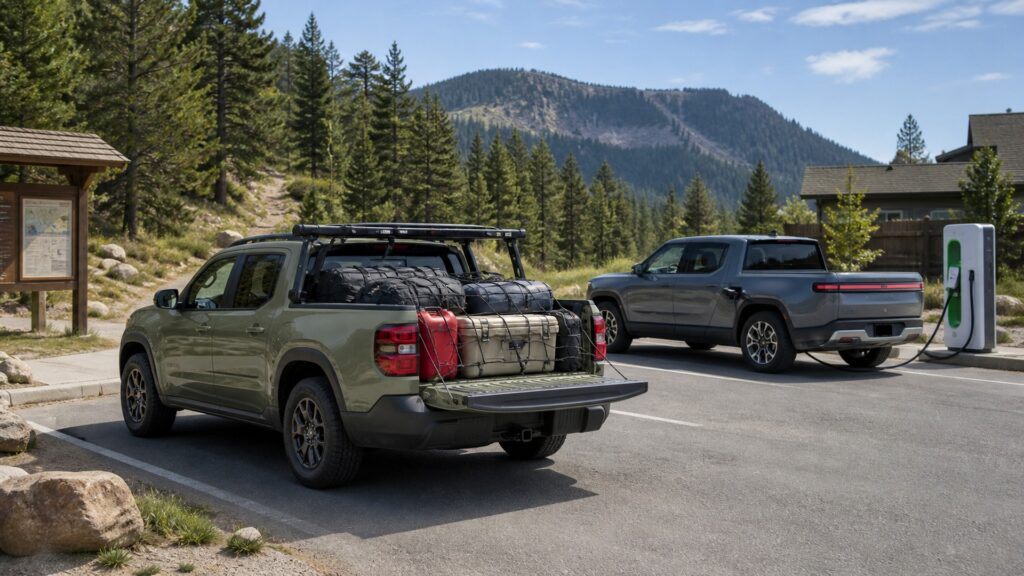
compact pickup trucks explainer hero image for Review Streets
What You'll Learn

When the Compact Candidate Fits Better

Look for a concrete advantage in the routine rather than a preference based only on category names.

  • Confirm the compact handles normal passengers, cargo, and towing
  • Measure the parking and loading spaces that constrain the choice
  • Check the real charging arrangement available to you
  • Test irregular trips and the complete ownership budget
  • Keep suitable electric candidates in the comparison

Tip: Choose the smallest suitable configuration only after confirming the required work. A convenient footprint does not excuse insufficient capacity.

Definitions

Six Checks for Choosing the Compact Alternative

Each tests a practical reason to prefer the specific vehicle.

Required Capability

The load, passenger, and equipment needs the truck must meet.

  • Example: A small crew and secured tools fit within the compact candidate's ratings.
  • Check: Include recurring tasks and important demanding trips.
  • Limit: Occasional overloading is not an acceptable substitute for capability.

Parking Fit

The ability to enter, maneuver within, and use the regular parking space.

  • Example: A shorter truck leaves room to open the garage door and reach stored equipment.
  • Check: Measure length, mirror width, height, and approach.
  • Limit: A compact label does not guarantee a fit in every space.

Loading Access

The ease of placing, securing, and removing normal cargo.

  • Example: A particular bed height makes frequently handled equipment easier to reach.
  • Check: Try the real items and attachment points.
  • Limit: A smaller truck is not automatically easier for every load.

Charging Access

Dependable use of suitable charging when the vehicle needs it.

  • Example: A renter's parking arrangement may offer no reliable charging window.
  • Check: Check permissions, equipment, timing, and alternatives.
  • Limit: A charger shown on a map may not solve daily access.

Route Flexibility

The ability to handle realistic changes in distance and destination.

  • Example: A workday adds a distant collection stop with little warning.
  • Check: Compare practical energy stops and reserves.
  • Limit: Fuel-powered vehicles also need route and supply planning.

Total Ownership Cost

The combined cost of obtaining and using the truck.

  • Example: Purchase terms, energy, insurance, tires, service, and setup all contribute.
  • Check: Use quotes and prices for the actual candidates.
  • Limit: Neither compact size nor electric propulsion guarantees the lowest total.

Tip: Write down the constraint the compact solves. If there is no clear advantage, compare the vehicles on the remaining merits.

Task Sufficiency

Start With the Work the Truck Must Actually Do

A compact can make sense when its seating, bed, payload, and towing provisions meet the required tasks. Check the configuration with normal passengers and installed equipment included. Avoid choosing from an advertised maximum that belongs to another build. If the compact cannot support an essential trailer or load, its parking convenience does not make it a suitable substitute.

  • List recurring loads and important exceptions.
  • Check usable bed dimensions as well as weight.
  • Verify the exact towing package and hitch requirements.

A compact serving a small tool load every day presents a different case from one expected to carry a crew and substantial hitch load together.

Everyday Space

Give Parking and Access Their Proper Weight

A truck occupies space even on days when its bed is empty. Compare regular parking, narrow entrances, turning approaches, and access around the vehicle. A particular compact may fit these constraints better than a larger electric candidate. Measure both, because electric propulsion alone does not imply large dimensions, and a different electric model may fit equally well.

  • Try the approach to the actual parking location.
  • Allow room for doors, tailgate, and charging access where relevant.
  • Check loading reach with normal equipment.

If the larger candidate forces inconvenient parking every day without adding needed capability, the compact has a meaningful practical advantage.

Energy Access

Prefer a Fuel-Based Routine When Charging Does Not Work

A gasoline or non-plug-in hybrid compact may be easier to support when reliable charging is unavailable at home, work, or practical public locations. Consider permission, parking duration, equipment access, and local charging prices. Do not assume public charging is unsuitable for everyone; assess the actual arrangement. Equally, do not count on an installation that cannot be completed or used dependably.

  • Check the normal parking arrangement before buying.
  • Compare time spent obtaining energy.
  • Include an alternative for disrupted access.

The decision can change if dependable charging later becomes available during time the truck is already parked.

Changing Travel

Test the Trips That Are Hard to Predict

Some owners travel to changing jobsites, tow infrequently but over long distances, or cannot easily add charging time to a schedule. Compare both candidates on those real constraints. A compact's own ratings and fuel range still matter. The aim is a workable trip, not an assumption that one powertrain can travel anywhere without planning.

  • Include the return trip and likely detours.
  • Check stops that accommodate the truck and trailer.
  • Use loaded conditions for energy estimates.

If the electric alternative requires recurring detours that interfere with necessary work, the fuel-powered compact can be the more practical choice within its capability.

Budget and Features

Buy the Capability and Convenience You Will Use

Compare complete purchase terms and ongoing costs, including any charging installation, service, insurance, tires, and local energy prices. An electric truck may provide useful storage or external power; a compact may meet the task at a lower cost in a specific comparison. Verify both claims. Paying for additional capability or equipment is worthwhile only when its benefits justify the commitment for that owner.

  • Use realistic annual mileage and energy prices.
  • Include setup costs and required accessories.
  • Compare fitted features rather than model-family advertising.

The compact is the stronger choice when it meets the work with a more manageable daily footprint, energy routine, or total budget.

Quick Reality Check

Conditions That Favor the Compact Candidate

A practical preference needs both sufficient capability and a useful advantage.

Choose the Compact When

Its actual ratings and layout meet the job while its dimensions improve regular access.

Its supported fuel routine or total ownership costs better fit the owner's circumstances.

Reconsider the Compact When

An essential load, passenger requirement, or trailer setup lies outside its capability.

A suitable electric candidate fits the same spaces and offers dependable charging or other valuable benefits.

Common Myths

Misconceptions About Choosing Compact Over Electric

Do not use size and propulsion as substitutes for specifications.

Compact trucks cannot be electric.

The labels describe different attributes and can apply to the same vehicle.

A compact is automatically cheaper in every respect.

Actual purchase, energy, insurance, service, and setup costs decide the comparison.

Small daily loads mean any compact can handle occasional towing.

The actual trailer, hitch load, occupants, and configuration must meet all limits.

No home charger means electric ownership is impossible.

A dependable workplace or public arrangement may work; assess its access, cost, and timing.

Tip: Prefer a vehicle because it solves the real constraints, not because the competing category is described unfairly.

FAQ

Questions About Choosing a Compact Pickup

Answers for balancing enough capability with everyday practicality.

When is a compact the sensible choice?

When it meets required tasks and improves actual access, energy convenience, or ownership cost compared with the candidate being considered.

What should I measure?

The vehicle and parking approach, door and tailgate clearance, usable cargo dimensions, and loading access.

Can a hybrid compact avoid charging stops?

A non-plug-in hybrid does not require external charging. Identify the specific powertrain before assuming that applies.

What if towing is only occasional?

It still must fit the vehicle's ratings and equipment, and the complete loaded trip needs a workable energy plan.

Could the decision favor electric later?

Yes. Different charging access, routes, needs, or available configurations can change the practical comparison.

Bottom Line

Use a compact pickup when it provides the required capability with a better fit for the owner's space, energy access, and budget.

Compare exact vehicles and keep size separate from propulsion, including the possibility that a suitable compact could itself be electric.

Next Steps

Go Deeper or Compare Your Options

Use these Review Streets paths to compare related categories and practical next decisions.

Technical references: Ford Maverick configuration information; Ford towing information and vehicle-specific guides; Ford electric range and charging considerations; DOE electric-vehicle ownership considerations. Use the manual and ratings for your own model year and configuration.