
Movement Pattern
Movement pattern is the path, posture, and timing the body follows while stepping.
- Example: repeating a short climbing motion on compact pedals
- Check: watch whether the motion stays smooth
- Limit: small frames can feel cramped
Movement pattern matters because a compact stair machine only works well when the step path, pedal travel, posture, and balance support fit the user. A small frame can still create a useful climbing-style workout, but only if the motion feels controlled enough to repeat.
The best compact stair machines do more than move the feet up and down. They let the user step with a stable rhythm, keep the knees and hips comfortable, and maintain posture without leaning heavily on the handles.
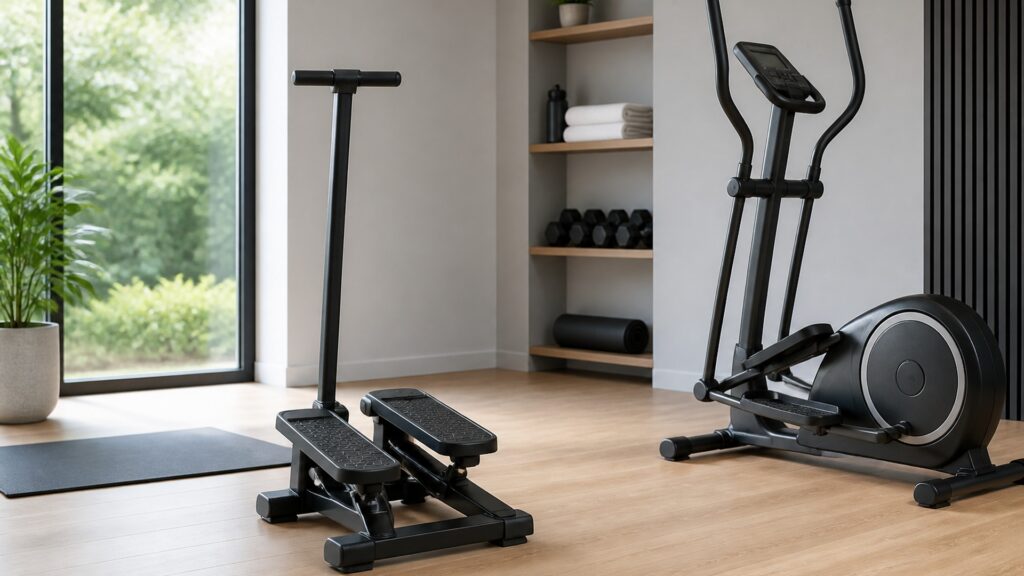
A practical look at step path, pedal travel, posture, balance, and repeatable climbing rhythm.
Tip: Test the machine at the pace the user will actually repeat, not just for a few slow steps.
These concepts explain how compact stepping feels during real use.
Movement pattern is the path, posture, and timing the body follows while stepping.
Step depth is how far each pedal moves through the stepping motion.
Pedal travel is the full route the pedal follows under the foot.
Cadence is the stepping rate during the workout.
Balance support is the help from handles, rails, or frame shape.
Posture fit is how naturally the user can stand while stepping.
Tip: Movement fit comes before intensity because every workout depends on the same repeated step.
Compact stair machines vary in how the pedals move. A useful model should let the user step without feeling jammed, bounced, or forced into an odd path.
Natural step motion makes repeat use more likely.
A shallow step may feel easy to start but less like climbing. A deeper step can raise intensity quickly but may be too demanding or uncomfortable for some users.
The right depth is the one the user can control.
Compact machines can shift or feel narrow. Handles and frame stability matter because stepping effort increases balance demand.
A stable step pattern makes the machine feel safer and more useful.
A compact stair machine can become choppy when the user rushes. The better test is whether the machine supports a steady rhythm at the pace the user expects to use.
Repeatable rhythm matters more than a few hard steps.
A compact stair machine should be chosen when the stepping motion feels sustainable. Size and resistance matter, but movement pattern decides whether the machine becomes part of the routine.
The movement pattern is the workout.
Compact stepping works best when the motion fits the user and room.
The step path feels stable, smooth, and repeatable.
The user can keep posture without leaning heavily.
Pedal travel feels cramped, choppy, or unstable.
The machine is too small or too light for the user's pace.
Small step machines still need a good motion pattern.
Step path, depth, and stability change the workout.
Small frames can feel harder to balance on.
Support position can affect posture and control.
Movement issues often appear after several minutes.
Tip: Judge the machine by repeated stepping, not by one or two test steps.
Short answers about step path, depth, cadence, and fit.
Because the user repeats the same step thousands of times across workouts.
Test step depth, pedal travel, frame stability, and posture at normal pace.
Yes. Some users may feel cramped by short pedal travel or narrow support.
No. Deeper stepping can be useful but only if it stays comfortable and controlled.
Choose the compact stair machine with the most repeatable step motion, not just the smallest footprint.
Movement pattern matters because compact stair machines depend on a repeated step that has to feel stable and natural.
Check step depth, pedal travel, posture, cadence, and balance support before judging resistance or size.
Use these Review Streets paths to compare related categories and practical next decisions.
Review step mechanics and compact cardio tradeoffs.
Explore the compact stair-machine category.
Compare more home cardio options.
Choose a retailer
Prices checked regularly. We may earn a commission at no cost to you.