
Frame Stability
Frame stability is how firmly the machine stays in place while the user steps.
- Example: a stepper that does not rock at normal pace
- Check: test on the intended floor
- Limit: light frames can shift
Safety factors matter because compact stair machines put repeated stepping effort on a small frame. The workout may look simple, but stability, pedal grip, hand support, clearance, and user control decide whether the machine feels safe enough to use regularly.
A safer compact stair machine is not necessarily the largest one. It is the one that stays planted, gives the user enough support, keeps the pedals predictable, and fits the room without crowding the stepping motion.
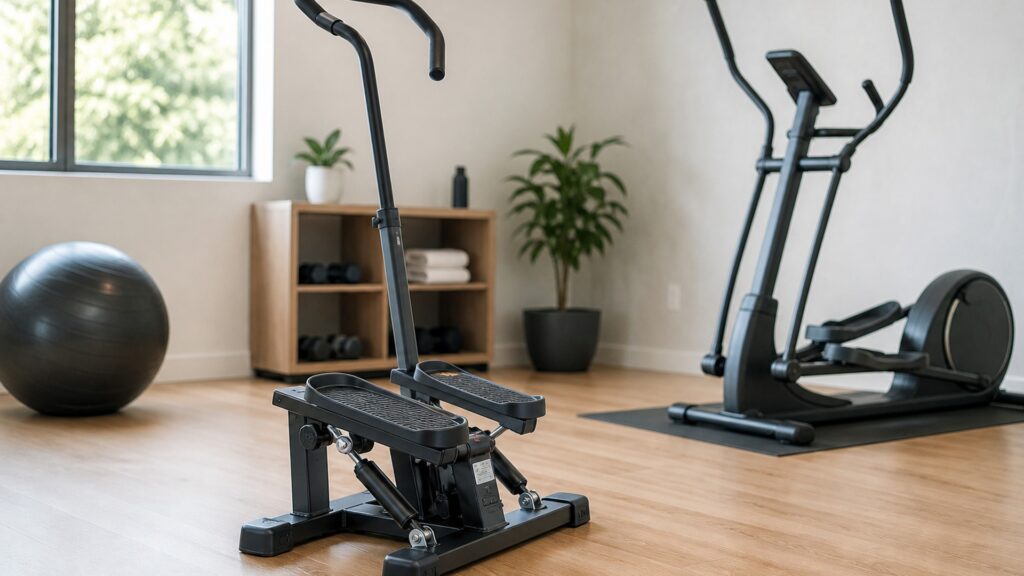
A practical look at frame stability, pedal grip, support handles, clearance, and controlled stepping.
Tip: A compact machine still needs full workout clearance and stable contact with the floor.
These concepts explain the setup and fit checks that make compact stepping more controlled.
Frame stability is how firmly the machine stays in place while the user steps.
Pedal grip is how securely the foot stays on the pedal surface.
Hand support is the help provided by handles or rails during stepping.
Clearance is the space needed around the machine to mount, step, and dismount safely.
Controlled cadence is stepping at a rate the user can manage without bouncing or losing posture.
Maintenance check is a quick review of parts that can loosen, wear, or shift.
Tip: Safety checks are practical setup habits, not a reason to avoid compact cardio.
A compact stair machine should sit on a flat, supportive surface. Rocking or sliding becomes more noticeable as cadence and resistance rise.
Stable floor contact makes the workout feel controlled.
The pedals should hold the user's feet without forcing awkward placement. Slipping, narrow pedals, or poor shoe contact can make the machine harder to use safely.
Secure feet make repeated stepping more reliable.
Hand support helps balance, but leaning heavily can change posture and reduce control. The user should be able to step while using support lightly.
Support should steady the user, not carry the workout.
A compact machine can still be unsafe in a cramped spot. The user needs room to get on, step, recover balance, and get off without hitting furniture.
Safe use takes more space than storage.
Compact stair machines can feel intense quickly. Pushing speed or resistance beyond control can make the frame rock, posture collapse, or steps become choppy.
Controlled stepping is safer and more useful than rushed effort.
Compact stair-machine safety is mostly about setup, fit, and controlled use.
The frame stays stable and the pedals feel secure.
The user has enough room and support for controlled stepping.
The machine rocks, slips, or crowds the user's movement.
The user steps faster than posture and balance allow.
Small equipment still deserves real setup checks.
Small machines can still shift or feel unstable.
Handles help, but frame stability and posture still matter.
The user needs operating clearance.
Effort is useful only when movement stays controlled.
Tip: Set up the machine before chasing intensity.
Short answers about stability, pedals, handles, and use space.
Check floor stability, pedal grip, handle position, clearance, and frame movement.
They can be when the user starts slowly and uses a stable machine.
Yes. Handles can help balance, but they should not force leaning.
Enough to mount, step, and dismount safely, not just enough to store the machine.
A compact stair machine is safest when it stays stable and the user can step with control.
Safety factors matter because compact stair machines combine small frames with repeated stepping effort.
Stable placement, secure pedals, useful handles, enough clearance, and controlled cadence make the machine easier to use regularly.
Use these Review Streets paths to compare related categories and practical next decisions.
Review step mechanics and compact cardio tradeoffs.
Explore the compact stair-machine category.
Compare more home cardio options.
Choose a retailer
Prices checked regularly. We may earn a commission at no cost to you.