
Why Corded Drills Duty Cycle Matters

The duty cycle of a corded drill refers to the ratio of time the tool can operate continuously without overheating. Despite its importance, this concept is often overlooked or misunderstood by users, leading to inefficient use and potential damage to the tool. It is essential for understanding how long a drill can work at its full capacity before requiring a cooldown period.

This explainer will clarify the role of duty cycle in the performance of corded drills. By the end, readers will have a comprehensive understanding of how duty cycle affects operational efficiency and tool longevity, as well as the factors that determine an ideal duty cycle for various tasks.
By: Review Streets Research Lab
Updated: April 20, 2026
Explainer · 8–12 min read
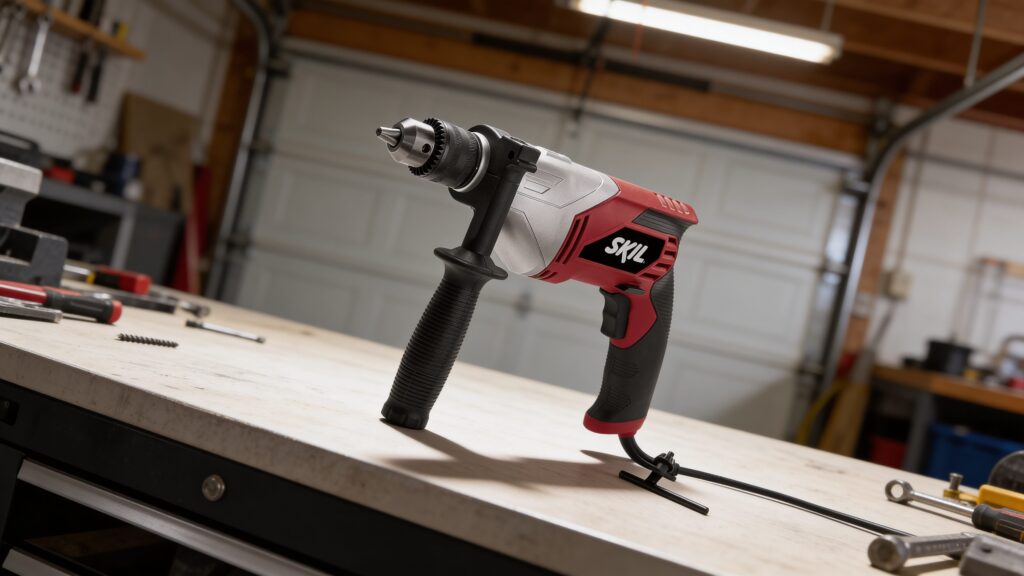
Illustration showing the importance of duty cycle in corded drills, featuring a drill in action with a focus on motor performance and efficiency.
What You’ll Learn

Why Corded Drills Duty Cycle Matters

An overview of how duty cycle impacts drill performance, focusing on operational limits, efficiency, and tool longevity during extended use.

  • What duty cycle is and why it’s essential for corded drills
  • How continuous use affects the drill’s motor and cooling system
  • Why a drill’s rated duty cycle matters for various tasks
  • How to interpret duty cycle specifications for optimal use
  • The role of temperature and heat buildup in tool performance
  • How to prevent overheating and extend tool lifespan
  • How different applications affect duty cycle requirements

Tip: Understanding duty cycle helps prevent tool damage and ensures peak performance, especially during prolonged, high-load tasks.

Definitions

Key Parts That Make a Corded Drill Work

Before you can understand performance, it helps to know what each major component does—and where the common misunderstandings come from.

Duty Cycle

The duty cycle refers to the amount of time a corded drill can run at full power before needing to cool down. It is critical for understanding the tool’s capacity during extended use.

  • Run time: How long the drill can operate continuously before overheating
  • Cool down: The necessary break between periods of intense use to avoid damage
  • Tool longevity: Affects the overall lifespan of the motor and components

Overheating

Overheating occurs when the motor generates excess heat that the tool cannot dissipate fast enough, leading to performance drops or even damage to internal components.

  • Heat buildup: Increases with prolonged heavy usage or insufficient cool down
  • Motor damage: Can degrade motor efficiency or cause permanent failure
  • Indicators: Excessive heat may cause the drill to slow down or stop working temporarily

Cooling System

The cooling system manages the heat generated during use, helping to maintain optimal performance and prevent overheating during extended or intense operations.

  • Ventilation: Allows airflow to reduce motor temperature
  • Material design: Uses heat-resistant materials to minimize thermal buildup
  • Airflow optimization: Key to ensuring that heat is dissipated efficiently

Motor Efficiency

Motor efficiency refers to the drill’s ability to convert electrical energy into rotational power without generating excessive heat. Efficient motors extend duty cycle and tool life.

  • Energy conversion: How much energy is used for actual drilling versus wasted as heat
  • Performance under load: A more efficient motor maintains consistent power output
  • Heat management: Efficient motors generate less heat, extending runtime

Load Impact

The load placed on a corded drill directly affects its duty cycle. Heavier or denser materials increase the load, requiring more power and generating more heat.

  • Material density: Denser materials require more torque and lead to higher heat
  • Resistance: High resistance increases the effort needed from the motor
  • Tool response: A higher load demands more power, reducing the available duty cycle

Tip: Managing the balance between workload and rest time ensures your drill’s motor stays cool and performs efficiently throughout its life.

Duty Cycle

Why Duty Cycle Matters for Corded Drills

The duty cycle defines how long a corded drill can operate before needing to cool down. Understanding this is critical for using the drill efficiently during demanding tasks.

  • The duty cycle specifies the ratio of operational time to rest time
  • Prolonged use without breaks can lead to overheating and tool damage
  • A drill with a high duty cycle can maintain performance during extended use
  • Frequent cooling breaks are essential for maintaining optimal motor efficiency
  • The type of task and material being drilled influences the required duty cycle

Understanding and managing the duty cycle ensures that the drill operates at peak efficiency without risking overheating or premature wear.

Motors

Brushless vs. Brushed Motors

The motor plays a major role in how efficiently a cordless drill turns battery energy into real work. This is where many modern performance gains come from.

  • Brushed motors use physical contacts that wear over time and waste some energy as heat
  • Brushless motors rely on electronic control for smoother power delivery and better efficiency
  • Brushless designs usually run cooler under load, extending both tool and battery life

In practice, brushless drills tend to feel stronger for longer tasks, even when rated at similar voltages.

Gearing

Why Gears Matter More Than Raw Motor Speed

The gearbox determines how motor speed is converted into usable torque. This is why drills with similar motors can behave very differently.

  • Low gear multiplies torque for driving screws or boring large holes
  • High gear trades torque for speed when drilling smaller holes
  • Gear quality affects smoothness, noise, and long-term durability

A well-designed gearbox allows a drill to stay productive without stalling or overheating when the work gets demanding.

Heat Management

Why Drills Lose Power as They Get Hot

Heat is the silent limiter of cordless drill performance. As internal temperatures rise, electronics and batteries reduce output to prevent damage.

  • Batteries restrict current when they overheat
  • Controllers dial back power to protect components
  • Motors lose efficiency as heat builds

This is why sustained drilling often tells a very different story than short burst tests.

User Control

Trigger Control, Balance, and Ergonomics

Beyond raw specs, how a drill feels in your hand affects accuracy, fatigue, and overall productivity.

  • Smooth trigger response improves precision when starting holes or driving screws
  • Good balance reduces wrist strain during overhead or extended use
  • Grip shape and weight distribution influence control more than most people expect

These factors don’t show up in spec sheets, but they heavily influence real-world performance.

Quick Reality Check

Where Corded Drills Shine — and Where They Don’t

A simple, practical balance: what cordless drills handle beautifully, and the situations where their limits show up.

What Cordless Drills Do Well

Cordless drills excel at portability and convenience. With no cord to manage, they’re easier to maneuver in tight spaces, on ladders, or across job sites.

Modern battery and motor designs allow many cordless drills to handle the majority of household and professional drilling tasks without feeling underpowered.

Where Cordless Drills Have Limits

Because they rely on batteries, cordless drills can lose performance as heat builds or batteries drain. Sustained heavy drilling can trigger power reductions.

For continuous, high-load tasks, corded tools still have an advantage in delivering unlimited runtime without thermal throttling.

Common Myths

Misconceptions About How Corded Drills Work

Cordless drills are often judged by outdated assumptions or misunderstood specs. Here’s what actually matters—and what doesn’t.

Cordless drills aren’t powerful enough for real work

Modern cordless drills—especially brushless models—can outperform many older corded drills in short to medium-duty tasks. Power limits usually show up during long, continuous drilling, not everyday use.

Higher voltage always means more power

Voltage alone doesn’t determine performance. Battery cell quality, current delivery, motor efficiency, and gearing all affect how much usable torque reaches the bit.

Amp-hours make a drill stronger

Amp-hours affect runtime, not peak power. A higher Ah battery lets you work longer, but it won’t necessarily make the drill drill faster or harder.

Brushless drills are always better

Brushless motors are generally more efficient and durable, but a well-designed brushed drill can still perform very well for light or occasional use.

If a drill stalls, it’s underpowered

Stalling often comes from heat buildup, controller limits, or the wrong gear selection—not a lack of rated torque. Switching to low gear or letting the drill cool can make a big difference.

Tip: When comparing drills, focus on how they behave under load and over time—not just headline specs or marketing claims.

FAQ

Frequently Asked Questions About How Corded Drills Work

Quick answers to the most common questions people have after learning the basics of corded drill power, motors, and gearing.

What actually determines how “powerful” a corded drill feels?

It’s a system: the power delivery from the electrical source, the efficiency of the motor, the gearing setup, and heat management. A well-balanced system determines how the drill performs under load.

Does higher amperage always mean more power?

Higher amperage can indicate more power, but other factors like motor design and gearing also significantly influence how effectively that power is used for drilling tasks.

What does duty cycle mean, and how does it affect performance?

Duty cycle refers to the amount of time a drill can operate continuously before requiring a rest period to cool down. A drill’s duty cycle impacts its performance during prolonged or heavy-duty tasks.

Why does my corded drill slow down or lose power during long drilling sessions?

Loss of power often comes from heat buildup or a thermal cutoff. The motor or internal components may slow down to prevent overheating, which is why cooling breaks or using proper gear selection helps.

When should I use low gear vs high gear?

Use low gear for tasks requiring more torque, such as driving screws or drilling into tough materials. Use high gear for faster drilling in softer materials where less torque is required.

What’s the practical advantage of using a corded drill?

Corded drills offer consistent, unlimited power as long as they’re plugged in, making them ideal for extended tasks or when maximum torque is needed without worrying about battery limitations.

Why do some chucks slip or wobble?

Chuck slip or wobble can be caused by poor grip, loose tightening, or wear on the chuck mechanism. It may also result from debris or damage inside the chuck, which prevents a secure grip on the drill bit.

What matters more for performance: the drill or the power source?

Both are critical. The power source provides the energy for the drill, but the motor, gearing, and control systems within the drill shape how effectively that power is translated into drilling force.

Tip: If your drill struggles, check gear selection, drill bit condition, and the potential for overheating before considering other issues like power supply.

Bottom Line

Corded drills perform based on their duty cycle, heat management, and power delivery—not just motor specs. The motor, gearbox, cooling system, and overall power management work together to maintain optimal performance during extended use.

Understanding how a drill’s power and heat systems work clarifies what affects performance over time, helping you make informed decisions based on real-world use.

Next Steps

Go Deeper or Compare Your Options

Now that you understand how corded drills work, these guides help you apply that knowledge to real buying decisions.

Best Corded Drills

A ranked look at the top corded drills across power levels, use cases, and budgets—based on real performance factors.

Corded vs Cordless Drills

A side-by-side comparison that breaks down power, runtime, heat limits, and which type makes sense for different jobs.

How to Choose a Corded Drill

A practical buying guide that explains which specs matter, which don’t, and how to avoid common marketing traps.

Quick Summary

Why Corded Drills Duty Cycle Matters

  • Duty cycle defines how long a corded drill can operate before cooling down
  • Heat management impacts continuous performance and tool longevity
  • Motor efficiency, cooling, and gearing affect sustained power output
  • Voltage and amp-hour ratings alone don’t determine overall drilling capacity
  • Extended use without breaks can lead to overheating and reduced effectiveness