
Why Family Preparedness Matters

Preparedness is the ability to make useful decisions when ordinary systems are interrupted. Severe weather, wildfire smoke, evacuation, power loss, illness, medication disruption, and communication failure create different demands, but each rewards work completed before stress narrows attention.

A household plan is more than a supply bin. It connects people, locations, health needs, medications, devices, pets, transportation, contacts, and backup options. Accessibility and caregiver responsibilities belong in the main plan, and practice reveals gaps that a checklist alone cannot show.

By: Review Streets Research Lab
Updated: August 13, 2026
Explainer · 8-12 min read
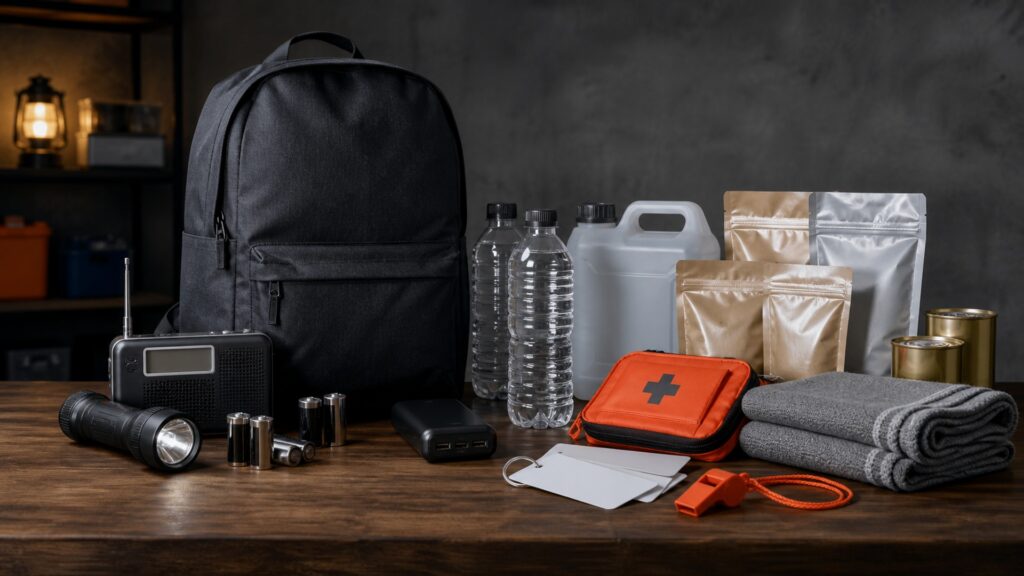
People-free organized family preparedness station with emergency supplies, blank contact cards, flashlight, radio, water, and medication pouch
What You'll Learn

Preparedness as a Maintained Household System

Connect risk, communication, health continuity, supplies, accessibility, practice, and recovery rather than treating a kit as the entire plan.

  • How household risk sets priorities
  • Why communication needs multiple routes
  • Which health details must travel with the family
  • How accessibility changes supplies and timing
  • Why practice exposes hidden dependencies
  • How recurring review keeps plans current

Tip: Read the concept as part of a system, then connect it back to the use case.

Definitions

Key Concepts That Define Family Preparedness

These definitions connect the main idea to the variables, limits, and practical signals readers need to compare options.

Hazard Profile

The events most plausible for a household and location

  • System role: Directs preparation toward realistic disruption
  • Decision use: Follow hazard profile when comparing the relevant input and output
  • Boundary: Hazard Profile does not represent every factor in the result

Emergency Action Plan

A shared sequence of contacts, locations, roles, and decisions

  • Why it matters: Reduces improvisation under stress
  • Observation: Changes in emergency action plan should be interpreted across comparable conditions
  • Caution: Treat emergency action plan as one signal rather than a complete conclusion

Health Continuity

Preservation of medications, devices, records, power, and support

  • Primary function: Protects ongoing needs during disruption
  • Comparison point: Check the stated range and method used for health continuity
  • Constraint: Context can change how health continuity affects the outcome

Go Kit

Portable essentials for evacuation or rapid relocation

  • Practical meaning: Supports movement rather than long home sheltering
  • Buyer check: Ask how the product establishes or controls go kit
  • Limit: A specification for go kit needs real-use context

Shelter Supply

Resources for remaining safely at home during interrupted services

  • Working effect: Covers a different operating scenario
  • Feedback: Repeated observations make shelter supply more interpretable
  • Uncertainty: Technique and conditions can alter the apparent result

Redundancy

A second method or resource for an essential function

  • Decision relevance: Prevents one failure from collapsing the plan
  • Use case: Connect redundancy with a defined action or comparison
  • Scope: Keep claims about redundancy inside the intended-use boundary

Tip: Keep the definitions connected; the strongest answer usually comes from the whole system, not one term.

Priorities

Plan for the Household's Real Hazards

Location, building type, health needs, transportation, climate, pets, work, school, and local guidance determine which disruptions deserve preparation first.

  • Review local hazards
  • Identify critical dependencies
  • Separate evacuation from shelter needs

Preparedness becomes practical when it is specific.

Coordination

Create Several Ways to Reconnect

Household members need contacts, meeting places, school or workplace procedures, and an out-of-area option when local communication is overloaded.

  • Store contacts offline
  • Choose primary and alternate locations
  • Include caregivers and neighbors

A plan should still work when one phone, network, or person is unavailable.

Continuity

Protect Medications, Devices, and Information

Medication lists, allergies, diagnoses, clinician contacts, device instructions, power requirements, and copies of essential documents support continuity.

  • Keep information current
  • Plan safe medication storage
  • Identify backup power and supplies

Health details must remain accessible without creating unnecessary privacy exposure.

Capability

Match Supplies to the Scenario

Water, food, lighting, sanitation, first aid, communication, respiratory protection, charging, and weather protection support different household functions.

  • Store by use case
  • Rotate dates and batteries
  • Keep essential items reachable

A large pile is less useful than a known, maintained system.

Resilience

Test the Plan and Repair Weak Points

Practice reveals locked exits, confusing roles, missing adapters, inaccessible supplies, pet problems, or unrealistic travel assumptions.

  • Run short household drills
  • Review after changes or events
  • Update roles as abilities change

Rehearsal turns written intention into operational memory.

Quick Reality Check

What Preparedness Can—and Cannot—Control

Preparation improves options and coordination without guaranteeing that every hazard will unfold as expected.

Where Planning Helps

Advance decisions reduce cognitive load and can preserve communication, medication, device power, sanitation, and safe movement.

Redundant contacts and supplies make a household less dependent on one fragile system.

Where Planning Stops

A household kit cannot replace evacuation orders, emergency services, building repairs, or professional medical care.

Plans become unreliable when hazards, household members, medications, locations, or equipment change without review.

Common Myths

Misconceptions About Family Preparedness

Common shortcuts and misunderstandings can make the topic seem simpler than it is.

Buying a large emergency kit completes family preparedness

A kit supplies objects but cannot assign roles, update health information, choose meeting places, plan transportation, accommodate disabilities, or teach anyone how to act. Preparedness combines supplies with decisions, communication, practice, and maintenance.

Families can simply make a plan during an emergency

Stress, incomplete information, disrupted networks, darkness, evacuation traffic, medication needs, and separated household members make improvisation harder. Advance choices preserve attention for changes that truly cannot be predicted. Use the stated purpose instructions and.

A phone contact list is enough for emergency communication

Phones can be lost, uncharged, damaged, locked, or disconnected from local networks. Printed contacts, out-of-area contacts, meeting places, school procedures, radio information, and backup charging create more resilient communication.

Preparedness is only necessary for households with children

People living alone, older adults, roommates, caregivers, pet owners, and households with disabilities or medical devices also have critical dependencies. Every household benefits from contacts, health information, supplies, and realistic backup plans.

Tip: Treat strong claims as starting points for comparison, not final answers.

FAQ

Frequently Asked Questions About Family Preparedness

Concise answers to common questions readers may have after the main explanation.

What health information belongs in a preparedness plan?

Include current medications and doses, allergies, conditions, clinician and pharmacy contacts, insurance details, device and power requirements, communication needs, and an emergency contact. Store copies securely but accessibly in appropriate formats.

How should medications be prepared for disruption?

Follow storage and refill rules, keep an updated list, identify pharmacy and prescriber contacts, plan refrigeration or power where required, and discuss special continuity needs with the appropriate healthcare or emergency-planning source.

How often should a family plan be practiced?

Practice often enough that roles, exits, contacts, and meeting places remain familiar, and repeat whenever the household, location, risks, health needs, or equipment change. Short targeted drills can reveal practical gaps.

What makes a preparedness supply truly useful?

It must serve a defined scenario, remain accessible, fit household abilities, be understood by likely users, and stay within date and operating condition. Supplies without compatible power, instructions, or required accessories may fail.

Bottom Line

Family preparedness matters because disruption removes time, information, access, and familiar routines precisely when health needs may become more difficult to manage.

Build the plan around real hazards and people, protect communication and health continuity, maintain the supplies, add redundancy, and practice enough to expose weak links.

Next Steps

Go Deeper or Compare Your Options

Use these Review Streets paths to connect the explainer to related categories, comparisons, and next decisions.

How Family Health Products Works

Family health products perform different jobs: measuring signals, reducing exposure, delivering a defined intervention, improving comfort, or supporting preparedness.

Why Preventive Care Matters

Preventive care uses age, history, exposures, and evidence to guide screening, vaccination, counseling, medication review, and follow-up before some problems become severe.

Why Family Wellness Matters

Family wellness is the household system around sleep, meals, movement, communication, prevention, and recovery.