
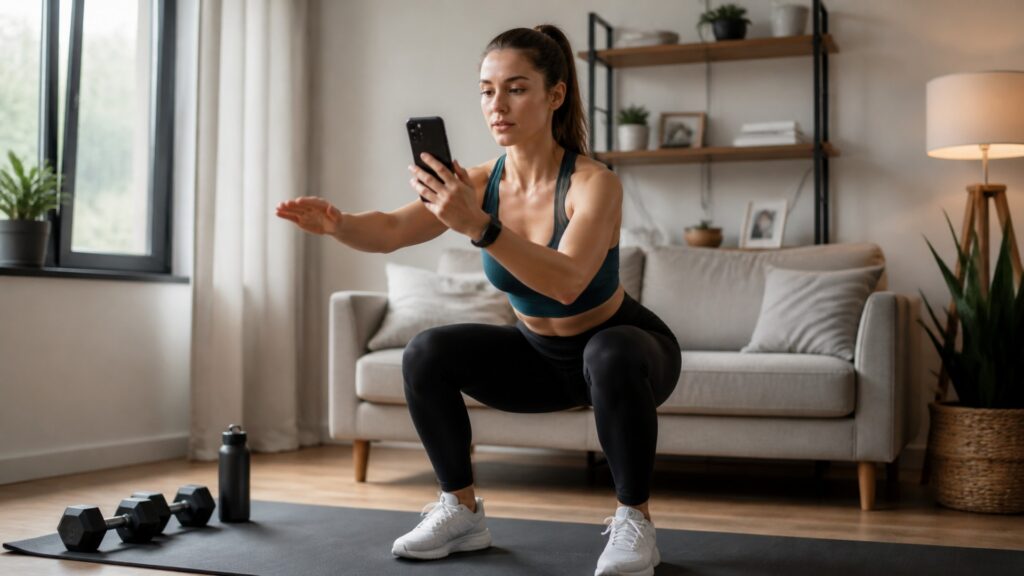
Why Fitness Training Apps Movement Pattern Matters

Movement pattern matters in a fitness training app because exercises are not interchangeable just because they look similar on a screen. A good app should help users choose movements that match the goal, available equipment, skill level, and the way the body is meant to move during the session.

When movement patterns are handled well, an app can build balanced workouts instead of random exercise lists. When they are handled poorly, users may repeat the same stress, miss important muscle groups, or choose exercises that do not fit the workout they meant to do.

By: Review Streets Research Lab
Updated: September 21, 2026
Explainer · 8-12 min read
fitness training apps movement pattern explainer hero image for Review Streets
What You'll Learn

How Movement Patterns Shape App-Based Workouts

A practical look at why exercise selection, substitutions, and balance matter inside fitness training apps.

  • Why movement patterns are more useful than isolated exercise names
  • How push, pull, squat, hinge, carry, rotation, and locomotion patterns affect balance
  • Where poor substitutions can change the training effect
  • Why movement variety matters for strength, mobility, and fatigue
  • How users can spot apps that organize exercises intelligently

Tip: Check whether the app explains the purpose of an exercise, not just the exercise name.

Definitions

Key Concepts Behind Movement Pattern Fit

These concepts help readers judge whether an app organizes exercise choices in a useful way.

Movement Pattern

A movement pattern is the basic action an exercise trains, such as pushing, pulling, squatting, hinging, rotating, carrying, or moving through space.

  • Example: a squat pattern appearing in goblet squats, bodyweight squats, and split squats
  • Check: see whether substitutions keep the same basic action
  • Limit: pattern labels do not replace technique, load, or coaching

Exercise Substitution

An exercise substitution is an alternate movement used when the original exercise does not fit equipment, skill, comfort, or setting.

  • Example: swapping a barbell deadlift for a dumbbell Romanian deadlift
  • Check: review whether the alternate trains a similar goal
  • Limit: a convenient swap can still change difficulty or emphasis

Workout Balance

Workout balance is the way an app distributes patterns so the plan is not dominated by one action while ignoring others.

  • Example: pairing push exercises with pulling work across a week
  • Check: look across the whole week, not just one workout
  • Limit: balance depends on the user's goal and recovery

Range And Control

Range and control refer to how far and how steadily the user moves through an exercise.

  • Example: controlling the bottom of a lunge instead of rushing through reps
  • Check: look for cues about setup, pace, and usable range
  • Limit: an app cannot fully see every rep without direct feedback

Skill Match

Skill match is how well the exercise fits the user's current coordination, strength, and experience.

  • Example: using a floor press before a more complex bench setup
  • Check: compare the exercise to the user's actual ability
  • Limit: progressions should not jump too quickly

Training Effect

Training effect is the practical result the exercise is meant to create inside the workout.

  • Example: using a hinge pattern to train posterior-chain strength
  • Check: ask what the exercise is doing for the plan
  • Limit: similar-looking movements can train different qualities

Tip: A strong app keeps the purpose of the movement intact when it changes exercises.

Exercise Choice

Movement Patterns Make Substitutions Smarter

A useful substitution does more than fill a blank space. It preserves the role of the original exercise as much as possible while fitting the user's equipment and ability.

  • A squat swap should still train a squat-like action.
  • A pull exercise should not be replaced with another push movement.
  • A simpler variation can be better than a flashy movement that breaks form.

The best app substitutions protect the purpose of the workout.

Balance

Pattern Balance Keeps Plans From Becoming Lopsided

App-based workouts can become repetitive if they chase popular exercises without checking the larger pattern mix. Balanced planning helps users avoid doing the same action too often while neglecting others.

  • Look at weekly push and pull volume together.
  • Check whether lower-body work includes more than one pattern.
  • Include mobility and control when the goal requires them.

Good balance supports progress without turning every session into the same workout.

Technique

Clear Pattern Cues Improve Workout Quality

Apps cannot physically coach every rep, so the explanation has to do more work. Good cues tell users what the movement should feel like, what to control, and when to choose a simpler version.

  • Useful cues explain setup, range, tempo, and common mistakes.
  • Video demos should match the exercise actually assigned.
  • Progressions should be easy to understand before the set begins.

Clear movement cues help the user train with more confidence and less guesswork.

Fit

The Right Pattern Still Has To Fit The User

A movement can be appropriate for the goal and still be wrong for the person that day. Equipment, soreness, mobility, space, and experience all affect whether an exercise belongs in the workout.

  • Apps should offer alternatives for limited equipment.
  • Pain or unusual discomfort should not be ignored.
  • A lower-skill version can keep the workout productive.

The best plan respects both the goal and the user's current conditions.

Practical Check

Evaluate The Week, Not Just The Exercise Library

A large exercise library is less important than how the app uses it. The better test is whether the app builds a week that includes sensible patterns, usable substitutions, and a clear training purpose.

  • Review several workouts in sequence.
  • Check whether substitutions preserve the pattern.
  • Watch for repeated stress on the same joints or muscle groups.

Movement pattern quality shows up in the structure of the plan, not only in the exercise catalog.

Quick Reality Check

Where Movement Pattern Guidance Helps And Where It Has Limits

Pattern-aware apps can improve exercise selection, but users still need realistic expectations.

Where It Helps

It keeps workouts balanced across actions instead of chasing random exercises.

It makes substitutions safer and more useful when equipment or skill level changes.

Where It Falls Short

It cannot fully evaluate form without direct observation.

It should not be treated as injury diagnosis or medical guidance.

Common Myths

Misconceptions About Movement Patterns In Fitness Apps

Exercise names alone do not prove a plan is balanced.

Any similar exercise is a good substitution

Similar-looking exercises can load the body differently and change the training effect.

A huge library means better movement variety

Variety matters only when the app organizes exercises around a sensible plan.

Beginners do not need pattern balance

Beginners often benefit from simple pattern balance because it keeps plans clear and repeatable.

The app can fully check form

Most apps can demonstrate and cue movement, but they cannot fully evaluate every rep like a qualified coach in person.

Tip: Use movement patterns to understand the workout's purpose, not as a substitute for good judgment.

FAQ

Frequently Asked Questions About Fitness App Movement Patterns

Short answers about exercise selection, substitutions, and balanced training.

Why do movement patterns matter in a fitness app?

They help the app organize exercises by training purpose instead of treating every movement as interchangeable.

What patterns should a general fitness app consider?

Most general plans should account for pushing, pulling, squatting, hinging, carrying, rotation, locomotion, and mobility as needed.

How can I tell if substitutions are weak?

A weak substitution changes the goal of the exercise, requires unavailable equipment, or makes the workout much easier or harder without explanation.

Can movement pattern guidance prevent injuries?

It can support better exercise choices, but it cannot guarantee injury prevention or replace medical advice.

What is the practical takeaway?

Choose apps that explain why exercises belong in the plan and offer substitutions that preserve the workout's purpose.

Bottom Line

Movement pattern quality matters because it determines whether app-based workouts are balanced, usable, and aligned with the goal.

The best fitness apps do not just list exercises. They organize movements so each workout has a clear purpose and practical fit.

Next Steps

Go Deeper or Compare Your Options

Use these Review Streets paths to compare related categories and practical next decisions.