
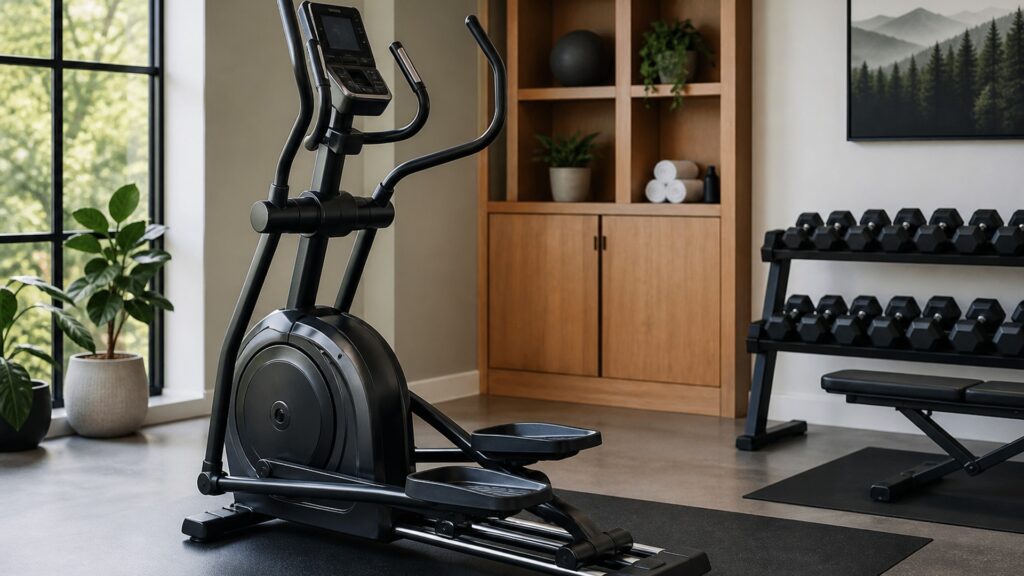
Why Front Drive Ellipticals Safety Factors Matters

Safety factors matter in front drive ellipticals because the machine combines moving pedals, rails, handles, resistance, and a raised standing position. A smooth stride is important, but the user also needs stable footing, enough clearance, safe mounting, and predictable controls.

Most front drive elliptical safety issues come from fit and setup rather than the drive location alone. The right machine should feel steady, easy to enter and exit, and manageable at the resistance and cadence the user plans to use.

By: Review Streets Research Lab
Updated: October 6, 2026
Explainer · 8-12 min read
front drive ellipticals safety factors explainer hero image for Review Streets
What You'll Learn

How Safety Factors Shape Front Drive Elliptical Use

A practical look at stability, clearance, controls, mounting, and maintenance on front drive ellipticals.

  • Why frame stability matters during faster movement
  • How step-up height and ceiling clearance affect safe placement
  • Where handles and pedal surfaces support balance
  • Why controls should be predictable during workouts
  • How maintenance reduces avoidable noise, wobble, and wear

Tip: Test the stride, setup, and controls together before judging the machine from one specification.

Definitions

Key Concepts Behind Front Drive Ellipticals Safety Factors Matters

These concepts connect the front drive layout to the workout details that matter for home use.

Frame Stability

Frame stability is how well the elliptical resists rocking, shifting, or flexing during use.

  • Example: the machine staying planted during moderate intervals
  • Check: test the machine at the user's expected pace
  • Limit: a stable frame still needs a level floor

Step-Up Height

Step-up height is how high the user must climb to stand on the pedals.

  • Example: checking whether mounting feels secure
  • Check: try stepping on and off slowly
  • Limit: low length does not always mean low height

Ceiling Clearance

Ceiling clearance is the vertical space above the user at the top of the pedal motion.

  • Example: placing the elliptical in a basement with enough headroom
  • Check: measure user height plus pedal rise
  • Limit: clearance changes with user height and posture

Pedal Security

Pedal security is how well the foot platform supports stable footing.

  • Example: wide textured pedals that reduce slipping
  • Check: test shoes on the pedal surface
  • Limit: pedals do not replace careful mounting

Handle Support

Handle support is how fixed and moving handles help the user balance and control posture.

  • Example: using fixed handles while stepping onto the machine
  • Check: reach handles without leaning awkwardly
  • Limit: handles cannot make an unstable frame safe

Maintenance Check

A maintenance check looks for loose parts, rail debris, roller wear, and unusual noise.

  • Example: cleaning rails and tightening approved hardware
  • Check: follow the manufacturer maintenance schedule
  • Limit: do not repair parts beyond your ability or instructions

Tip: The best signal is how the machine feels across a full workout, not one isolated feature.

Stability

The Frame Should Stay Planted

A front drive elliptical should feel steady when the user increases cadence or resistance. Rocking, flexing, or walking across the floor can make the workout feel unsafe.

  • Test the machine at normal workout speed.
  • Place it on a level surface.
  • Use a mat when the floor needs protection or grip.

Stable footing is the foundation of safer use.

Mounting

Getting On And Off Should Feel Controlled

Front drive ellipticals place the user on moving pedals. Safe mounting depends on step-up height, handle access, and whether the pedals stay predictable when weight shifts.

  • Use fixed handles when stepping on.
  • Check pedal height before buying.
  • Avoid awkward placement near walls or furniture.

Entry and exit matter as much as the workout itself.

Clearance

The Room Needs Enough Height And Space

A machine that fits the floor can still be unsafe if the user is too close to the ceiling or surrounding objects. Clearance should be checked with the user standing on the pedals.

  • Measure overhead space at the highest pedal point.
  • Leave side and rear clearance.
  • Keep cords and objects away from moving parts.

Safe placement includes the full motion zone.

Controls

Resistance Changes Should Be Predictable

The console and resistance controls should be easy to use without sudden surprises. Abrupt changes can break rhythm, especially for users who rely on steady pacing.

  • Try resistance changes while moving.
  • Use beginner programs before harder intervals.
  • Know how to stop or reduce intensity quickly.

Predictable controls help the user stay balanced.

Upkeep

Maintenance Keeps Small Problems From Growing

Rails, rollers, pedals, and bolts can change over time. Regular checks help catch wobble, noise, or wear before they affect safety.

  • Clean rails as instructed.
  • Stop using the machine if new grinding or looseness appears.
  • Follow the manual for tightening and lubrication.

A safer machine is also a better-maintained machine.

Quick Reality Check

Where Safety Checks Help And Where They Have Limits

Safety checks reduce avoidable problems, but they cannot make every machine right for every user.

Where They Help

They reveal fit, clearance, and stability issues before daily use.

They encourage safer setup and routine maintenance.

Where They Have Limits

They do not replace medical clearance or professional help when needed.

They cannot fix a machine that is poorly built, damaged, or wrong for the user.

Common Myths

Misconceptions About Front Drive Elliptical Safety

A familiar cardio machine still needs careful setup and fit.

Low impact means no safety concerns

Lower joint impact does not remove balance, clearance, or setup risks.

A compact machine is always safer at home

Compact placement can create clearance problems if the room is too tight.

Handles solve every balance issue

Handles help, but the frame and pedal path still need to feel stable.

Maintenance is only about noise

Loose parts, dirty rails, or worn rollers can affect safety as well as sound.

Tip: Treat broad claims as a reason to check the real machine more closely.

FAQ

Frequently Asked Questions About Front Drive Elliptical Safety Factors

Short answers for practical elliptical buying and setup decisions.

What safety factor should I check first?

Check whether the frame stays stable and the stride feels controlled at your expected pace.

How much ceiling clearance do I need?

Measure the user's height while standing on the pedals at their highest point, then leave comfortable overhead margin.

Are front drive ellipticals safe for beginners?

They can be, if the user can mount safely, control the pace, and start with appropriate resistance.

What maintenance affects safety?

Rail cleaning, roller condition, bolt checks, and unusual noise checks can all matter.

What is the practical takeaway?

A front drive elliptical is safer when it fits the user, room, pace, and maintenance routine.

Bottom Line

Safety factors matter because a front drive elliptical has moving pedals, raised footing, resistance changes, and room-clearance demands.

Choose a machine that feels stable, easy to mount, predictable to control, and practical to maintain.

Next Steps

Go Deeper or Compare Your Options

Use these Review Streets paths to compare related categories and practical next decisions.