
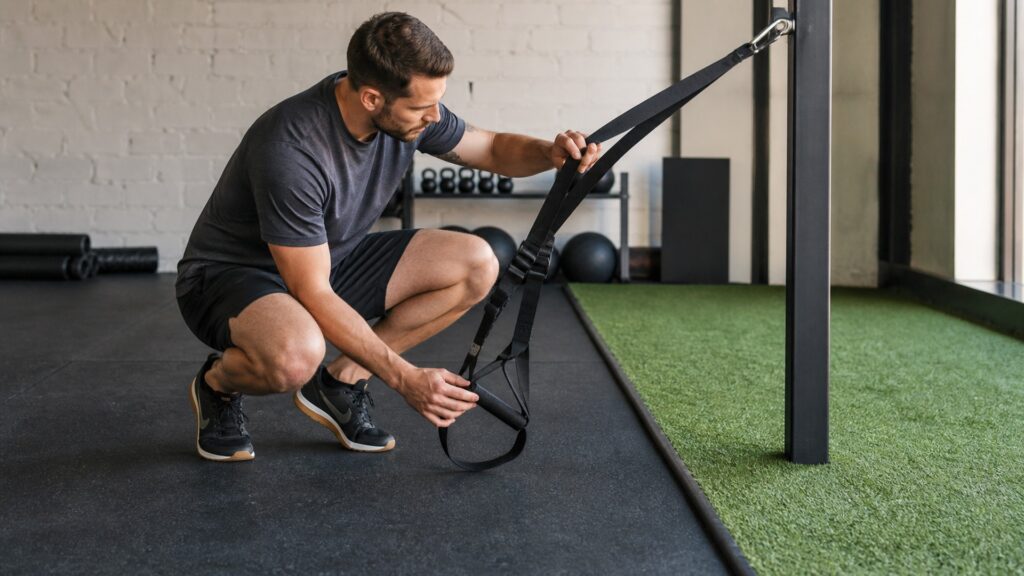
Why Functional Suspension Training Safety Factors Matters

Safety factors matter in functional suspension training because the anchor, straps, floor, and user all share the load. A strong exercise plan still fails if the anchor slips, the door setup is wrong, the straps are uneven, or the user cannot exit the movement safely.

Suspension training can be safe and effective, but it depends on setup. Anchor strength, strap condition, handle grip, floor traction, clearance, body angle, fatigue, and controlled exits all matter before intensity rises.

By: Review Streets Research Lab
Updated: October 2, 2026
Explainer · 8-12 min read
functional suspension training safety factors explainer hero image for Review Streets
What You'll Learn

How To Evaluate Suspension Training Safety

A practical look at anchor security, strap setup, surface grip, clearance, and movement control.

  • Why anchor security comes first
  • How strap condition and even setup affect safety
  • Where floor grip and clearance matter
  • Why body angle changes load demand
  • How fatigue affects safe exits

Tip: Start with the training job, then decide whether straps solve that job better than a fixed tool.

Definitions

Key Concepts Behind Functional Suspension Training Safety Factors Matters

These concepts explain how strap setup, body angle, and movement control shape the training decision.

Anchor Security

Anchor security is how reliably the straps attach to a door, wall, ceiling, rack, beam, or mount.

  • Example: checking a door anchor before leaning into rows
  • Check: verify rating, placement, and closure
  • Limit: a weak anchor makes the setup unsafe

Strap Condition

Strap condition is the state of webbing, buckles, handles, stitching, and attachment points.

  • Example: checking for frayed straps before training
  • Check: inspect before loading
  • Limit: damage can worsen under force

Floor Traction

Floor traction is how well the user's feet or hands stay planted during angled exercises.

  • Example: shoes slipping during suspension rows
  • Check: test grip slowly
  • Limit: dust, sweat, or smooth floors can change traction

Clearance

Clearance is the space needed to lean, step, rotate, or exit the exercise.

  • Example: having enough room behind the user during rows
  • Check: leave space for failed reps and step-outs
  • Limit: small rooms restrict some drills

Body Angle Load

Body angle load is how much force the user places through the straps based on lean and position.

  • Example: a low row angle creating more demand than an upright row
  • Check: make angles harder gradually
  • Limit: aggressive angles can surprise beginners

Controlled Exit

Controlled exit is the ability to stop the exercise safely when form or grip fails.

  • Example: stepping forward out of a row
  • Check: know the exit path before starting
  • Limit: fatigue can reduce exit control

Tip: Suspension training is useful when adjustability and control support the exercise rather than complicating it.

Anchor

The Anchor Is The First Safety Check

Suspension training depends on an anchor that can handle leaning, pulling, pressing, and shifting force. The straps are only as safe as the attachment point.

  • Use rated anchors when possible.
  • Check door direction and closure for door anchors.
  • Avoid improvised attachment points.

A secure anchor is nonnegotiable.

Equipment

Straps And Hardware Need Inspection

Webbing, stitching, buckles, handles, carabiners, and adjustment points can wear over time. A quick inspection prevents avoidable failures.

  • Look for frays, cracks, slipping buckles, and uneven straps.
  • Set both handles evenly when the exercise requires it.
  • Retire damaged equipment.

The setup should be checked before the set.

Surface

Feet And Hands Need Reliable Traction

Many suspension exercises depend on angled body positions. If the feet slide, the exercise can fail quickly.

  • Use appropriate shoes or flooring.
  • Test grip before full reps.
  • Avoid slick floors for steep angles.

Traction is part of the resistance system.

Scaling

Body Angle Should Progress Gradually

Small changes in angle can greatly increase load. Users should earn harder angles with control, not jump to the steepest version.

  • Start more upright.
  • Change one variable at a time.
  • Keep exit control available.

Gradual scaling protects both form and setup.

Fatigue

Safety Changes As Grip And Control Fade

A safe first rep does not guarantee a safe final rep. Grip, bracing, shoulder control, and foot traction can all decline with fatigue.

  • Leave reps in reserve on unstable exercises.
  • Stop when alignment or grip fades.
  • Avoid max-effort work on uncertain anchors.

Stopping early is part of safe suspension training.

Quick Reality Check

Where Safety Checks Help And Where They Have Limits

Safety checks reduce avoidable setup risk before the exercise begins.

Where They Help

They catch weak anchors, worn straps, slick floors, and poor exit paths.

They help scale angle and instability to the user.

Where They Fall Short

They cannot make an unsuitable anchor safe.

They do not replace qualified guidance for pain or injury.

Common Myths

Misconceptions About Suspension Training Safety

Simple straps still require serious setup checks.

Any strong-looking anchor is fine

Anchors need suitable rating, direction, and installation.

Bodyweight training is automatically low risk

Bodyweight force can still overload straps, anchors, grip, or joints.

Harder angles are just a fitness issue

Harder angles also increase setup and exit demands.

A good strap system removes user error

The user still has to set it up and scale it correctly.

Tip: Judge the setup by the movement it improves, not by how many variations it promises.

FAQ

Frequently Asked Questions About Suspension Training Safety

Short answers for practical training and buying decisions.

What should I check first?

Check the anchor point, because every exercise depends on it.

Are door anchors safe?

They can be safe when used exactly as intended with a suitable door and direction of pull.

How do I know an angle is too hard?

If alignment, grip, foot traction, or exit control breaks down, the angle is too hard.

Do straps wear out?

Yes. Webbing, stitching, buckles, and handles should be inspected regularly.

What is the practical takeaway?

Safe suspension training depends on secure anchors, sound straps, good traction, enough clearance, and controlled progression.

Bottom Line

Functional suspension training safety factors matter because setup carries the user's bodyweight under changing force.

Check anchor security, strap condition, floor traction, clearance, body angle, and exit control before increasing difficulty.

Next Steps

Go Deeper or Compare Your Options

Use these Review Streets paths to compare related categories and practical next decisions.