
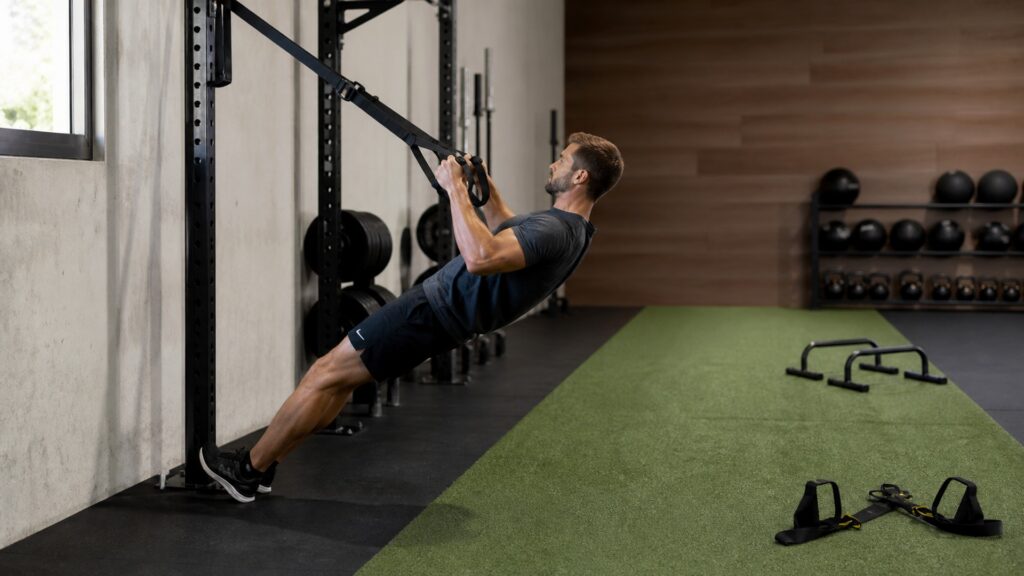
Why Functional Suspension Training Workout Role Matters

Workout role matters in functional suspension training because straps can serve several different jobs in a session. They can be the main strength tool, a warm-up support, a balance aid, a core-control challenge, a mobility assistant, or an accessory station.

The role has to be clear before the straps are loaded. A suspension row used for main pulling strength should be programmed differently from a strap-assisted squat, a warm-up mobility drill, or a late-workout core finisher.

By: Review Streets Research Lab
Updated: October 2, 2026
Explainer · 8-12 min read
functional suspension training workout role explainer hero image for Review Streets
What You'll Learn

How Suspension Straps Fit Into A Workout

A practical guide to using straps as main work, assistance, warm-up, accessory training, or core control.

  • Why strap exercises need a defined session role
  • How main strength work differs from assistance work
  • Where suspension straps fit warm-ups and mobility
  • Why core drills need careful placement
  • How fatigue changes strap safety and quality
  • When another tool fits the workout better

Tip: Assign the straps a job before choosing exercises. Main strength, assistance, warm-up, and core control need different setup choices.

Definitions

Key Concepts Behind Suspension Training Workout Role

These concepts clarify how strap-based exercises fit inside a complete workout.

Workout Role

Workout role is the specific job a suspension exercise performs in a session.

  • Example: using straps for main rows or assisted lunges
  • Check: name the job before setting angle or volume
  • Limit: one setup should not try to do every job at once

Main Strength Work

Main strength work is the priority exercise block where quality, rest, and progression matter most.

  • Example: low-angle suspension rows as the main pull movement
  • Check: track angle, reps, and control
  • Limit: straps may not provide enough load for every goal

Assistance Role

An assistance role uses straps to make another movement easier to control.

  • Example: strap-assisted squats or lunges
  • Check: let the body still do the work
  • Limit: too much assistance can reduce training value

Warm-Up Role

A warm-up role uses straps to prepare range, balance, or movement quality.

  • Example: light strap-supported hinges before lower-body work
  • Check: keep effort low and repeatable
  • Limit: warm-ups should not become max-effort work

Core-Control Role

A core-control role uses straps to challenge trunk alignment.

  • Example: fallouts, body saws, or suspended plank variations
  • Check: stop before alignment fails
  • Limit: core drills can become too intense quickly

Accessory Role

An accessory role supports the main goal with targeted volume or movement practice.

  • Example: extra rows after a main strength block
  • Check: avoid duplicating fatigue without purpose
  • Limit: accessories can clutter the workout

Tip: The same straps can be useful in different roles, but the session should make that role obvious.

Purpose

The Straps Need A Clear Session Job

Suspension systems are versatile enough to become unfocused. A clear role determines exercise choice, angle, rest, volume, and difficulty.

  • Use main work for priority strength.
  • Use assistance when position or balance needs help.
  • Use accessory work only when it supports the plan.

A defined role keeps the straps from becoming random variety.

Order

Placement Changes The Training Effect

High-control strap exercises usually belong earlier than fatigue-heavy finishers. Warm-up and assistance drills can appear earlier or lighter, while core finishers need conservative scaling.

  • Put demanding rows or presses before heavy fatigue.
  • Use support drills when they improve later movement.
  • Keep late-session strap work easier to exit safely.

Where the straps appear changes what they can train well.

Progression

Progression Should Match The Role

Main strength work needs measurable progression. Warm-ups need consistency. Assistance work should gradually reduce help. Core-control work should expand only while alignment holds.

  • Track body angle for main exercises.
  • Keep warm-up setup repeatable.
  • Reduce assistance only when movement quality stays high.

Progress is different for each role.

Fatigue

Strap Quality Changes As The User Tires

Grip, bracing, shoulder position, and foot traction can fade during a workout. That makes role and placement especially important for suspension training.

  • Avoid steep angles when grip is fading.
  • Stop when alignment breaks.
  • Use easier versions for finishers.

The role should account for fatigue before it appears.

Fit

Sometimes Another Tool Fits The Role Better

Straps are not always the best tool. Fixed bars, handles, bands, cables, or weights may fit certain roles better than a moving strap system.

  • Use fixed tools when stable support matters.
  • Use external load when precise strength loading matters.
  • Use straps when adjustability solves the problem.

Good workout role includes knowing when not to use straps.

Quick Reality Check

Where Workout Role Helps And Where It Has Limits

Role-based planning keeps suspension training practical and repeatable.

Where It Helps

It clarifies whether straps are for strength, assistance, warm-up, mobility, or core work.

It helps set difficulty, order, and volume.

Where It Falls Short

It cannot make an unsafe anchor acceptable.

It does not make straps the best tool for every movement.

Common Myths

Misconceptions About Suspension Training Workout Role

Straps are flexible, but every session still needs focus.

Straps should be used for every exercise

They should be used when angle adjustment, support, or instability improves the exercise.

Core finishers are always safe because they use bodyweight

Suspended core drills can become difficult quickly, especially under fatigue.

Assistance means the exercise is too easy

Assistance can improve range, balance, and position when used intentionally.

More strap variety means a better workout

Variety helps only when each exercise has a clear role.

Tip: Let the role choose the exercise, angle, and volume.

FAQ

Frequently Asked Questions About Suspension Training Workout Role

Short answers for placing straps inside a session.

Can suspension straps be the main workout tool?

Yes, when the plan is built around repeatable bodyweight strength, assistance, and core work with safe setup.

When should straps be used as assistance?

Use them when they improve balance, range, or movement quality without removing the exercise's purpose.

Should suspended core drills come at the end?

They can, but they should be scaled conservatively because fatigue reduces bracing and exit control.

How do I know if straps are the wrong tool?

If instability, anchor setup, or angle control distracts from the target movement, another tool may fit better.

What is the practical takeaway?

Functional suspension training works best when the straps have a clear role in the workout.

Bottom Line

Functional suspension training workout role matters because straps can serve many jobs.

Choose the role first, then match exercise choice, angle, order, volume, and safety checks to that role.

Next Steps

Go Deeper or Compare Your Options

Use these Review Streets paths to compare related categories and practical next decisions.