
Why GPS Safety Wearables GPS Safety Safety Factors Matters

A location wearable can reduce uncertainty after someone goes missing, yet the same map can expose a vulnerable person to surveillance, coercion, or a dangerously confident search in the wrong place.

Safety therefore depends on the whole response system: voluntary wearing, tightly controlled access, fresh position data, dependable power, and responders who understand uncertainty before acting.

By: Review Streets Research Lab
Updated: August 19, 2026
Explainer · 8-12 min read
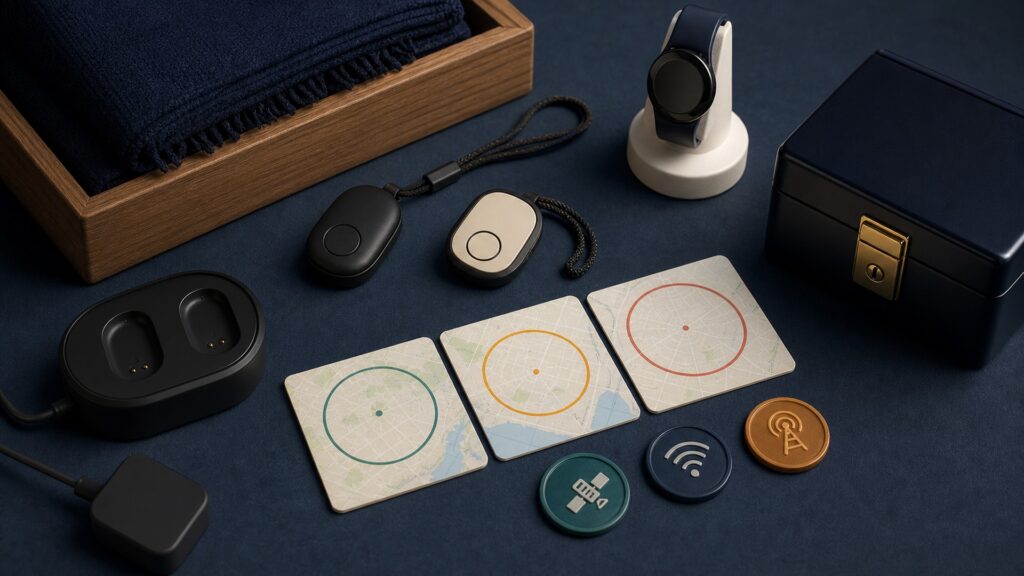
People-free editorial still life for Why GPS Safety Wearables GPS Safety Safety Factors Matters
What You'll Learn

Design a safer location-sharing and response system

Follow privacy, attachment, battery, coverage, and escalation as connected safeguards rather than treating a map pin as protection by itself.

  • Set boundaries for location access
  • Prevent unnoticed removal
  • Reserve power for the expected outing
  • Recognize stale or estimated positions
  • Rehearse proportionate escalation
  • Keep an independent emergency option

Tip: Read the concept as part of a system, then connect it back to the use case.

Definitions

Six Concepts That Shape This Decision

These definitions connect the main idea to the variables, limits, and practical signals readers need to compare options.

Location permission

Location permission determines which accounts, apps, and people can view current or historical position records.

  • It is the first safety boundary because inappropriate access can enable unwanted monitoring even when tracking hardware works correctly.
  • Review viewers on the wearer’s phone and every shared account; remove old devices, former caregivers, and unused integrations.
  • A permissions screen cannot reveal whether an authorized viewer will use information respectfully.

Attachment check

An attachment check confirms that the wearable remains on the intended person in its expected position.

  • Loose straps, clothing changes, charging, and intentional removal can separate a valid location from the person responders hope to find.
  • Include a comfortable fit check before departure and define what a removal notification should cause a helper to do.
  • Removal sensing may miss slow detachment or may alarm during ordinary bathing and sleep.

Battery reserve

Battery reserve is the charge left after routine use, including the energy needed to obtain and transmit locations.

  • Weak coverage and frequent updates can consume power faster than a familiar home-day pattern suggests.
  • Test an outing of realistic length, record the ending charge, and leave margin for delay rather than planning to reach zero.
  • A percentage estimate can change with temperature, battery age, radio use, and software behavior.

Position age

Position age is the elapsed time since the wearable produced the location currently shown to a viewer.

  • A precise-looking pin may describe an earlier stop, especially indoors or where cellular service is intermittent.
  • Make the timestamp visible during every drill and require viewers to say both the place and the observation time.
  • Freshness does not establish meter-level accuracy or confirm that the device stayed with its wearer.

Geofence alert

A geofence alert reports that a calculated position crossed a virtual boundary around a chosen area.

  • Boundary size and location uncertainty interact; a narrow fence can create noisy alerts while a wide fence delays notice.
  • Walk the actual perimeter under ordinary conditions, noting late, missing, and repeated alerts before choosing a response rule.
  • A geofence is not a physical barrier and cannot prevent departure or injury.

Escalation plan

An escalation plan assigns the contacts, verification steps, and emergency threshold after a concerning location event.

  • It converts ambiguous device information into ordered human action without making one relative responsible for every minute of monitoring.
  • Run a tabletop drill involving a stale pin, unreachable wearer, and unavailable primary contact; document who proceeds next.
  • No script covers every emergency, so immediate danger still warrants local emergency services.

Tip: Keep the definitions connected; the strongest answer usually comes from the whole system, not one term.

Control the audience before sharing begins

This safeguard centers on control the audience before sharing begins.

A tracker can become a surveillance tool when accounts are reused or access outlives a caregiving role. Ask the wearer what sharing is acceptable, use separate logins, enable strong recovery methods, and review location history retention. Consent should be revisited rather than assumed permanent.

  • Prefer individual accounts over a family password
  • Remove viewers when responsibilities change
  • Limit history retention where possible
  • Document consent and exceptions

Protection starts with knowing who can see the map.

Make attachment compatible with ordinary life

This safeguard centers on make attachment compatible with ordinary life.

A technically excellent device offers little protection from a dresser or charging dock. Choose a form the person tolerates through clothing changes, sleep, hygiene, and community activities. Treat repeated removal as information about comfort or autonomy, not merely noncompliance.

  • Test clasp operation and skin comfort
  • Plan around bathing and charging
  • Investigate repeated removal respectfully
  • Use identification outside the device too

Reliable wearing requires comfort and cooperation.

Plan power around the longest plausible delay

This safeguard centers on plan power around the longest plausible delay.

Charging once each evening may fail during travel, hospitalization, or an unexpectedly long outing. Measure actual endurance with the selected update rate and network conditions. Keep the charger identifiable, and assign responsibility without hiding it inside a vague household routine.

  • Measure real rather than advertised runtime
  • Retest aging batteries
  • Pack a compatible travel charger
  • Set a warning with useful response time

Remaining charge must cover uncertainty, not just the schedule.

Teach viewers to read uncertainty

This safeguard centers on teach viewers to read uncertainty.

During a search, people may drive toward an old indoor fix while the wearer continues moving. The response screen should expose timestamp, accuracy radius, connection state, and movement history. Call nearby contacts and check likely destinations before treating one coordinate as ground truth.

  • Read timestamp before street name
  • Notice the accuracy circle
  • Compare several fixes for direction
  • Avoid hazardous searches based on one pin

Coordinates are clues whose quality changes by place.

Rehearse what happens after an alert

This safeguard centers on rehearse what happens after an alert.

A good drill begins with a realistic boundary notice and ends with a confirmed human outcome. Decide how long to verify, who checks familiar routes, when authorities are contacted, and what details are safe to share. Debrief false alarms without weakening the emergency threshold.

  • Assign a primary and backup contact
  • Define verification time limits
  • Prepare identifying and medical information
  • Revise the plan after every incident

The final safeguard is a practiced response, not a notification.

Quick Reality Check

The defensible claim is narrower than constant protection

A configured system can improve access to recent location clues and organize response, but it cannot eliminate wandering, exploitation, injury, or communication failure.

What this evidence supports

Drills can show whether authorized viewers receive intelligible alerts and can find the displayed timestamp.

Field records can reveal whether attachment, battery, and coverage remain adequate during the wearer’s normal destinations.

What remains outside the result

Consumer tracking cannot guarantee timely rescue or determine why someone left a familiar place.

Location sharing may itself create harm when consent, account security, or responder judgment is poor.

Common Myths

Misconceptions That Distort the Decision

Common shortcuts and misunderstandings can make the topic seem simpler than it is.

Myth: continuous tracking guarantees a quick recovery

A device can be unworn, discharged, offline, delayed, or attached to the wrong object. Recovery also depends on someone noticing the alert, interpreting uncertainty, and taking appropriate action within the actual situation.

Myth: every family member should have permanent map access

Broad access increases opportunities for accidental disclosure, coercive monitoring, and forgotten credentials. Give location information only to necessary responders, use individual accounts, and remove permissions promptly when caregiving roles or relationships change.

Myth: a precise map pin is always current

The screen may center neatly on a coordinate calculated minutes earlier or derived from weaker signals. Read its timestamp and accuracy estimate, compare subsequent fixes, and verify conditions before directing a consequential search.

Myth: frequent updates are automatically safer

Short intervals can exhaust the battery and flood helpers with movement data that does not change their decision. Select a rate that preserves adequate power while supporting the agreed response threshold.

Tip: Treat strong claims as starting points for comparison, not final answers.

FAQ

Questions to Ask Before Choosing

Concise answers to common questions readers may have after the main explanation.

What should a family test before relying on the wearable?

Test wearing comfort, outdoor and indoor fixes, position timestamps, boundary alerts, low-power warnings, recipient availability, and the final phone call. Include one failed connection and confirm the backup process works.

How should an inaccurate location be handled?

Check position age and accuracy first, request another fix, call the wearer when appropriate, and contact nearby trusted people. If credible danger exists, follow the emergency plan without waiting endlessly for better data.

Can tracking be used when the wearer cannot give ongoing consent?

Capacity, legal authority, dignity, and risk require individual consideration. Use the least intrusive arrangement, involve appropriate caregivers or professionals, restrict access, and revisit whether expected safety benefits still justify monitoring.

What belongs in a non-device backup?

Maintain current contact details, a recent description, likely destinations, medical considerations, identification options, and instructions for local authorities. The plan should remain usable when the tracker, phone, network, or account is unavailable.

Bottom Line

Treat GPS safety as a chain of fallible safeguards. Restrict viewers, support comfortable wearing, protect battery reserve, interpret location age, and rehearse escalation before an urgent event.

Keep the wearable only when its information leads to proportionate help without creating unacceptable surveillance or false confidence. Identification, community support, and an offline response plan remain essential.

Next Steps

Go Deeper or Compare Your Options

Use these Review Streets paths to connect the explainer to related categories, comparisons, and next decisions.